

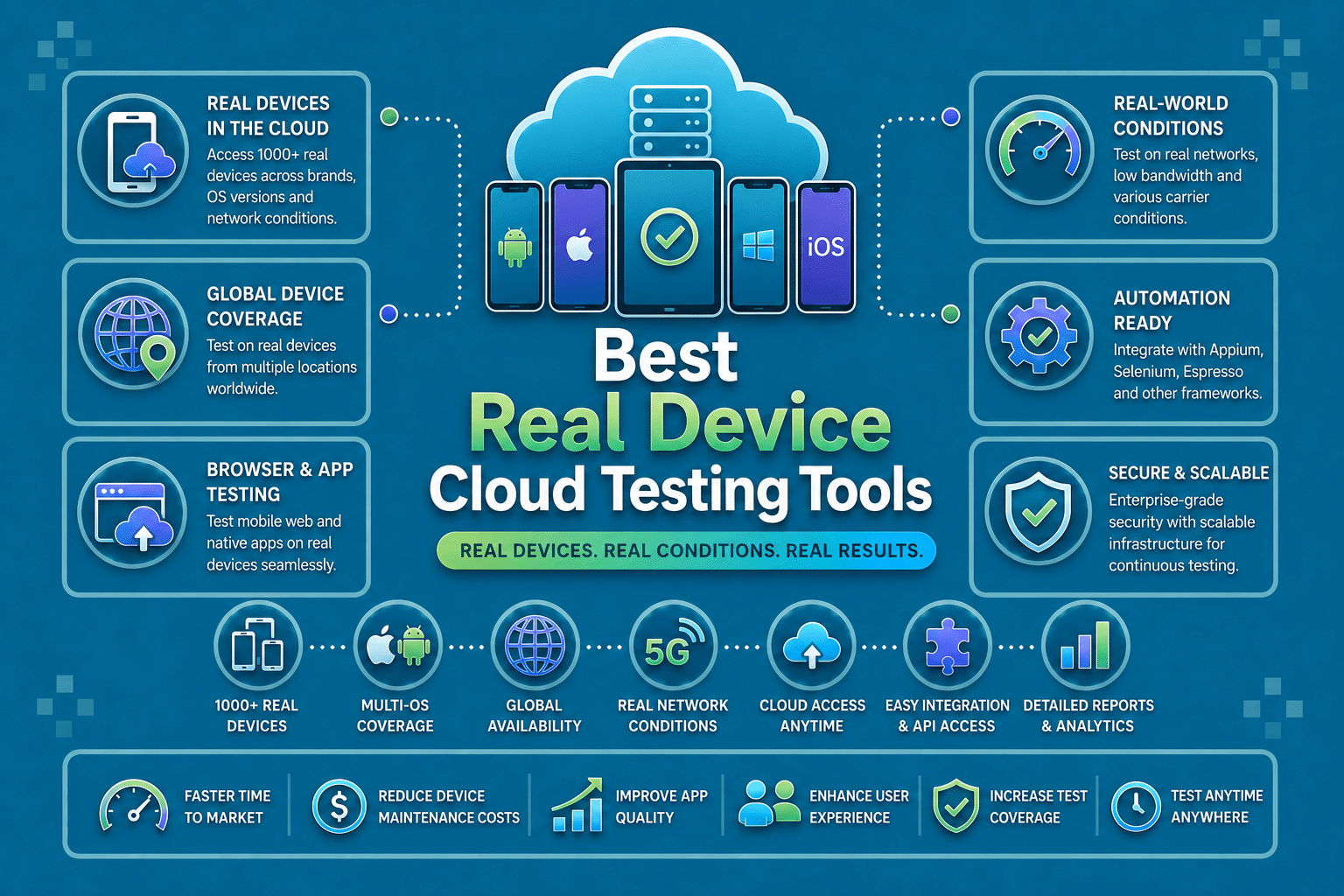

Testing mobile apps on emulators can only take you so far. Real users run your app on physical devices with real network conditions, actual hardware sensors, and OS quirks that no simulator can replicate. That is where real device cloud testing comes in.
Cloud-based app testing on real devices gives your team remote access to a library of physical smartphones and tablets hosted in the cloud.
You can run automated tests, debug live sessions, and validate performance across hundreds of device-OS combinations without buying or maintaining a single physical device.
This guide covers the 10 best real device cloud mobile testing tools available today, what sets each one apart, and how to choose the right fit for your team.
Key Tools
- Panto AI: AI-powered mobile app testing platform for real device cloud automation with natural-language test generation.
- BrowserStack: Leading real device cloud testing platform for broad mobile app coverage and enterprise-scale compatibility testing.
- Sauce Labs: Unified cloud-based app testing tool for mobile, web, and desktop teams needing AI-assisted debugging.
- LambdaTest: Cost-effective real device cloud testing platform with fast parallel execution and AI-powered test authoring.
- Kobiton: Mobile-focused cloud device testing tool for teams moving from manual testing to automation quickly.
- Perfecto: Enterprise real device cloud testing platform built for secure, compliant mobile testing in regulated industries.
- HeadSpin: Performance-first real device testing platform for analyzing mobile app experience across real networks and geographies.
- AWS Device Farm: AWS-native real device cloud testing service for teams already embedded in the Amazon ecosystem.
- Firebase Test Lab: Google cloud-based app testing platform for Android-first teams needing scriptless real device smoke testing.
- Bitbar: Flexible real device cloud testing tool for teams that want framework support and deployment options.
The 10 Best Real Device Cloud Testing Tools in 2026
1. Panto AI
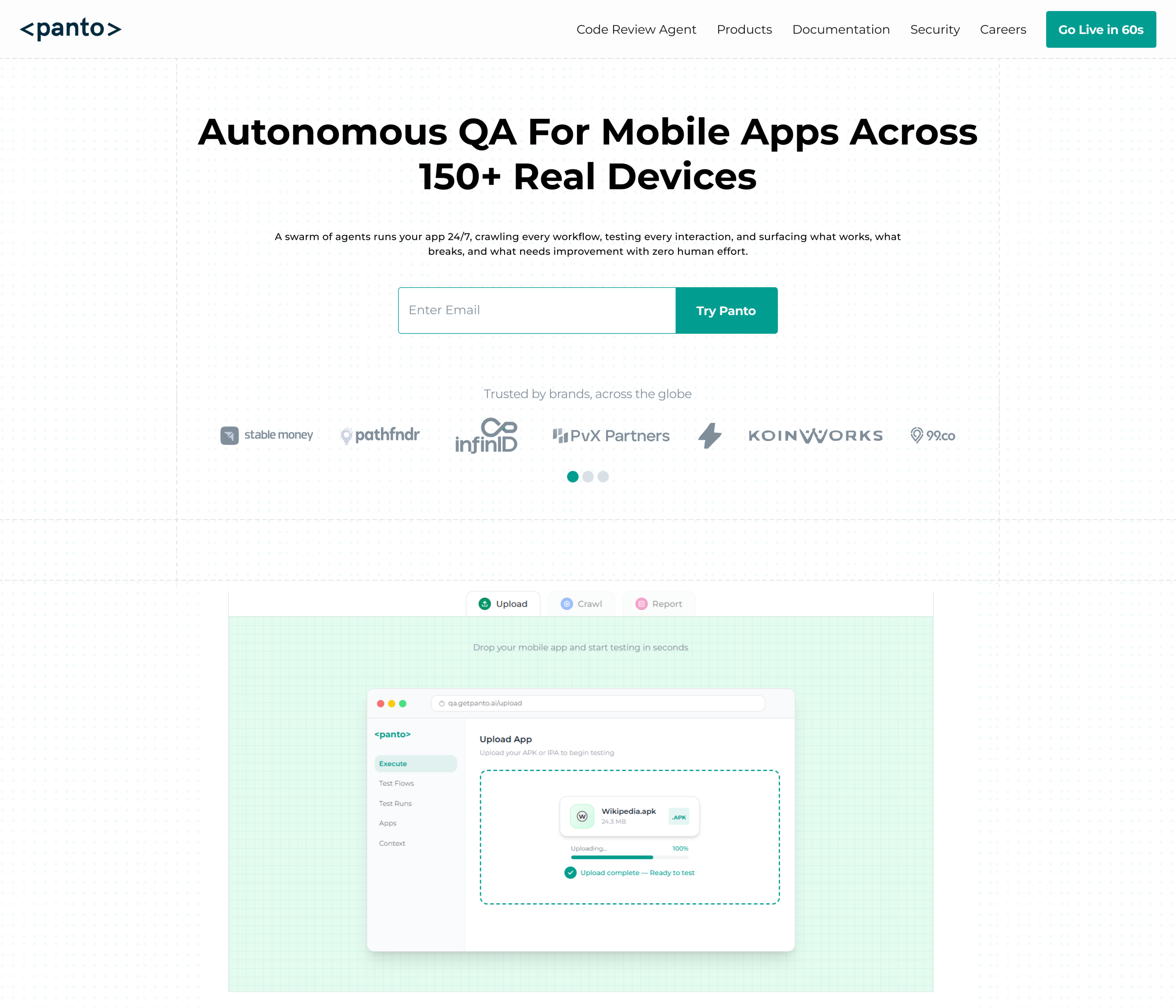
Panto AI is an AI-powered mobile QA platform built specifically for teams that need real device cloud testing without the scripting overhead. It takes a different approach from traditional device cloud providers by combining real device execution with AI-driven test generation and root cause analysis.
Where most platforms give you infrastructure and expect you to bring automation, Panto generates deterministic test scripts from plain English instructions. A QA engineer can describe a user flow in natural language, and the platform navigates the app on real devices, converts those runs into reusable Appium or Maestro scripts, and keeps them updated as the UI changes.
Key Features:
- NLP-based test case generation that converts plain English flows into executable automation
- Real device execution across 150+ physical devices for Android and iOS
- Self-healing tests that detect UI changes and adapt automatically
- AI-powered root cause analysis that links test failures to specific code changes
- Appium and Maestro script export for version control and CI integration
- Codeless test creation with a visual test design environment
- Seamless CI/CD integration with automatic test triggering on code commits
- Vibe Debugging platform that connects visual failures back to the pull request that caused them
How It Helps With Real Device Mobile App Testing:
Panto removes the gap between having access to real devices and actually getting value from them. Instead of spending hours scripting test flows for each device configuration, teams describe the intended behavior once and let the AI handle execution across the device matrix.
The self-healing layer means that routine UI updates do not trigger a maintenance cycle, which is one of the biggest hidden costs of device cloud testing programs.
Limitations:
- Optimized primarily for mobile app testing, not web or desktop
- Advanced customization beyond auto-generated scripts may require technical input
- NLP-centric workflows have a learning curve for teams used to pure code-based automation
Best For: Mobile-first teams that want AI-assisted test generation, reduced scripting overhead, and real device cloud coverage without managing test infrastructure.
2. BrowserStack
BrowserStack is one of the most established names in cloud mobile testing, with a real device cloud that spans over 3,500 physical devices. It supports both live manual testing and automated test execution across Android and iOS.
The platform is well-documented, widely adopted, and integrates with essentially every major CI/CD tool and automation framework. For teams that prioritize device breadth and ecosystem maturity, BrowserStack is often the default choice.
Key Features:
- Access to 3,500+ real Android and iOS devices hosted in the cloud
- Support for Appium, Espresso, XCUITest, and other major automation frameworks
- Live interactive testing for manual exploratory sessions
- Parallel test execution to reduce total run time
- App Automate for automated mobile testing with detailed logs and video recordings
- Integration with Jenkins, GitHub Actions, CircleCI, and most major CI systems
- Network simulation to test under various connectivity conditions
How It Helps With Real Device Cloud Testing:
BrowserStack’s device lab is one of the largest available, which makes it particularly useful for compatibility testing across a wide range of manufacturer builds and OS versions. The combination of live testing and automated execution in a single platform means teams can investigate failures manually right after a test reports them.
Limitations:
- Pricing scales significantly at higher usage tiers, which can be a constraint for growing teams
- Test infrastructure is powerful but teams still need to build and maintain their own automation scripts
- Parallel test limits on lower plans can slow down CI pipelines
Best For: Enterprise teams and larger QA organizations that need broad device coverage and a mature, well-supported automation infrastructure.
3. Sauce Labs
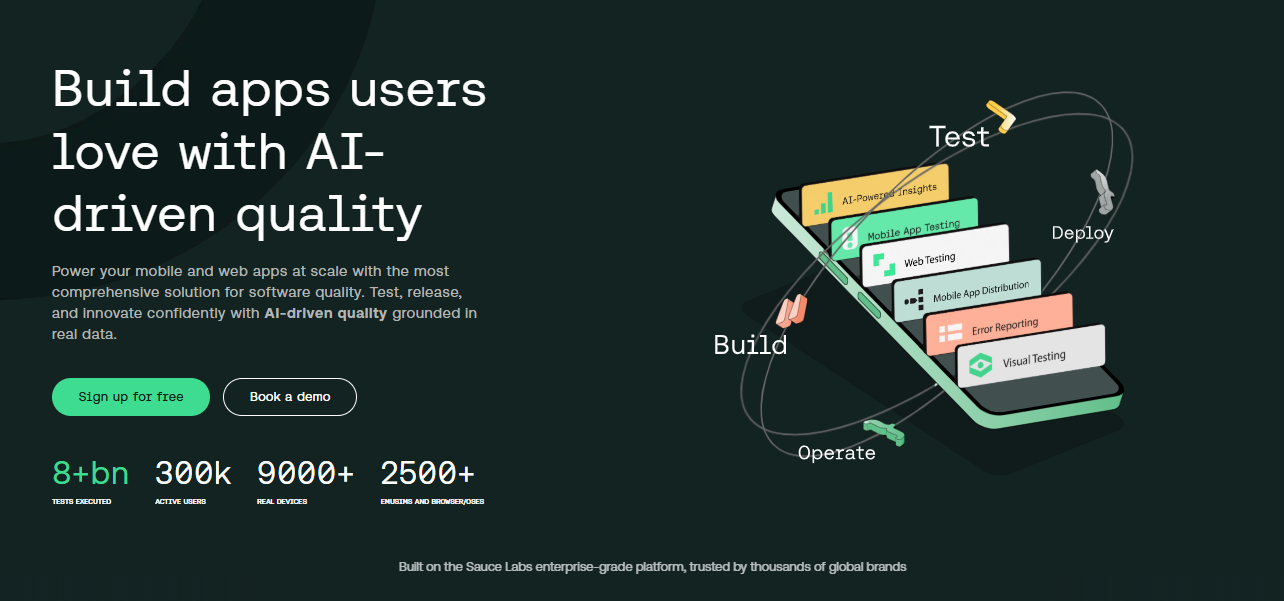
Sauce Labs provides a unified cloud mobile testing tool that covers real devices, virtual devices, browsers, and desktop environments from a single platform. It has been in the market for over a decade and is especially strong for organizations running cross-platform test programs.
Beyond device access, Sauce Labs offers AI-driven failure analysis and error classification, which helps teams spend less time triaging test results and more time fixing actual bugs.
Key Features:
- Real device cloud with support for Appium, Espresso, and XCUITest
- Unified platform covering mobile, web, and desktop testing
- AI-powered test failure analysis and error categorization
- Extended debugging capabilities including video, network, and performance logs
- Visual testing integration for screenshot-based regression checks
- Sauce Orchestrate for advanced test pipeline management
- Strong support for both private and public device clouds
How It Helps With Real Device Cloud Testing:
Sauce Labs is particularly well-suited for teams that run web and mobile testing under the same umbrella. The AI failure analysis reduces the time spent manually reviewing test output, and the extended log capture on real devices makes debugging production-like issues significantly faster.
Limitations:
- The breadth of features can make the platform feel complex for teams with simple mobile-only needs
- Real device availability for niche or older models can be inconsistent
- Cost can climb quickly for teams running large parallel test suites
Best For: Cross-platform QA teams that test across mobile, web, and desktop and want unified reporting and AI-assisted failure triage.
4. LambdaTest
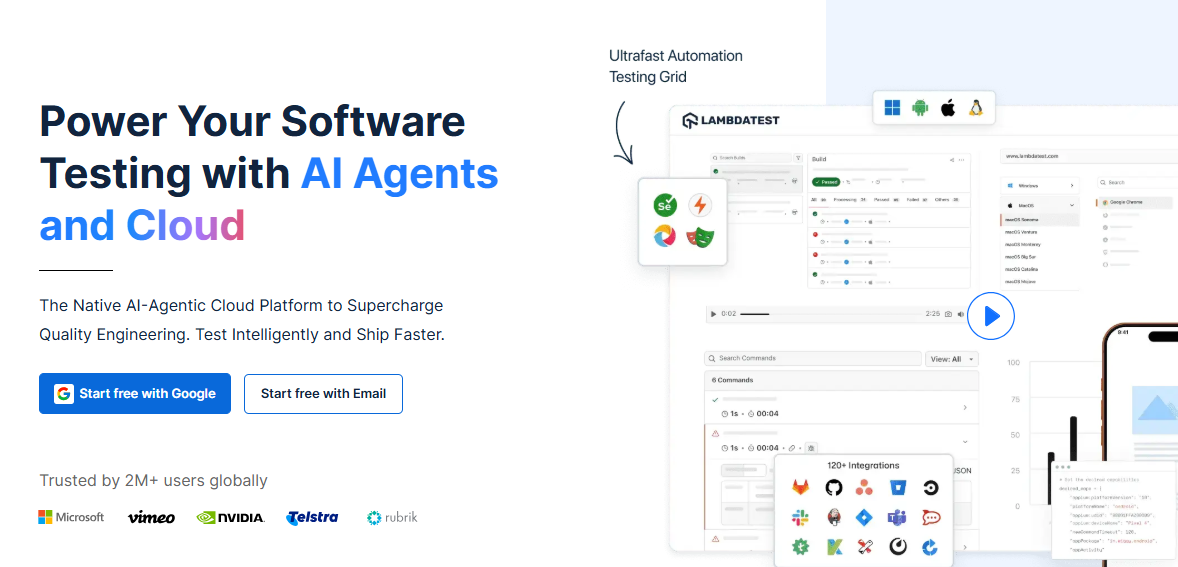
LambdaTest has grown quickly into a full-featured cloud-based app testing tool with a real device cloud, browser testing infrastructure, and an AI layer called KaneAI. Its pricing is generally more accessible than some legacy providers, which makes it popular with mid-size teams.
The platform supports a wide range of frameworks and has built out strong integrations with project management and CI tools, making it easy to embed into existing engineering workflows.
Key Features:
- Real device cloud with 3,000+ Android and iOS devices
- KaneAI for AI-powered test planning and test case authoring
- HyperExecute for blazing fast parallel test execution
- Real-time interactive testing on physical mobile devices
- Support for Appium, Espresso, XCUITest, XCUI, and more
- Integration with Jira, GitHub, Jenkins, and other popular tools
- Smart visual UI testing with automated screenshot comparison
How It Helps With Real Device Cloud Testing:
LambdaTest’s HyperExecute engine makes it notably fast for teams running large regression suites across many real devices in parallel. The KaneAI layer helps teams with less automation experience contribute to test coverage, which expands the effective QA capacity without adding headcount.
Limitations:
- Some users report occasional device availability issues on older or region-specific models
- The volume of features can require a ramp-up period to use effectively
- Customer support response times vary depending on the subscription tier
Best For: Mid-size teams looking for a cost-competitive real device cloud with fast parallel execution and an AI testing layer.
5. Kobiton
Kobiton focuses specifically on cloud device testing on mobile, and has carved out a strong position with its AI-powered testing capabilities and intelligent test execution. It offers both a cloud device farm and an on-premises option for teams with data residency requirements.
The platform includes a feature called scriptless test automation, which allows teams to generate automated test scripts by recording manual sessions on real devices, lowering the barrier to getting automation coverage.
Key Features:
- Real device cloud and on-premises device lab options
- Scriptless automation from recorded manual sessions
- AI-powered test case generation and intelligent test execution
- Appium-compatible automation framework support
- Detailed device logs, crash reports, and performance metrics
- Network condition simulation for testing under poor connectivity
- Integration with major CI/CD platforms and test management tools
How It Helps With Real Device Cloud Testing:
Kobiton is a solid choice for teams that want to move from manual to automated real device cloud testing without a steep scripting investment. The record-to-automate flow means QA engineers can start capturing reusable test coverage from day one, and the on-premises option is meaningful for regulated industries where cloud data storage is restricted.
Limitations:
- Device selection is smaller than BrowserStack or LambdaTest
- The AI features, while useful, are less mature than newer AI-native platforms
- On-premises setup requires more internal infrastructure management
Best For: Teams that need both cloud and on-premises device access, or those transitioning from manual to automated mobile testing.
6. Perfecto
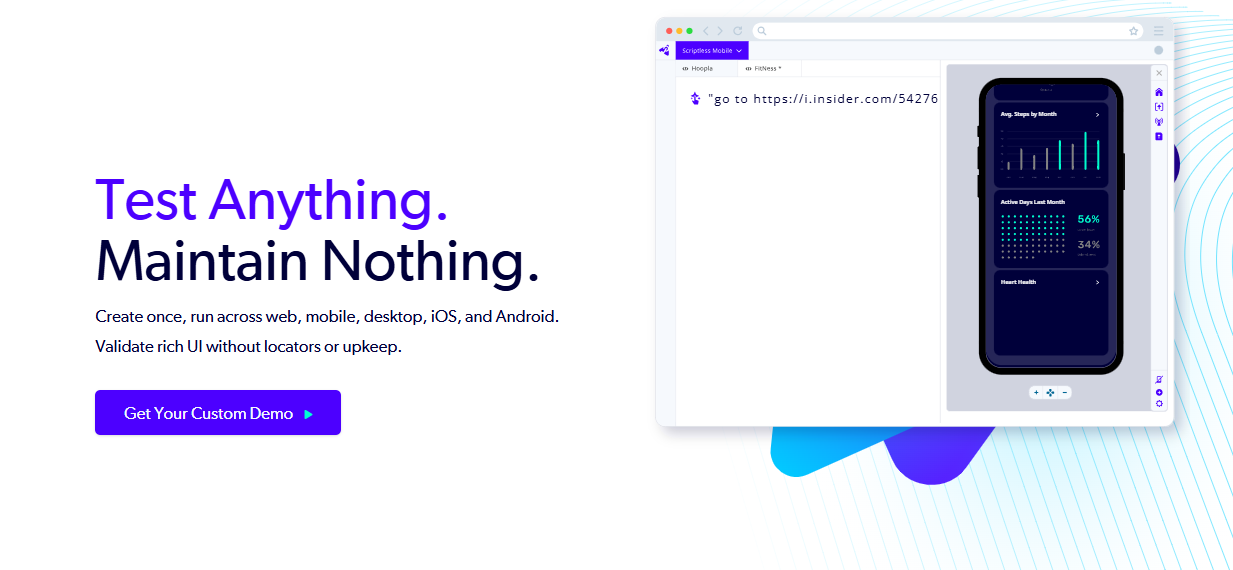
Perfecto, part of Perforce, is an enterprise-grade mobile and web testing platform with a strong focus on compliance, security, and test quality analytics. It is widely used in heavily regulated industries like banking, healthcare, and insurance.
The platform provides a private cloud mobile testing option with dedicated devices, which gives teams more consistent access and reduces test flakiness caused by shared resource contention.
Key Features:
- Private and public real device cloud options for Android and iOS
- AI-powered test analysis and smart test reporting
- Dedicated device access to minimize flakiness from shared pools
- Compliance and security certifications relevant to regulated industries
- Visual testing and cross-device screenshot comparison
- Deep integration with enterprise CI/CD and ALM toolchains
- Performance and network condition testing on real devices
How It Helps With Real Device Cloud Testing:
Perfecto’s private real device cloud is particularly valuable for teams where test reliability is non-negotiable. Dedicated device access means tests are not competing for resources with other users, which significantly reduces non-deterministic failures and makes test results more trustworthy.
Limitations:
- Pricing is positioned at the enterprise end of the market
- Less suitable for smaller teams or startups without enterprise procurement processes
- UI and workflow can feel dated compared to newer platforms
Best For: Enterprise teams in regulated industries that need private device access, audit trails, and enterprise-grade security for their mobile test cloud.
7. HeadSpin

HeadSpin takes a performance-first approach to real device cloud testing. Rather than focusing primarily on functional test execution, it instruments real devices globally to capture detailed performance and experience data, including network behavior, rendering metrics, and third-party service latency.
It is particularly strong for teams that care about real-world user experience quality across different geographies and network environments.
Key Features:
- Global network of real devices across multiple countries and carriers
- AI-powered performance analysis and experience intelligence
- Real network conditions rather than simulated throttling
- Automated root cause analysis for performance regressions
- Support for Appium and other standard automation frameworks
- Session recording with device logs, network traces, and UI metrics
- Integration with observability and analytics tools
How It Helps With Real Device Cloud Testing:
HeadSpin is uniquely useful when the question is not just whether a feature works, but how fast and smoothly it works under real-world conditions. Testing on real devices connected to actual carrier networks in different regions surfaces performance issues that no simulated test environment can reproduce.
Limitations:
- More specialized for performance and experience testing than functional regression coverage
- Higher cost compared to general-purpose device cloud platforms
- Steeper learning curve for teams not focused on performance engineering
Best For: Teams with a strong focus on app performance, user experience quality, and global network behavior across real devices’ carrier connections.
8. AWS Device Farm
AWS Device Farm is Amazon’s managed real device cloud testing service, integrated directly into the AWS ecosystem. It provides access to a curated set of physical Android and iOS devices for both automated testing and manual interactive sessions.
For teams already running infrastructure on AWS, Device Farm offers a natural path to real device cloud testing without adding a new vendor relationship or separate billing.
Key Features:
- Real Android and iOS device access within the AWS console
- Support for Appium, Espresso, XCUITest, and Calabash
- Built-in test report with screenshots, logs, and performance metrics
- Remote access for live manual testing sessions
- Pay-per-use pricing model alongside unmetered device slots
- Native integration with AWS CodePipeline and other AWS developer tools
- Private device fleet option for dedicated device access
How It Helps With Real Device Cloud Testing:
Device Farm fits naturally into AWS-centric engineering organizations. Teams can trigger device tests directly from CodePipeline without managing credentials or third-party integrations, and the IAM-based access control makes it easy to manage permissions within existing security frameworks.
Limitations:
- Device selection is more limited than dedicated cloud device testing providers
- Less feature-rich than purpose-built mobile testing platforms
- AI-assisted testing features are minimal compared to newer platforms
Best For: Engineering teams deeply embedded in the AWS ecosystem that want real device testing without adding a third-party platform dependency.
9. Firebase Test Lab
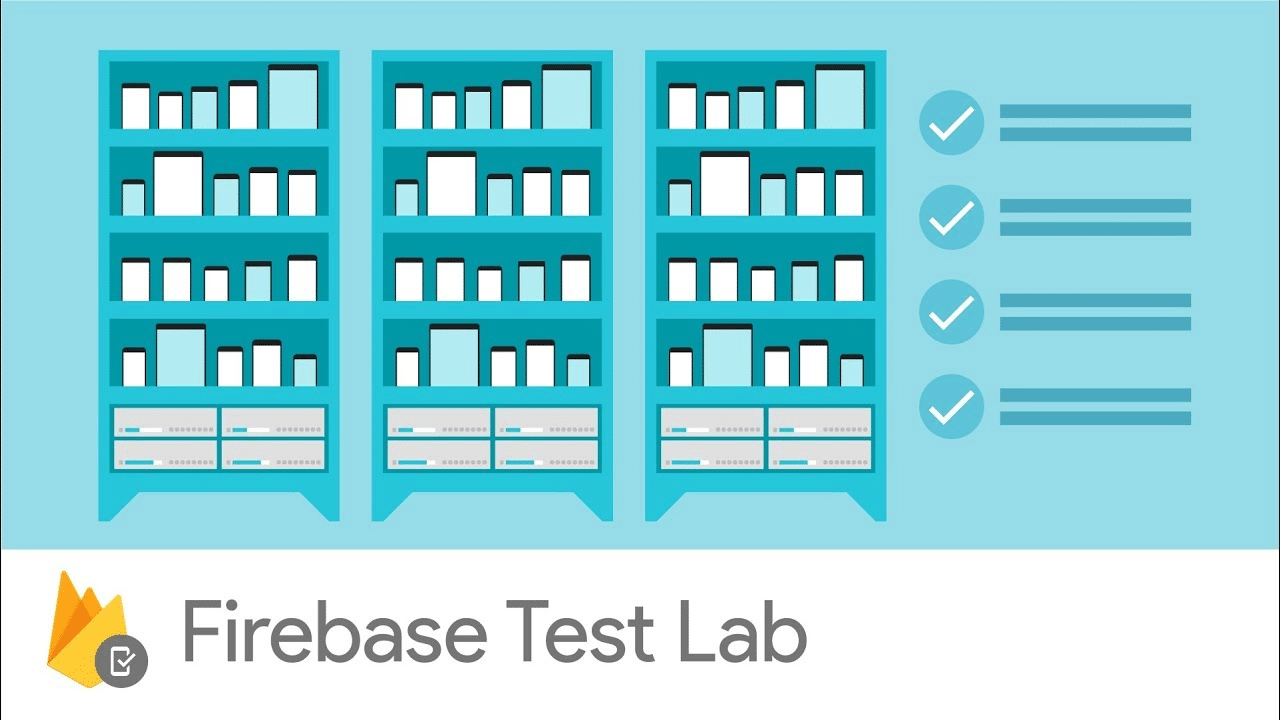
Firebase Test Lab is Google’s cloud-based app testing infrastructure, giving Android and iOS teams access to physical and virtual devices hosted in Google’s data centers. It integrates closely with Firebase and Google Play, making it a natural fit for Android-first development teams.
The Robo test feature is a standout: it automatically crawls your app on real devices without requiring any test scripts, surfacing crashes and broken flows through automated exploration.
Key Features:
- Physical and virtual Android and iOS devices hosted by Google
- Robo test for scriptless automated app crawling and crash detection
- Instrumented test support for Espresso and XCUITest
- Game Loop testing for Unity and Unreal Engine based apps
- Detailed test reports with screenshots, videos, and device logs
- Direct integration with Firebase, Google Play Console, and Android Studio
- Free tier available with daily test limits
How It Helps With Real Device Cloud Testing:
Firebase Test Lab is particularly effective as a first line of defense in a CI pipeline. The Robo test can catch surface-level regressions on real devices without any scripting effort, and the tight integration with Google Play means teams can validate builds before release without leaving the Google toolchain.
Limitations:
- Android coverage is stronger than iOS; iOS support is more limited
- Less suited for complex, multi-step functional test automation at scale
- Customization and reporting depth are more limited than enterprise-focused platforms
Best For: Android-focused teams and those already using Firebase or Google Play that want quick, low-friction real device smoke testing integrated into their release pipeline.
10. Bitbar

Bitbar, now part of the Smartbear portfolio, is a flexible real device cloud testing tool. It supports a wide range of testing frameworks and offers both a public cloud and private on-premises device lab configuration.
Bitbar is strong on framework flexibility and allows teams to bring their existing test automation without significant rework, making it a practical choice for organizations with established testing setups.
Key Features:
- Real device cloud with Android and iOS support
- Broad framework support including Appium, Espresso, XCUITest, and Robotium
- Public cloud and private on-premises deployment options
- Parallel test execution with configurable device groups
- Video recording, logs, and performance data for every test run
- REST API for custom integrations and test triggering
- Integration with Jenkins, GitLab, and other CI systems
How It Helps With Real Device Cloud Testing:
Bitbar’s flexibility makes it approachable for teams with heterogeneous testing setups. The REST API and framework-agnostic design mean it fits into existing pipelines without requiring teams to retool their automation architecture.
Limitations:
- Less AI-native than newer platforms in this space
- UI has been noted as less polished compared to competitors
- Support quality can vary after the Smartbear acquisition
Best For: Teams with existing automation investments that need a flexible, framework-agnostic cloud device testing tool that supports both cloud and on-premises deployment.
Comparison Table: Best Real Device Cloud Testing Tools
| Tool | Real Device Count | AI Features | Framework Support | Best For | Pricing |
|---|---|---|---|---|---|
| Panto AI | 150+ | NLP generation, self-healing, RCA | Appium, Maestro | AI-first mobile QA teams | Free tier; Scale from $999/mo |
| BrowserStack | 3,500+ | Limited | Appium, Espresso, XCUITest | Enterprise device coverage | Usage-based |
| Sauce Labs | Large | Failure analysis, error classification | Appium, Espresso, XCUITest | Cross-platform (mobile + web) | Usage-based |
| LambdaTest | 3,000+ | KaneAI test authoring | Appium, Espresso, XCUITest | Mid-size teams, fast parallel runs | Usage-based |
| Kobiton | Moderate | Scriptless, AI test generation | Appium | Manual-to-automated transition | Custom pricing |
| Perfecto | Moderate | Smart test analysis | Appium, Espresso, XCUITest | Regulated enterprise teams | Enterprise pricing |
| HeadSpin | Global network | Performance intelligence | Appium | Performance and UX testing | Custom pricing |
| AWS Device Farm | Curated | Minimal | Appium, Espresso, XCUITest | AWS-native engineering teams | Pay-per-use |
| Firebase Test Lab | Moderate | Robo test (scriptless crawl) | Espresso, XCUITest | Android teams in Google ecosystem | Free tier available |
| Bitbar | Moderate | Limited | Appium, Espresso, XCUITest, Robotium | Flexible, framework-agnostic teams | Custom pricing |
How to Choose the Cloud Device Testing Tool?
The right choice depends on where your team sits today and where you want to go.
If you are building a cloud-based app testing practice and want to minimize scripting effort from day one, an AI-native platform like Panto AI will get you to meaningful coverage faster.
If you are an enterprise running hundreds of parallel tests across thousands of device configurations, BrowserStack or Sauce Labs give you the infrastructure breadth and ecosystem maturity you need.
Performance-focused teams testing across real devices networks should look seriously at HeadSpin. Teams in regulated industries should evaluate Perfecto.
Android-first teams embedded in the Google ecosystem will find Firebase Test Lab genuinely convenient. And teams that want to stay inside AWS can get far with Device Farm before needing to look elsewhere.
Cloud device testing is no longer optional for serious mobile development. The fragmentation of Android devices alone, combined with the strict hardware integration of iOS, makes emulator-only testing a significant quality risk. Getting the right platform in place early pays dividends across every release cycle.
Conclusion
Real device cloud testing bridges the gap between what emulators show you and what real users actually experience. Each real device mobile automation tool in this list solves a version of that problem, but they differ significantly in how much automation intelligence they bring, how many devices they cover, and how they fit into different team structures and budgets.
The best cloud-based app testing tool is the one your team will actually use consistently, and that means it needs to fit your workflow, not the other way around.