

AI-powered code review is rapidly transforming how modern engineering teams maintain quality, security, and long-term scalability.
While GitLab Duo provides in-platform assistance, organizations are now exploring GitLab Duo alternatives that deliver architectural insight, stronger security detection, and intelligence that extends across repositories and development workflows.
This guide explores the top GitLab Duo alternatives for code review, highlighting tools that move beyond simple suggestions toward meaningful engineering impact.
From cross-repository reasoning and semantic bug detection to workflow automation and human-AI hybrid review models, these platforms represent the next evolution of AI-driven software quality.
So What Is GitLab Duo?
GitLab Duo is GitLab’s AI-powered assistant designed to support developers across the software development lifecycle.
It delivers capabilities such as code suggestions, merge request summaries, vulnerability explanations, and test generation directly within the GitLab interface, allowing teams to accelerate development without leaving their core workflow.
The solution is particularly effective for organizations already standardized on GitLab. Its native integration across repositories, CI/CD, and security tooling helps streamline everyday engineering tasks and reduce context switching during reviews.
Where GitLab Duo Works Well
- Deep, native integration with the GitLab platform
- Helpful automation for merge requests, testing, and security insights
- Faster developer workflows with in-context AI assistance
- Simplified adoption for GitLab-centric engineering teams
Where GitLab Duo Falls Short
- Limited visibility across multiple repositories or external tools
- Minimal architectural or long-term maintainability reasoning
- Less flexibility for multi-platform or hybrid DevOps environments
- Restricted organizational learning beyond individual projects
Because modern engineering quality now depends on security, governance, maintainability, and cross-team intelligence, many organizations are exploring more specialized AI code review platforms.
The following tools represent the most capable GitLab Duo alternatives available today.
Top GitLab Duo Alternatives for Smarter Code Review
1. Panto AI
Panto AI stands out as a purpose-built intelligence layer for engineering quality rather than just an assistant embedded in a single repository.
It focuses on long-term maintainability, architectural reasoning, and cross-project learning that improves over time.
The platform analyzes pull requests, historical commits, and dependency relationships to surface deeper risks that traditional linters miss, while also incorporating security signals typically associated with SCA and SAST analysis.
It further streamlines collaboration through intelligent pull-request summaries and contextual PR conversations, capturing organizational knowledge so repeated mistakes are automatically prevented across teams.
Panto AI delivers context-aware insights that connect security, performance, and maintainability into a single review experience. This enables engineering leaders to move from reactive bug fixing to proactive code health governance.
Key Benefits
- Cross-repository intelligence and pattern detection
- Strong architectural and maintainability insights
- Continuous learning from historical engineering data
- Scales across large distributed teams
Limitations
- Newer platform compared to legacy incumbents
- Requires onboarding for full organizational insight
2. CodeRabbit
CodeRabbit provides conversational AI code reviews directly inside pull requests.
It focuses on readability, logic correctness, and developer education through inline explanations.
The tool integrates with GitHub workflows and automatically summarizes changes to speed reviewer understanding. Its conversational style helps junior developers learn best practices during everyday reviews.
CodeRabbit also highlights potential bugs and security concerns using pattern-based reasoning. This makes it useful for teams wanting lightweight AI assistance without heavy infrastructure changes.
Key Benefits
- Natural language explanations inside PRs
- Quick onboarding with GitHub integration
- Helpful for mentoring junior developers
- Fast automated summaries of changes
Limitations
- Limited architectural depth
- Primarily focused on GitHub ecosystems
3. Snyk Code
Snyk Code delivers security-focused static analysis powered by machine learning inside developer workflows.
It prioritizes early detection of vulnerabilities, unsafe dependencies, and compliance risks before code reaches production.
The engine scans code in real time and integrates directly into CI pipelines.
This ensures security issues are caught before deployment rather than after release.
Snyk’s strength lies in developer-friendly remediation guidance that explains why an issue matters. Teams benefit from reduced security debt and improved regulatory readiness.
Key Benefits
- Strong vulnerability detection accuracy
- Seamless CI/CD integration
- Clear remediation guidance
- Enterprise compliance support
Limitations
- Less focus on maintainability or architecture
- Can generate noise in very large codebases
4. Qodo (formerly CodiumAI)
Qodo is an AI-driven code quality platform, that focuses on test intelligence before review begins.
It emphasizes logical reasoning, behavioral accuracy, and edge-case detection rather than traditional static scanning.
The platform generates meaningful test cases, explains code behavior, and identifies hidden logical flaws that linters often miss.
This shifts quality assurance earlier in the lifecycle and reduces downstream production defects.
Qodo integrates into IDEs and pull request workflows to deliver contextual development insights. Its proactive approach helps teams prevent bugs instead of only detecting them during review.
Key Benefits
- Strong focus on logic correctness and edge-case detection
- AI-generated test cases that improve coverage automatically
- Early feedback directly inside developer workflows
- Reduces production defects before review begins
Limitations
- Less emphasis on security vulnerability detection
- Limited architectural or cross-repository intelligence
5. SonarQube with AI Enhancements
SonarQube provides long-standing static analysis for maintainability, reliability, and security across multiple languages.
Recent AI enhancements improve issue prioritization, remediation clarity, and overall signal accuracy.
It evaluates code quality trends while offering dashboards that track technical debt over time. This visibility helps engineering leaders make informed governance decisions.
AI-assisted prioritization now reduces false positives and highlights higher-risk issues first. That makes SonarQube more actionable within modern CI/CD pipelines.
Key Benefits
- Mature ecosystem and language support
- Strong technical debt visibility
- Enterprise-ready governance dashboards
- Improved prioritization with AI
Limitations
- Setup and maintenance overhead
- Reviews feel less conversational than newer tools
6. Codacy
Codacy enables automated code quality monitoring and enforcement across repositories and teams.
It focuses on consistency, duplication detection, and maintainable coding standards.
The platform integrates with pull requests to block merges when quality thresholds drop. This creates an automated safeguard for engineering discipline.
Codacy analytics provide long-term visibility into quality trends across projects. Managers gain measurable insight into improvement over time.
Key Benefits
- Automated quality enforcement
- Multi-language support
- Useful analytics and reporting
- Easy pull request integration
Limitations
- Limited deep AI reasoning
- Primarily rule-driven analysis
7. ReviewPad
ReviewPad automates pull request workflows using programmable governance and review rules.
It helps teams standardize approvals, reviewer assignments, and policy enforcement.
Automation reduces manual coordination overhead in large repositories.
This improves consistency and review turnaround time.
While not purely AI-driven, ReviewPad complements intelligent review tools effectively. It ensures reliable execution of engineering processes at scale.
Key Benefits
- Strong workflow automation
- Custom governance and review rules
- Saves reviewer coordination time
- Integrates with GitHub processes
Limitations
- Limited native AI intelligence
- Requires rule configuration effort
8. Bito AI Code Review
Bito delivers AI-generated summaries, explanations, and refactoring guidance to accelerate understanding.
It prioritizes developer productivity and rapid comprehension over deep static analysis.
Developers can explore unfamiliar code through conversational queries and contextual insights. This is especially useful during onboarding or legacy maintenance.
Bito integrates into IDEs and repositories for real-time assistance. Its primary value lies in speed rather than governance depth.
Key Benefits
- Strong natural language explanations
- Helpful for developer adoption and onboarding
- IDE and repository integrations
- Fast code comprehension
Limitations
- Limited security or architectural depth
- Not designed for enterprise governance
9. PullRequest.com
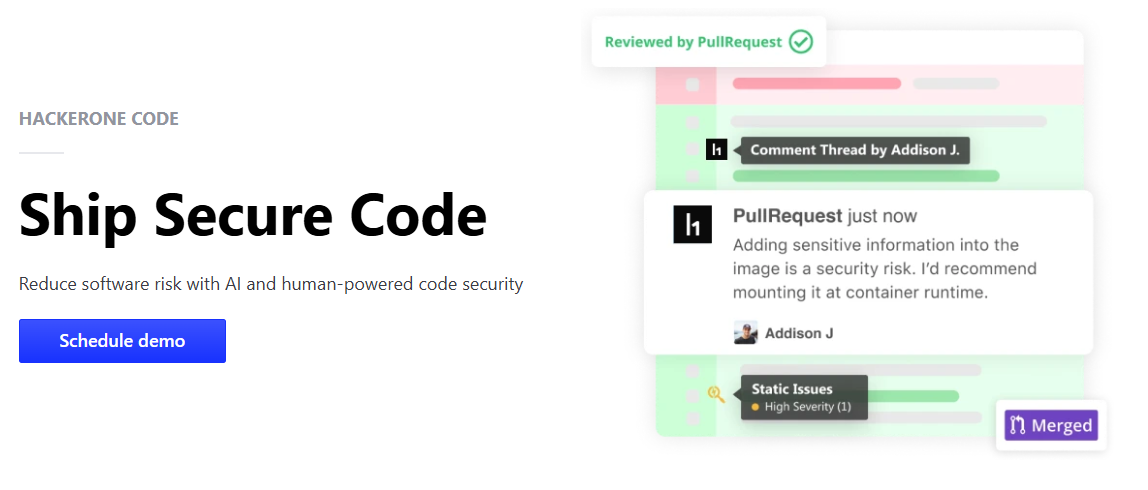
PullRequest.com combines experienced human reviewers with AI-assisted analysis.
It provides external code review capacity for teams that need expert oversight.
Organizations use the service to scale review quality without expanding internal hiring. AI tooling helps reviewers prioritize high-risk changes efficiently.
This hybrid model strengthens engineering feedback for fast-growing teams.
It is particularly valuable for startups lacking senior review bandwidth.
Key Benefits
- Access to expert human reviewers
- Scalable review capacity
- AI-assisted prioritization
- Useful for growing teams
Limitations
- Ongoing service pricing
- Less internal knowledge capture
10. Amazon CodeGuru Reviewer
Amazon CodeGuru Reviewer uses reinforcement learning to detect inefficiencies, bugs, and performance issues in pull requests. It is purpose-built for development teams operating within AWS environments.
The service highlights concurrency risks, resource misuse, and optimization opportunities. This helps improve runtime efficiency before deployment.
Tight AWS integration simplifies adoption for cloud-native architectures. However, flexibility outside AWS ecosystems remains limited.
Key Benefits
- Strong performance optimization insights
- Native AWS integration
- Automated PR analysis
- Scales with cloud workloads
Limitations
- Best suited for AWS environments
- Less focus on maintainability governance
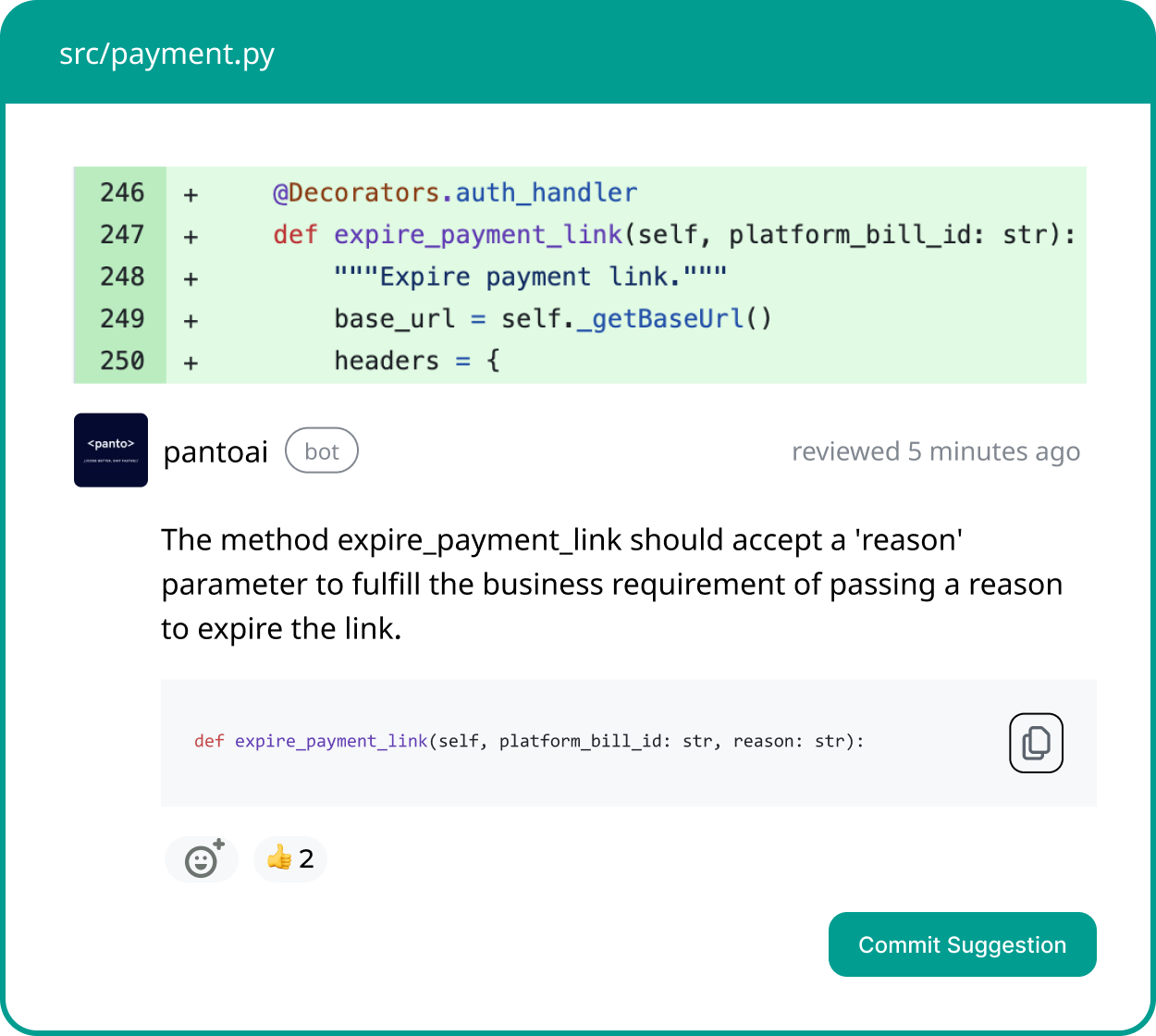
Your AI Code Review Agent
Panto reviews every pull request with business context, architectural awareness, and consistent standards—so teams ship faster without hidden risk.
- ✓ Aligns business intent with code changes
- ✓ Catches bugs and risk in minutes, not days
- ✓ Hallucination-free, consistent reviews on every commit
Comparison Table of Top GitLab Duo Alternatives
| Tool | Primary Strength | Best For | Key Limitation |
|---|---|---|---|
| Panto AI | Cross-repo intelligence & maintainability | Engineering org governance | Newer platform |
| CodeRabbit | Conversational PR reviews | GitHub teams & learning | Limited depth |
| Snyk Code | Security vulnerability detection | Compliance-focused teams | Less architectural insight |
| Qodo | Logic correctness & AI test generation | Preventing defects before review | Limited security focus |
| SonarQube AI | Technical debt tracking | Enterprise governance | Setup complexity |
| Codacy | Quality automation | Multi-repo monitoring | Rule-driven limits |
| ReviewPad | Workflow automation | Process governance | Minimal AI |
| Bito AI | Code understanding | Developer productivity | Limited security depth |
| PullRequest.com | Human + AI reviews | Scaling startups | Service cost |
| Amazon CodeGuru | Performance optimization | AWS-native teams | Ecosystem lock-in |
Final Thoughts
Choosing the right GitLab Duo alternative depends on whether your priority is security, productivity, governance, or long-term maintainability. Many tools solve one piece of the problem, but few provide deep organizational intelligence.
Panto AI leads this space by moving beyond inline suggestions toward true engineering insight. For teams serious about scalable code quality, it represents the next evolution of AI-driven code review.