

Tabnine provides context-aware code completion while prioritizing privacy, but it focuses on generating code rather than analyzing it.
Many teams supplement their autocomplete assistant with AI review tools that automate code checking and security scanning.
The Tabnine alternatives below include both types: some emphasize broad AI code completion (like Copilot or Codeium), while others automate pull-request review and compliance checks (like Panto or Semgrep).
We describe each Tabnine alternative’s core strengths and best use cases to help you pick the right mix of code review and completion tools for your team.
The 10 Best Tabnine Alternatives
Below are ten tools that compete with or complement Tabnine, each with unique capabilities. For eachpf these Tabnine alternatives, we describe its core strength, ideal use cases, and scenarios where it may outperform Tabnine.
1. Panto AI: Business-Context Code Review
Best for: Security-conscious and compliance-driven teams
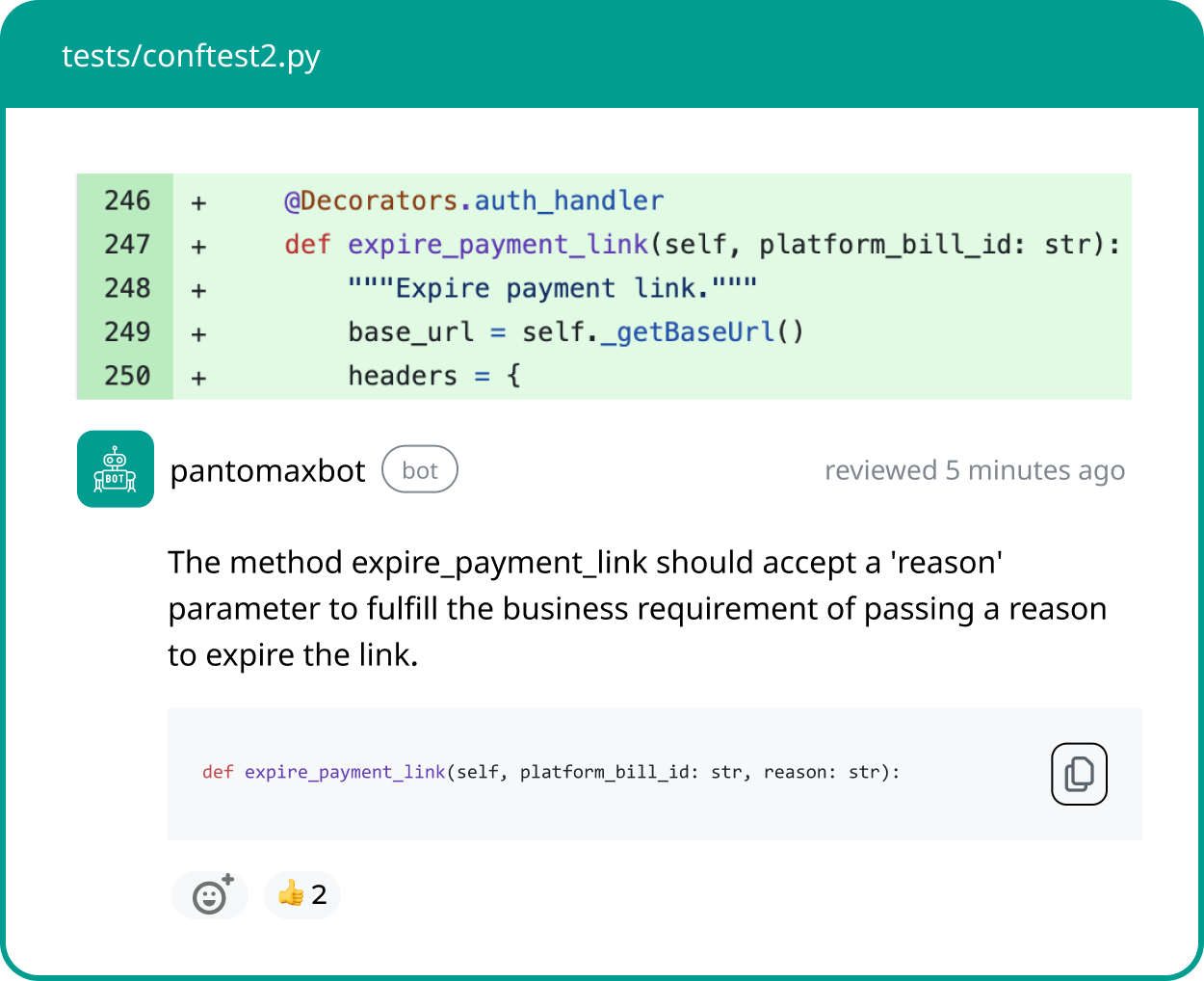
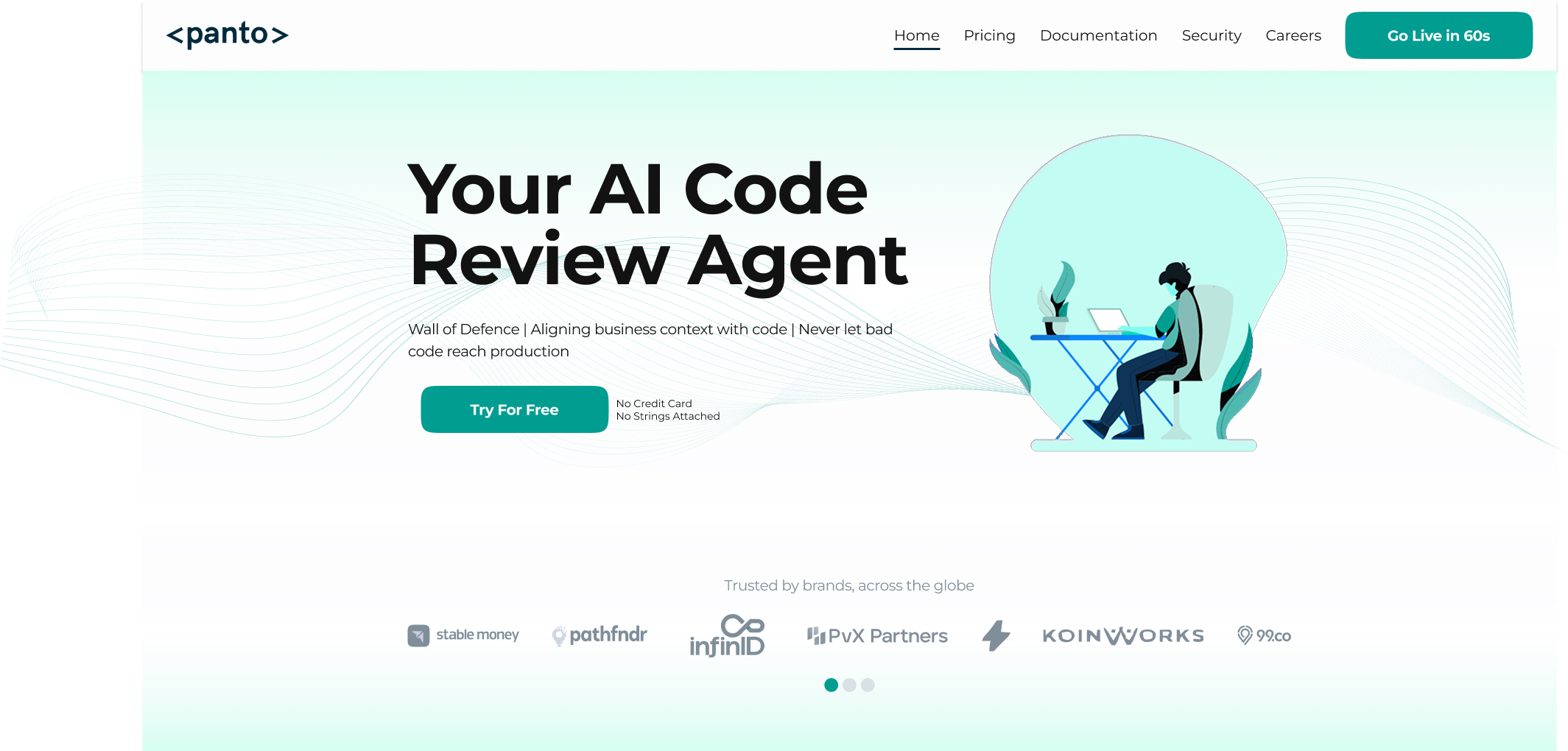
Panto AI transcends traditional code assistance by combining AI-powered code review with business context alignment.
It runs 30,000+ security and quality checks across 30+ programming languages, identifying systemic risks, compliance violations, and architectural drift before code reaches production.
Unlike Tabnine’s focus on pure autocompletion, Panto contextualizes code changes with Jira and Confluence data to align development with business intent.
This makes Panto a compelling choice for organizations where code quality, code security and code compliance are top priorities.
For example, Panto’s reviews are already used by hundreds of developer teams (including Fortune 500 companies) to enforce security and code standards. It catches issues that Tabnine’s completion-only approach might miss, helping regulated teams ship code safely.
In effect, Panto acts more like an AI reviewer double-checking your pull requests. It integrates with secret scanners and bug trackers, functioning as a full-featured code checking tool, not just a completion engine.
2. GitHub Copilot: AI-Powered Code Autocomplete
Best for: General-purpose development (especially in GitHub environments)
GitHub Copilot remains the gold standard for AI pair programming. It integrates with VS Code, JetBrains, and other IDEs, leveraging OpenAI’s Codex to suggest complete lines and entire functions based on your code context.
Copilot excels in broad, multi-language development and is ideal for teams deeply integrated with the GitHub ecosystem. By providing intelligent in-editor assistance and even a chat interface for debugging, it can significantly speed up everyday coding tasks.
Many developers report Copilot saves time on boilerplate and repetitive code, and its continuous training on public repos often gives it an edge over Tabnine’s suggestions. In fact, GitHub reports developers using Copilot achieve roughly 50% faster merges.
Copilot runs on GitHub’s cloud and requires a login, whereas Tabnine can run fully offline. This gives Tabnine an advantage in air-gapped or high-security environments.
However, Copilot’s model is constantly updated with new code patterns, often outpacing Tabnine’s static model in suggesting up-to-date idioms. Teams using VS Code or GitHub natively will find Copilot a powerful Tabnine alternative to Tabnine for broad AI code completion.
3. Amazon Q Developer (CodeWhisperer): Cloud-Native AI Coding
Best for: AWS-focused cloud and infrastructure development
Amazon CodeWhisperer (now Amazon Q Developer) is AWS’s own AI coding assistant. It integrates tightly with AWS services like Lambda, S3, and DynamoDB, offering code snippets optimized for cloud environments plus built-in vulnerability scanning.
This AWS-native alignment means Q Developer suggests highly relevant code in cloud workflows. It’s ideal for teams building on AWS: by incorporating AWS best practices and security into its suggestions, CodeWhisperer often produces more relevant AWS-specific snippets than Tabnine.
For example, it can auto-complete CloudFormation templates or IAM policies in context — tasks a general model would miss. This makes it a natural fit for AWS-heavy development teams.
CodeWhisperer offers a free tier with optional paid upgrades, unlike Tabnine’s fixed licensing. This freemium model can be more cost-effective for AWS-centric teams, since you can scale up usage without a large upfront fee.
For projects deeply tied to AWS, Q Developer’s specialized completions and security checks generally outperform Tabnine’s generic review suggestions.
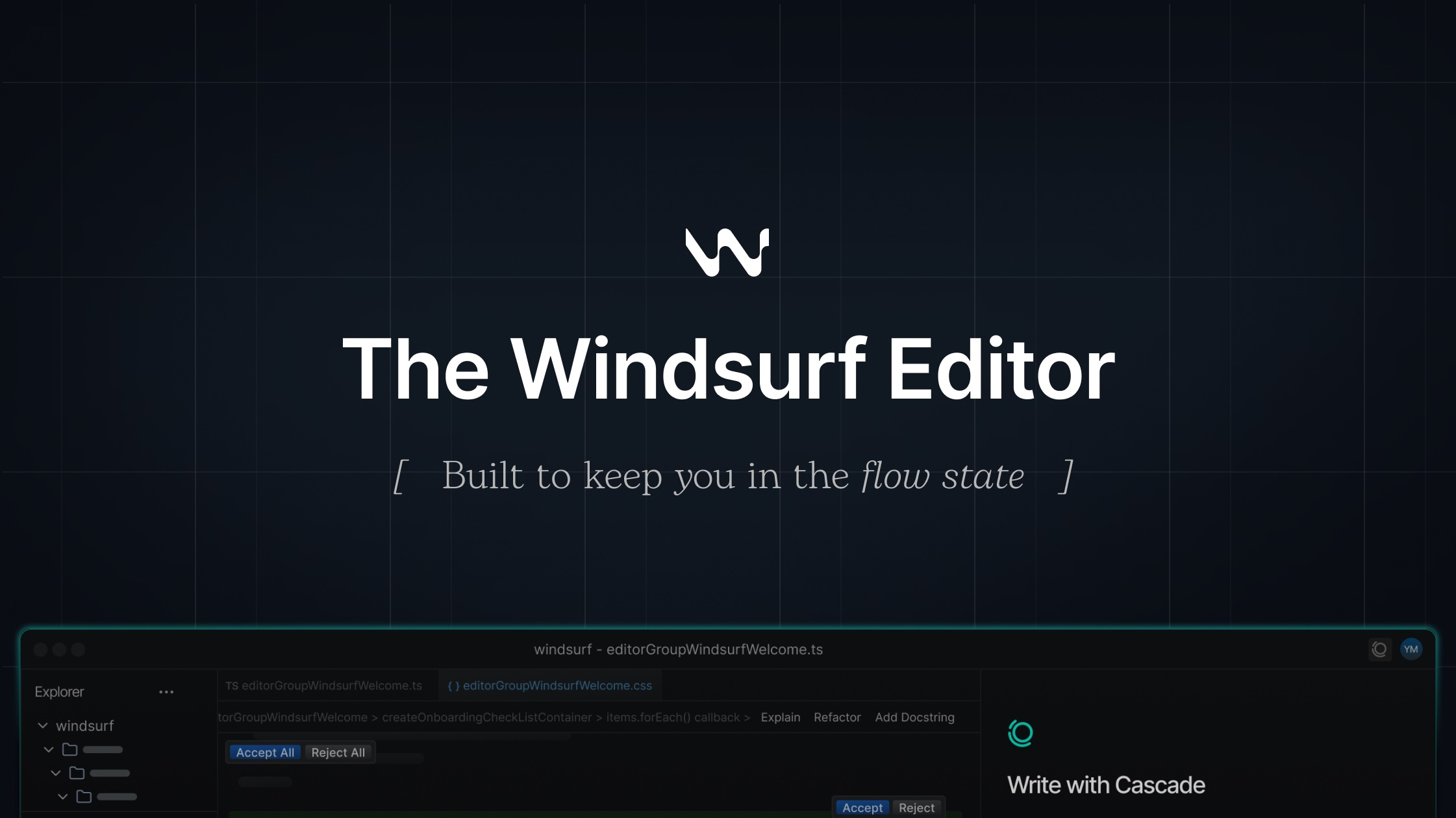
4. Codium (Windsurf): Fast Free Autocomplete
Best for: Freelancers, students, and privacy-first teams
Codeium (now known as Windsurf) is a fast-growing free AI assistant supporting over 70 programming languages. It offers unlimited code completions, refactorings, and even code summaries under a very generous free tier.
Importantly, Codeium provides a self-hosting option so that all code can be processed locally for maximum privacy.
In practice, Codeium is an excellent choice for small teams or solo developers who want a cost-effective, high-speed autocomplete solution with minimal setup.
Its free tier and optional self-hosting mean teams can try it without commitment. Many find Codeium’s suggestions as robust as Tabnine’s across projects, effectively matching its relevance at no cost.
Codeium’s strength is also its simplicity: it works out-of-the-box with no fee, making it extremely easy to adopt. By contrast, Tabnine’s full-featured capabilities generally require a paid subscription.
Over time, Codeium’s community-driven development has kept its suggestions sharp and its features expanding. As a result, Codeium is one of the best for rapid code completion and refactoring.
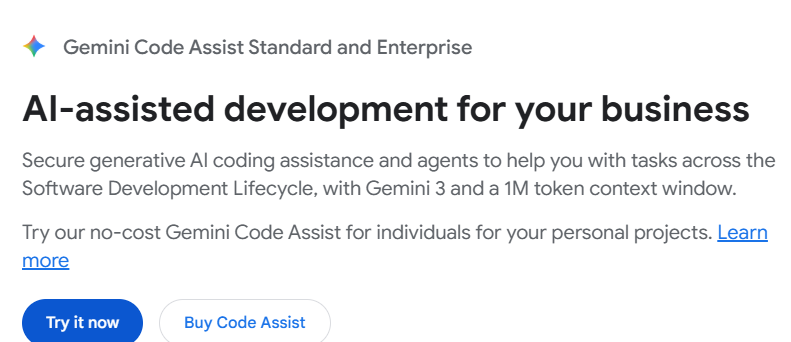
5. Google Gemini: Conversational AI Coding Companion
Best for: Complex problem solving and learning-oriented development
Google’s Gemini AI (formerly Bard) combines advanced reasoning with code knowledge. It provides detailed explanations and step-by-step guidance, making it valuable for tackling complex logic and learning new concepts.
Unlike specialized autocomplete engines, Gemini shines as a conversational assistant: developers can ask it to explain code, debug issues, or brainstorm solutions.
It’s ideal for teams wanting an AI that goes beyond simple code generation to providing insight and guidance. Teams can ask Gemini to refactor tricky functions, review algorithms, or explain architecture concepts.
In practice, Gemini serves as a knowledgeable pair programmer for tasks that Tabnine’s pattern-based model cannot handle. Note that Gemini runs in the cloud, so latency may be higher than local tools like Tabnine, but its reasoning capabilities are unmatched.
As a Google product, Gemini is already integrated into developer tools (e.g. Android Studio and VS Code plug-ins), signaling a push into coding workflows.
While Gemini is newer and still evolving, its multimodal language understanding makes it stand out when a coding task demands NLP reasoning or explanations—capabilities Tabnine does not provide.
6. Sourcegraph Cody (Amp): Enterprise-Scale Code Assistant
Best for: Large monorepos and enterprise engineering teams
Sourcegraph Cody (and its newer Amp version) is tailored for enterprise-scale codebases. It uniquely leverages Sourcegraph’s search index to comprehend the entire repository, not just the files you have open.
This whole-repo context allows Cody to give highly accurate, context-aware suggestions and answer queries that span multiple services.
For very large teams or complex monorepos, Sourcegraph’s approach to code completion and QA greatly outperforms simpler IDE assistants like Tabnine. Cody can answer questions about any module in your repo, not just the current file.
In practice, teams with massive codebases find Sourcegraph’s insights and search much more powerful — Tabnine cannot search across files, so for repository-wide questions, Cody can be the difference between minutes and hours spent locating an issue.
Using Cody requires a Sourcegraph Enterprise setup and may involve additional licensing. Compared to Tabnine’s quick plugin installation, Cody is more complex to configure.
For organizations already using Sourcegraph, Cody adds powerful code-wide intelligence; for others it may be overkill. In any case, its deep integration with large codebases makes it a unique alternative for teams needing both AI completion and global search capabilities.
7. Microsoft IntelliCode: Smarter IntelliSense
Best for: .NET/C# developers in Visual Studio
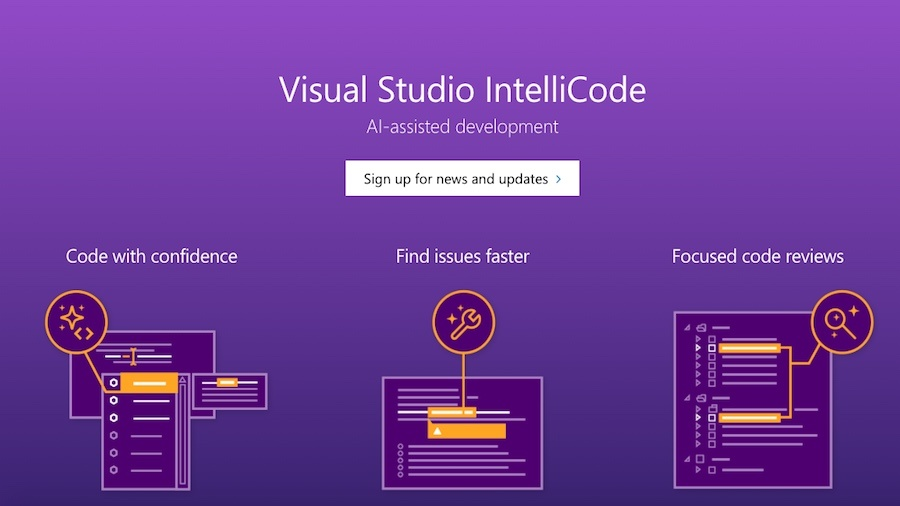
Microsoft IntelliCode builds on Visual Studio/VS Code’s IntelliSense with reinforcement learning, ranking completions by best practices learned from thousands of projects.
It provides contextual signature and style recommendations tuned to your code patterns. IntelliCode is essentially a seamless upgrade for development teams in the Microsoft ecosystem: it enhances the familiar editor experience (for C#, .NET, C++) with smarter auto-completion at no additional cost.
Compared to Tabnine, IntelliCode works natively in Microsoft’s tools without extra setup or cost. It excels at learning from both your code and large open-source repos to provide highly relevant suggestions within the IDE.
Because IntelliCode is free with Visual Studio/Code, Microsoft-centric teams get AI assistance at no cost, whereas Tabnine often requires a subscription.
However, IntelliCode only supports Microsoft languages, so teams working across diverse stacks will still need a more general AI assistant like Tabnine or one of these Tabnine alternatives for non-.NET code.
8. Semgrep: Flexible Static Code Analysis
Best for: Security-focused DevOps and policy enforcement
Semgrep is an open-source static analysis tool that automates code review and security checks across your codebase. Teams define custom rule sets to detect vulnerabilities, unsafe patterns, or style violations as part of CI/CD.
This gives complete control over what gets flagged, making Semgrep ideal for security-minded or DevSecOps teams.
Unlike Tabnine’s autocomplete role, Semgrep enforces code quality gates and compliance policies at commit time, preventing risky code from reaching production.
Semgrep complements completion tools by focusing exclusively on code checking. In practice, teams often write code with Tabnine and then run Semgrep in CI as a gatekeeper.
Semgrep does not generate code, but it ensures that new code conforms to the team’s quality and security standards before merging.
9. Codacy: Automated Code Quality and Style
Best for: Maintaining consistent code standards
Codacy automates code quality and style checks to help teams maintain standards over time. It supports 30+ languages and integrates with GitHub, GitLab, and Bitbucket to provide continuous feedback on pull requests.
This is ideal for teams that want to enforce coding conventions, complexity limits, and maintainability metrics.
By highlighting issues like code duplication, cyclomatic complexity, or lint rule violations, Codacy keeps large codebases clean and consistent without extra reviewer effort.
Codacy covers code health in ways Tabnine does not: it provides dashboards for trends in coverage or complexity, and can auto-fix some trivial lint issues.
Developers might rely on Tabnine to write code faster and on Codacy to enforce style and quality, giving a complete solution for code health and completion.
10. Greptile: Semantic Code Graph Analysis
Best for: Enterprise teams with complex systems
Greptile as a tool, builds a semantic graph of your entire code repository, capturing cross-file and cross-service dependencies. It goes beyond line-by-line review by surfacing hidden architectural impacts, dependency changes, and systemic risks.
Greptile provides compliance dashboards and is SOC2 certified, making it suited for very large enterprises where deep understanding of code changes is critical.
In summary, Greptile’s focus on big-picture code intelligence means it can catch issues that many other assistants (including Tabnine) might miss.
By analyzing how changes propagate across an entire system, Greptile flags cross-cutting concerns and architecture violations that Tabnine would not see. This makes it particularly valuable for organizations with sprawling, interconnected codebases.
Greptile’s self-hosted architecture appeals to large enterprises. While Tabnine also has on-prem options, Greptile’s semantic graph analytics are unique.
Teams often use Tabnine for autocomplete and Greptile as a secondary reviewer that checks for architecture and system-wide impacts.
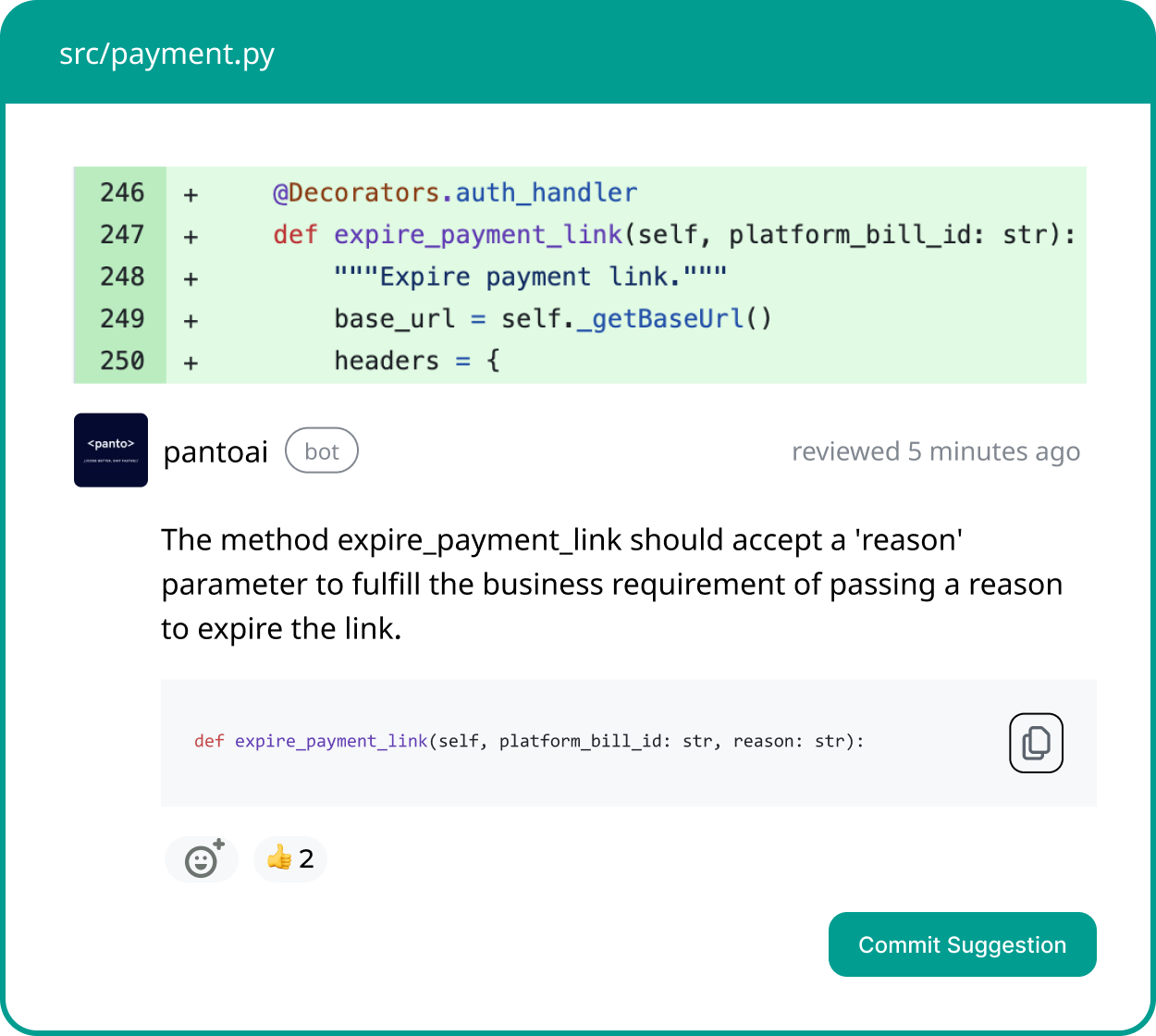
Your AI Code Review Agent
Panto reviews every pull request with business context, architectural awareness, and consistent standards—so teams ship faster without hidden risk.
- ✓ Aligns business intent with code changes
- ✓ Catches bugs and risk in minutes, not days
- ✓ Hallucination-free, consistent reviews on every commit
Tabnine Alternatives Comparison Table
| Tool | Core Focus | Code Scope | Best For | Pricing |
|---|---|---|---|---|
| Panto AI | Context-driven AI code review | Entire repository | Security/compliance-driven teams | Custom enterprise |
| GitHub Copilot | Context-aware code completion | Open file context | General dev teams (GitHub users) | $10/user/mo (Pro) |
| Amazon Q Developer | AWS-optimized code suggestions | AWS/cloud projects | AWS-native teams | Freemium (free + $19 Pro) |
| Codeium (Windsurf) | Fast, free AI autocomplete | Local session | Freelancers, students, startups | Freemium (free + $15 Pro) |
| Google Gemini | Conversational AI coding companion | IDE/Cloud | Learning, research, complex tasks | Subscription (GCP AI Plan) |
| Sourcegraph Cody (Amp) | Enterprise AI assistant (search) | Entire repository | Large enterprises and monorepos | Usage-based (credits) |
| IntelliCode | ML-enhanced IntelliSense | Editor/IDE scope | Microsoft/.NET development teams | Free (with VS/Code) |
| Semgrep | Custom static code analysis | CI/CD pipelines | DevSecOps/security teams | Open-source (free) |
| Codacy | Automated code quality enforcement | Repository-wide | Teams enforcing coding standards | Freemium (Pro tier) |
| Greptile | Semantic code graph analysis | Entire repository | Large-scale systems & enterprises | Enterprise (~$30+/user/mo) |
Choosing the Right Tabnine Alternative
- Solo Developers & Small Teams (1–5 devs): Codeium or GitHub Copilot are great for quick setup and powerful autocomplete across many languages. They offer fast AI code completion at minimal cost.
- AWS-Centric Projects: Amazon Q Developer (CodeWhisperer) is tailored to AWS cloud and infrastructure code, speeding up development in AWS environments. It provides AWS-specific suggestions and security checks that Tabnine wouldn’t.
- Microsoft Ecosystem: IntelliCode provides immediate AI assistance for C#, .NET and VS Code workflows at no additional cost. It seamlessly integrates into Visual Studio, making it an easy Tabnine alternative for Windows/.NET teams.
- Security & Compliance Focus: Panto AI or Semgrep ensure code is reviewed with business context and custom security rules, catching issues before deployment.
Panto adds a business-aware review layer, while Semgrep enforces coding/security policies. - Large Enterprises: Sourcegraph Cody, Greptile or Panto AI deliver whole-repository intelligence and code governance needed for massive monorepos and regulated organizations.
They provide codebase-wide analysis, making them more suitable than Tabnine when breadth of insight and compliance are critical.
Each Tabnine alternative offers a different blend of code review and AI code completion capabilities. Teams should consider their primary goals (speed, security, maintainability) and technology stack (GitHub, AWS, Microsoft, etc.) when selecting the best fit.