

Code quality assurance remains non-negotiable for engineering teams shipping reliable, maintainable software at scale.
While SonarQube dominated the static analysis landscape, modern workflows demand AI-powered insights, lower false positives, and faster velocity.
This guide explores twelve superior SonarQube alternatives that offer automation, precision, and the complete developer experience.
Understanding SonarQube: What It Offers & What It Lacks
What SonarQube Does Well
SonarQube remains a solid tool for code quality and security scanning across 35+ programming languages. It supports automated code review, PR decoration, and CI/CD integration with GitHub, GitLab, Azure DevOps, and Bitbucket.
The platform provides continuous inspection, detects bugs, code smells, vulnerabilities, and now includes AI CodeFix for automated remediation. SonarQube excels at code coverage, duplicate code detection, and complexity analysis with 6,500+ built-in rules.
Its free Community Edition makes it accessible for small teams and open-source projects without upfront licensing costs. Recent updates (2025.6) added Swift support, faster JavaScript/TypeScript analysis (40% faster), and better supply chain security.
What SonarQube Doesn’t Deliver
- Setup & Adoption: Requires complex configuration and steep learning curve, discouraging rapid deployment across distributed teams.
- AI & Conversational Review: Lacks native AI-powered feedback—relies on static comments and basic IDE integration instead of intelligent dialogue.
- Advanced Security Features: Taint analysis, C/C++ analysis, and secrets detection restricted to paid Developer, Enterprise, or Data Center editions.
- Fast Feedback Loops: Report generation is time-consuming, slowing down development velocity in fast-moving environments.
- Custom Standards: Limited custom rule creation prevents teams from encoding organization-specific coding standards easily.
- Enterprise Pricing: Licensing scales with lines of code analyzed—prohibitively expensive for large codebases and distributed teams.
- Alert Quality: Excessive “code smell” warnings without intelligent prioritization, creating alert fatigue and forcing manual triage overhead.
- False Positive Filtering: Lacks sophisticated AI-powered false positive reduction compared to modern alternatives, increasing manual review burden.
- User Experience: Outdated UI and steep learning curve frustrate teams unfamiliar with static analysis concepts.
- Infrastructure Demands: Requires significant server resources and high memory consumption, demanding dedicated infrastructure investment.
- PR Integration: Basic pull request feedback without contextual business logic alignment or risk prioritization like next-gen tools.
- Automated Fixes: AI CodeFix is a recent addition and nowhere near as sophisticated as purpose-built code review platforms.
The 2026 Code Quality Market: What Teams Demand Now
Modern engineering teams operate under unprecedented pressure: ship faster, maintain zero-defect quality, reduce security vulnerabilities, and comply with evolving regulations—all simultaneously.
Code quality tools must now be force multipliers that amplify developer productivity rather than bottlenecks that slow shipping velocity.
The 2026 market demands platforms that understand business context, prioritize exploitable vulnerabilities, integrate seamlessly into daily workflows, and deliver actionable insights in seconds—not hours.
Teams want auto-remediation capabilities that close the gap between detection and resolution, eliminating busywork and enabling developers to focus on architecture and logic.
They demand transparency in pricing, flexible deployment models (cloud or on-premise), and compliance-first design that works across regulated industries without compromise.
SonarQube, built for the 2000s model of centralized code review and manual quality audits, simply cannot deliver on these expectations without fundamental architectural redesign.
The 12 Best SonarQube Alternatives for 2026
1. Panto AI – AI Code Review Agent
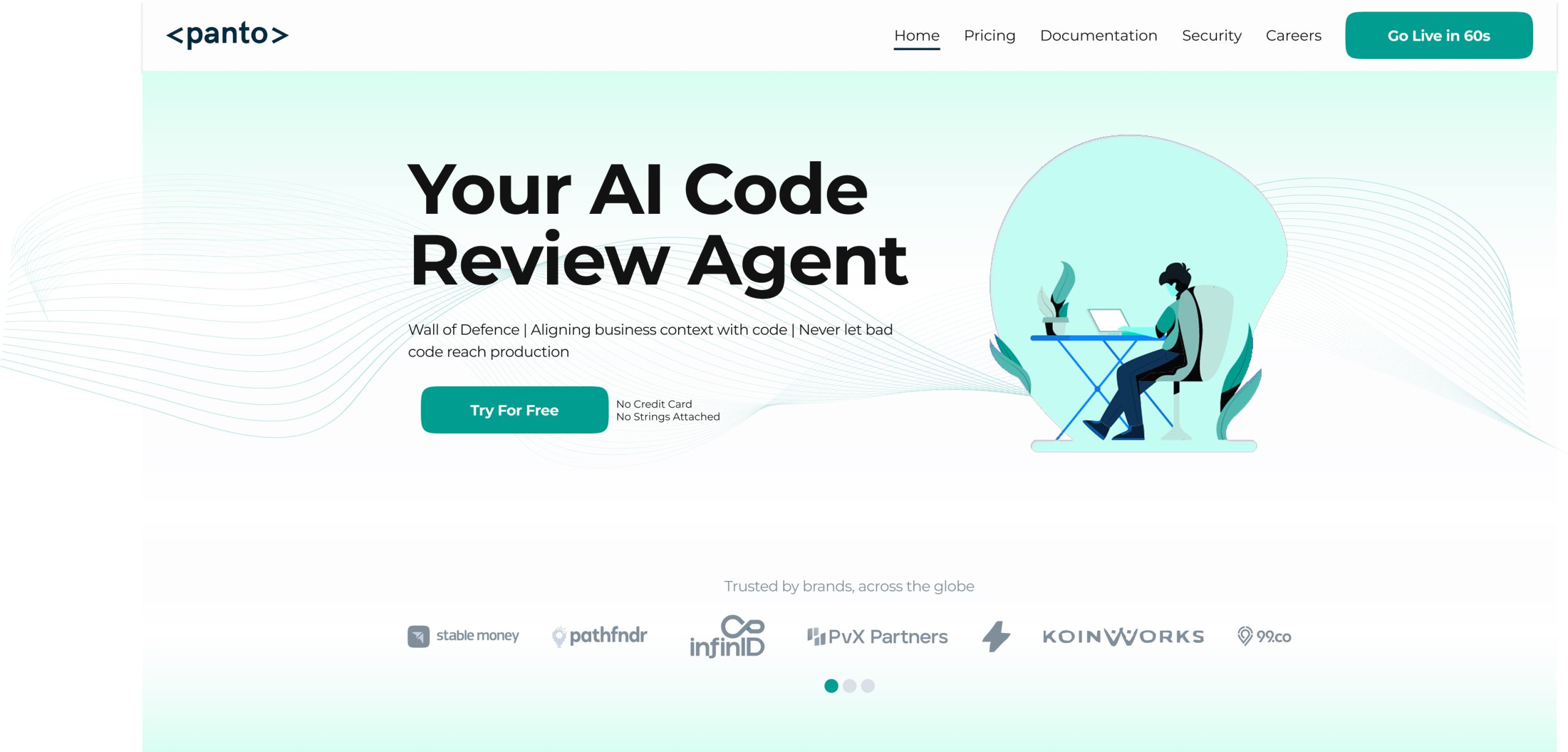
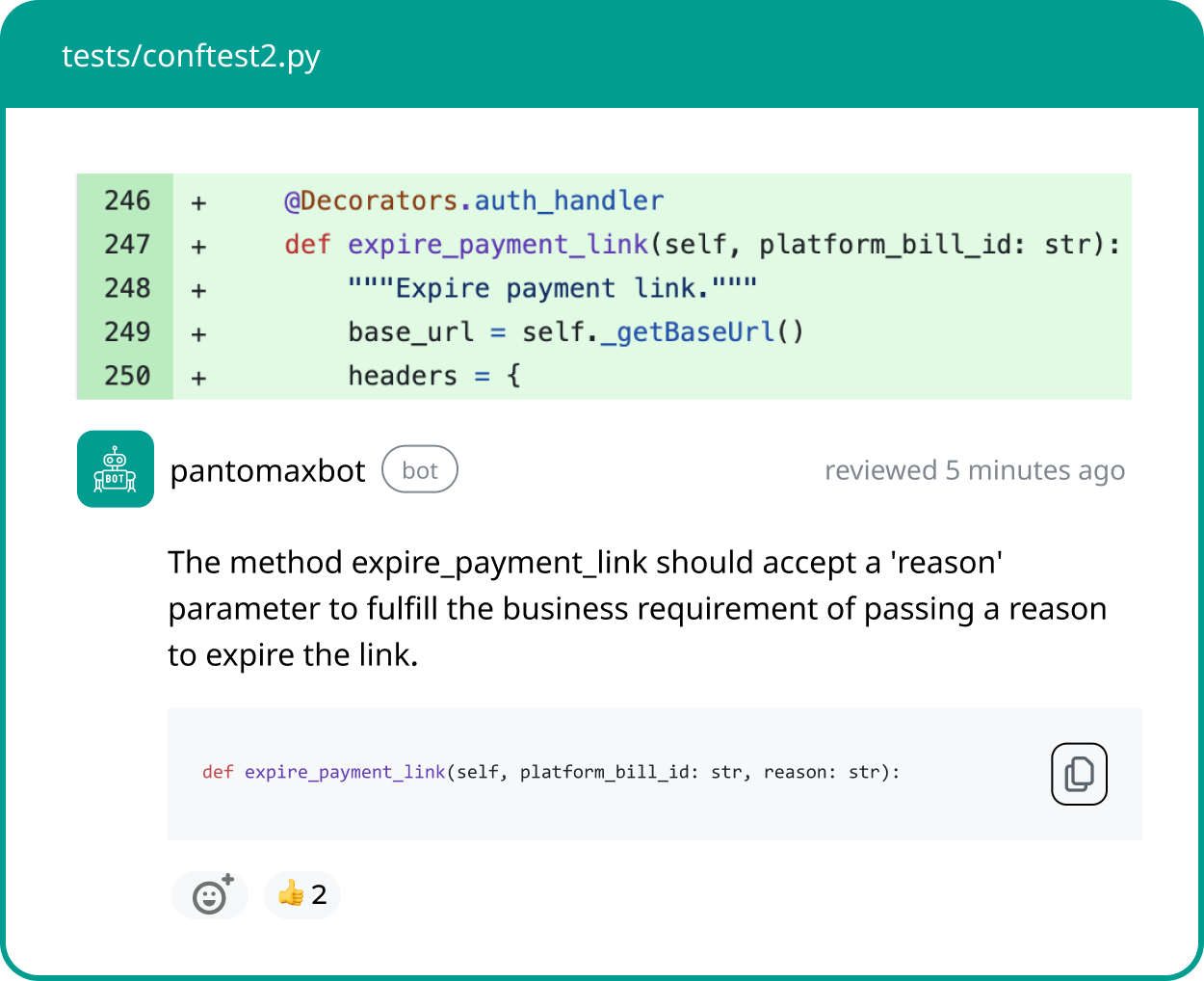
Panto AI redefines automated code review by combining business context with technical analysis for intelligent PR summaries. Unlike traditional SAST tools, Panto generates summaries in seconds and enables conversational feedback directly within pull requests.
The platform supports 30+ languages, conducts 30,000+ security checks, offers zero code retention, and maintains CERT-IN compliance certification. The chat feature transforms code review from monologue to dialogue, reducing reviewer cognitive load significantly.
With 500+ developers actively using Panto and 5M+ lines of code reviewed, it demonstrates production-grade reliability. On-premise deployment flexibility ensures data security for compliance-sensitive organizations.
2. CodeAnt AI – Real-Time Code Intelligence
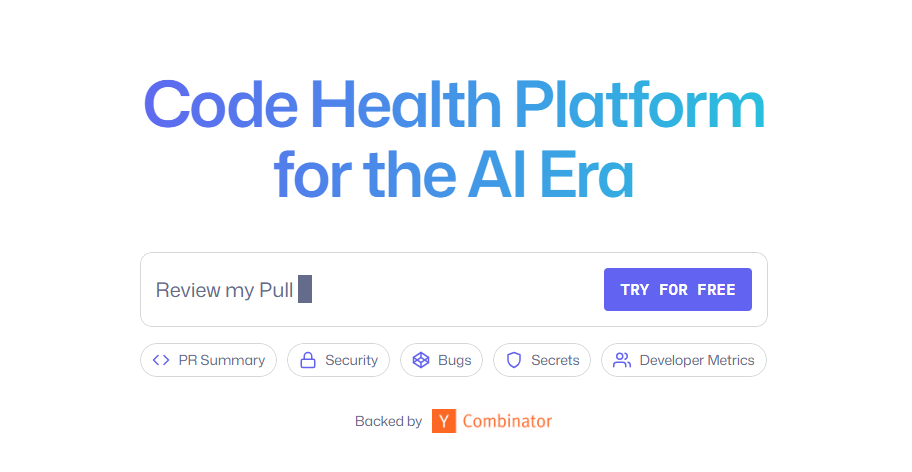
CodeAnt AI serves high-velocity teams requiring instant, context-aware feedback without workflow disruption. The platform excels at identifying actionable security risks through AI models trained on real production vulnerabilities.
It integrates seamlessly with GitHub, GitLab, and Bitbucket for automatic pull request analysis. Line-by-line reviews flag genuine security issues while filtering noise, enabling developers to focus on critical fixes.
The free tier supports unlimited open-source repositories, lowering barriers for community projects. Pricing starts at $99 per team for private repositories, making it accessible to mid-size teams.
3. Codacy – Multi-Language Coverage at Scale
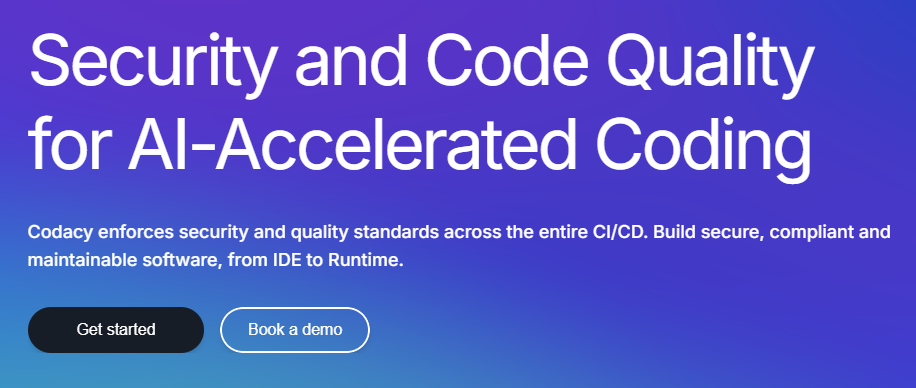
Codacy stands out for analyzing 49 programming languages across SAST, secret detection, and IaC scanning. The platform delivers PR feedback with ML-powered false positive reduction ensuring developers see only high-confidence issues.
Code quality gates enforce coding standards automatically, preventing code that violates thresholds from merging. Smart false positive triage learns from team feedback, continuously improving signal-to-noise ratio.
Pricing is $21 per developer per month for teams, scaling affordably with engineering growth. The free plan supports open-source projects, making it ideal for distributed development communities.
4. DeepSource – Automated Code Fixes
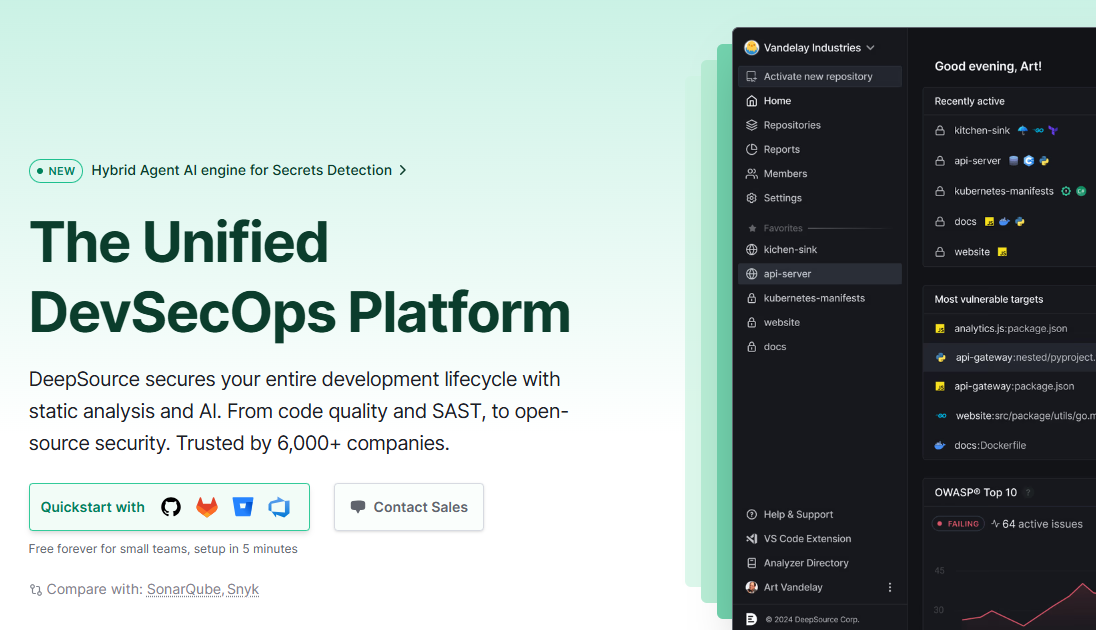
DeepSource uniquely prioritizes automated remediation over detection, reducing manual refactoring workload by 30-40%. The platform’s autofix feature resolves formatting, unused variables, and performance antipatterns automatically.
Static analysis integrates directly into IDEs and CI/CD workflows, catching issues before PR submission. With a 5% false positive ceiling, DeepSource balances precision with coverage across 16+ languages.
The platform supports both cloud and on-premise deployments for security-conscious enterprises. Starting at $10 per developer monthly, DeepSource delivers enterprise-grade automation at mid-market pricing.
5. CodeQL – GitHub-Native Semantic Analysis
CodeQL enables teams to query code like databases, identifying vulnerability patterns across entire repositories. Custom query support empowers security teams to encode organization-specific risks and code quality.
The platform excels for GitHub Advanced Security users, offering native integration without configuration overhead. CodeQL’s query-based approach yields fewer false positives than pattern-matching alternatives through semantic code analysis.
Free for open-source projects and included with GitHub Advanced Security for enterprises. CodeQL eliminates additional licensing costs for teams already invested in GitHub’s security ecosystem.
6. Snyk Code – Developer-Friendly SAST
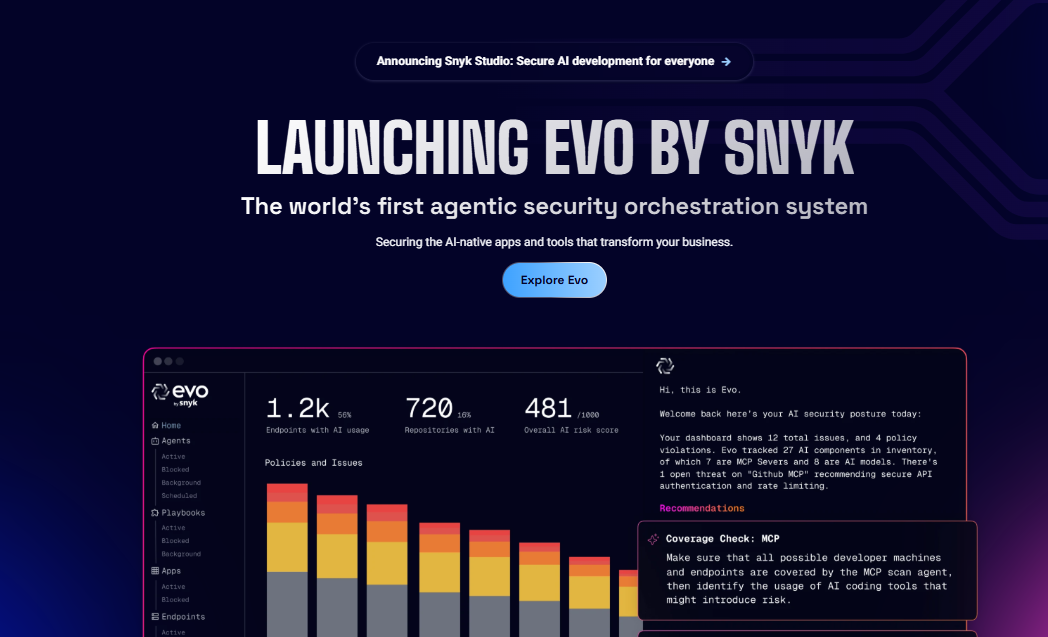
Snyk Code prioritizes developer experience by embedding security insights directly into IDEs and pull requests. The platform combines SAST, SCA, container scanning, and IaC analysis into unified remediation workflows.
Auto-fixes reduce mean-time-to-resolution by 50%, while priority-scored findings tackle exploitable risks first. CLI and IDE extensions provide real-time feedback during coding, enhancing code quality.
Multi-platform language support spans 20+ languages, serving polyglot engineering teams effectively. Snyk’s freemium model provides basic SAST scanning at zero cost, scaling to enterprise tiers.
7. Veracode – Enterprise-Grade Coverage
Veracode is the industry benchmark for comprehensive application security, supporting 100+ programming languages and binary code formats. The platform’s <1.1% false positive rate—industry-leading precision—eliminates noise-driven alert fatigue completely.
Integrated SAST, DAST, and SCA provide full-spectrum vulnerability detection across development, testing, and production. IDE integration enables developers to fix issues in-context, while dashboards provide executives with compliance status.
The policy-driven architecture enforces organizational standards automatically across all codebases. It’s the default choice for regulated industries: financial services, healthcare, and government.
8. Checkmarx One – Comprehensive AppSec Platform
Checkmarx One delivers SAST, DAST, SCA, IaC scanning, and secrets detection under one unified platform. The platform achieves 90% faster scanning than alternatives while maintaining 80% lower false positives through advanced data-flow analysis.
Incremental scanning modes analyze only modified code, accelerating CI/CD workflows without sacrificing depth. Developer assist features provide fix guidance contextually within IDEs and pull requests.
Rapid deployment under 5 minutes eliminates implementation bottlenecks for teams.Enterprise licensing scales with application portfolio size, ideal for AppSec teams managing complexity.
9. JetBrains Qodana – IDE-Native Intelligence
Qodana brings JetBrains IDE intelligence to CI/CD pipelines, leveraging built-in inspections from IntelliJ IDEA, WebStorm, and PyCharm. Native support for 60+ languages makes Qodana the default for JetBrains ecosystem users.
Quality gates enforce coverage thresholds and inspection profiles, preventing non-compliant code from merging. Insights dashboards aggregate findings across projects, enabling teams to prioritize technical debt effectively.
Code coverage analysis identifies untested critical sections in Java, Kotlin, PHP, JavaScript, and TypeScript. Pricing starts at $6 per active contributor monthly, making Qodana one of the most affordable scalable solutions.
10. Fortify Static Code Analyzer (SCA) – Legacy Code Mastery
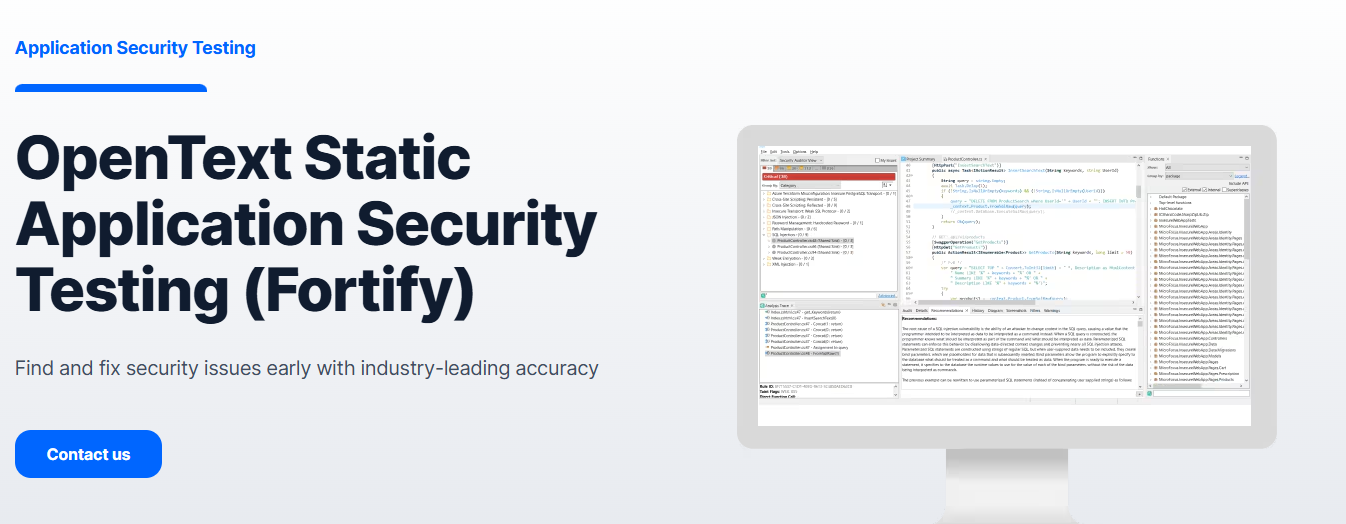
Fortify SCA specializes in analyzing complex legacy codebases, supporting 33+ languages and identifying 1,511 vulnerability categories. Symbolic execution and data-flow analysis uncover subtle exploitable flaws that pattern matching completely misses.
Reinforcement learning powered audit assistant automates prioritization, reducing manual audit workload and enabling consistent triage. Fortify’s CI/CD integration (Jenkins, Azure DevOps, GitHub) enables shift-left security during development.
Enterprise licensing and white-glove professional services support mission-critical applications. It’s the go-to choice for organizations with stringent compliance requirements and complex security needs.
11. Semgrep – Lightweight, Fast, Open
Semgrep provides blazingly fast static analysis through lightweight AST-based scanning, completing analysis in under 10 seconds. Custom rule syntax enables teams to encode proprietary coding standards and security patterns efficiently.
With 2,500+ community-contributed rules in Semgrep Registry and 30+ language support, teams benefit from collective intelligence. Open-source deployment flexibility accommodates air-gapped environments and compliance-restricted organizations.
Pricing remains transparent: free for individuals, custom pricing for enterprises.
Semgrep appeals to teams valuing transparency, control, and community-driven rule development over black-box solutions.
12. Cycode ASPM – AI-Driven Risk Intelligence
Cycode combines native SAST, SCA, IaC, and secrets scanning with AI agents automating vulnerability discovery and remediation. The platform’s Risk Intelligence Graph correlates findings across tools, prioritizing exploitable vulnerabilities.
Agentic AI automates Change Impact Analysis, Risk Intelligence, and Fix & Remediation tasks traditionally requiring manual code review. CI/MON tool secures CI/CD pipelines with runtime protection and build artifact integrity checking.
Enterprise-grade visibility spans code, cloud infrastructure, and supply chain risks comprehensively. Cycode positions itself as the unified AppSec operating platform for modern engineering teams.
Detailed Comparison Table
| SonarQube alternatives | Key Strength | Languages | Auto-Fix | Pricing | False Positive Rate | Deployment |
|---|---|---|---|---|---|---|
| Panto AI | AI-Powered PR Reviews | 30+ | Yes | Free Trial + Paid | <2% | Cloud + On-Premise |
| CodeAnt AI | Real-Time Code Insights | 30+ | Yes | Free + $99/team | Low | Cloud |
| Codacy | 49 Language Support | 49 | Limited | Free + $21/dev | Medium | Cloud |
| DeepSource | Automated Fixes | 16+ | Yes | Free + $10/dev | <5% | Cloud + On-Premise |
| CodeQL | GitHub Integration | 15+ | No | Free (OSS) | Very Low | Cloud |
| Snyk Code | Developer-First | 20+ | Yes | Free + Custom | Low | Cloud + On-Premise |
| Veracode | Enterprise Focus | 100+ | Limited | Enterprise | <1.1% | Cloud + On-Premise |
| Checkmarx One | Comprehensive Coverage | 30+ | No | Enterprise | Low | Cloud + On-Premise |
| JetBrains Qodana | IDE Integration | 60+ | Yes | Free + $6/dev | Medium | Cloud + On-Premise |
| Fortify SCA | 1511 Vulnerabilities | 33+ | No | Enterprise | Medium | Cloud + On-Premise |
| Semgrep | Fast & Lightweight | 30+ | Limited | Free + Custom | Low | Cloud + On-Premise |
| Cycode ASPM | AI Risk Intelligence | 30+ | Yes | Enterprise | Low | Cloud + On-Premise |
How to Choose Your SonarQube Replacement
For AI-Powered Automation
Panto AI and CodeAnt AI excel at intelligent PR reviews with minimal configuration overhead.
- Both platforms leverage proprietary AI models to deliver accurate, context-aware feedback without noise.
- They automate code review bottlenecks that traditionally required experienced senior engineers.
For Enterprise Scale
Veracode, Fortify, and Checkmarx One deliver comprehensive coverage across 100+ languages with built-in compliance.
- These platforms scale to enterprise complexity while maintaining precision and reducing operational overhead.
- They’re designed for organizations managing thousands of applications across global teams.
For Developer Experience
DeepSource, Snyk Code, and JetBrains Qodana prioritize IDE integration, auto-fixes, and reduced alert fatigue.
- These tools maximize developer velocity while maintaining code quality standards throughout development.
- They transform code review from a bottleneck into a seamless workflow enhancement.
For Budget-Conscious Teams
Codacy, Qodana, and Semgrep offer scalable pricing ($6-21 per developer monthly) without compromising depth.
- These alternatives democratize enterprise-grade analysis for growing teams with limited budgets.
- They prove that cost-effective solutions don’t require sacrificing accuracy or language coverage.
For DevSecOps Innovation
Cycode ASPM and Snyk bring agentic AI, supply chain security, and continuous risk posture management.
- These platforms represent the next generation of application security beyond traditional static analysis.
- They address emerging threats across the entire software development and deployment lifecycle.
Migration Checklist: Transitioning from SonarQube
- Evaluate language and framework coverage for your primary tech stack, ensuring full language support.
- Test false positive rates on real repositories to confirm alignment with your team’s tolerance threshold.
- Map existing quality gates and policies to your new platform for seamless standard enforcement.
- Assess integration depth with your IDE, version control, and CI/CD tooling for workflow acceleration.
- Calculate TCO across licensing, implementation, and training comparing three-year commitments.
- Run parallel trials (SonarQube + replacement) for 4-6 weeks, measuring impact on developer velocity and security metrics.
Final Recommendation
Code quality has transitioned from back-office compliance to competitive differentiators. Teams that ship faster with fewer defects, maintain lower defect exposure, and empower developers to enforce their own quality standards.
Modernizing your code quality infrastructure isn’t optional—it’s the foundation for sustained velocity and reduced risk at scale.
Choose SonarQube alternatives like Panto AI, CodeAnt AI or Cycode, that aligns with your technical architecture, team composition, and business priorities, then commit to full implementation.
The 90-day migration window may seem aggressive, but teams that execute decisively see immediate returns: faster feedback loops, fewer false alarms, higher developer satisfaction, and measurably better code quality metrics within 12 weeks.
Your 2026 engineering roadmap should include this transition—the compounding benefits justify the investment completely.