

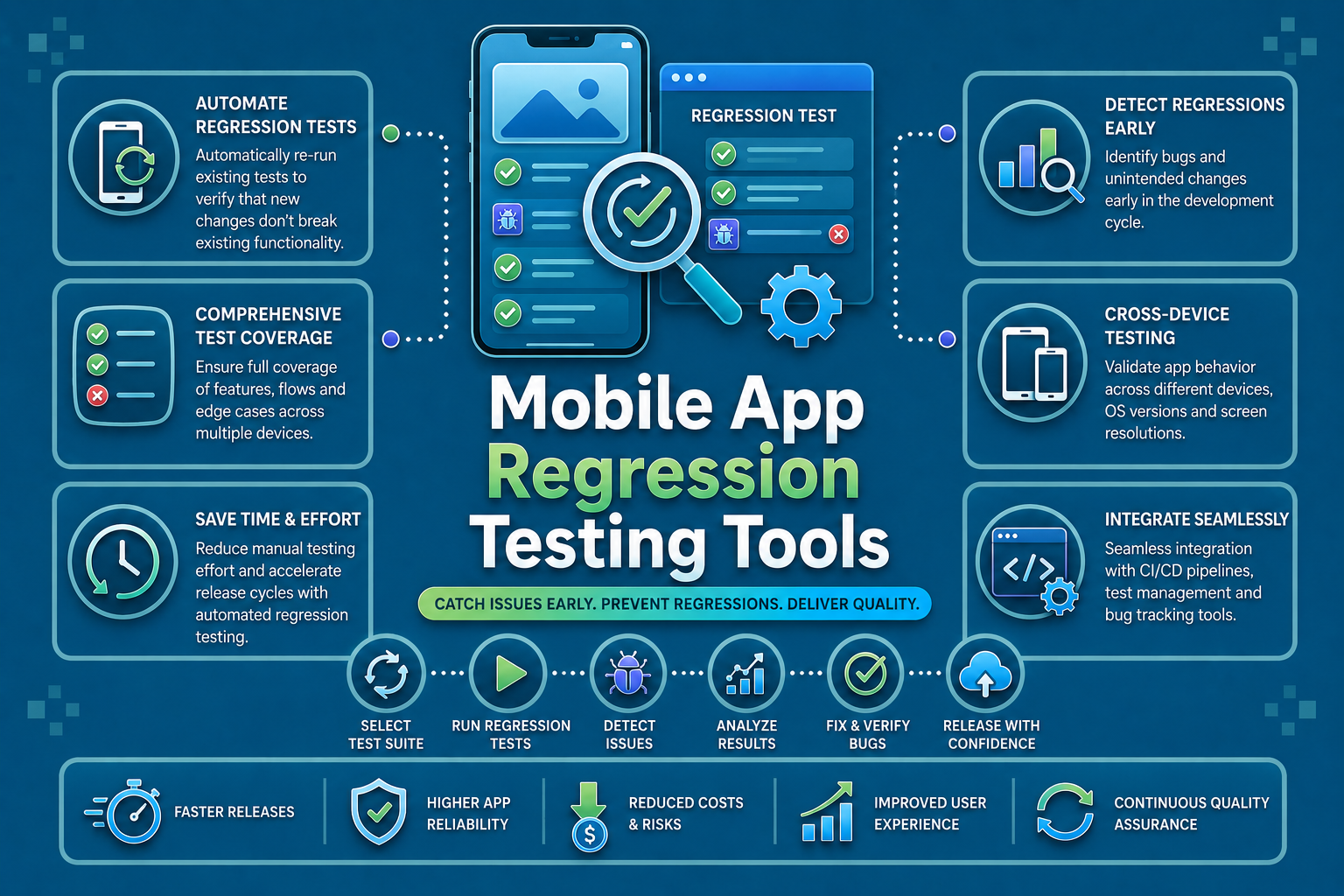

Mobile app regression testing has become one of the most critical parts of modern app delivery. With teams shipping updates daily, and sometimes multiple times a day, even small code changes can unintentionally break existing functionality on iOS, Android, or both.
Automated regression testing helps mobile teams quickly validate that core features still work across devices, reducing release risk and giving developers the confidence to ship faster.
This guide covers the 10 best mobile app regression testing tools in 2026, comparing their features, mobile support, strengths, limitations, and pricing.
Key Tools:
- Panto AI: Best for AI-first mobile regression testing with natural-language test creation and self-healing.
- Playwright: Best for fast, code-first web regression with strong CI support.
- Selenium: Best for teams that need maximum framework flexibility and broad browser support.
- Detox: Best for React Native teams needing reliable native mobile regression.
- Katalon Studio: Best for teams that want web, mobile, API, and desktop testing in one platform.
- mabl: Best for AI-driven test maintenance and scalable regression workflows.
- Testim: Best for smart locators, self-healing tests, and faster test authoring.
- Applitools: Best for visual regression testing across devices and screen sizes.
- testRigor: Best for plain-English test creation with low-maintenance regression.
- TestComplete: Best for enterprise teams needing desktop, web, and mobile coverage.
10 Best Mobile App Regression Testing Tools In 2026
1. Panto AI
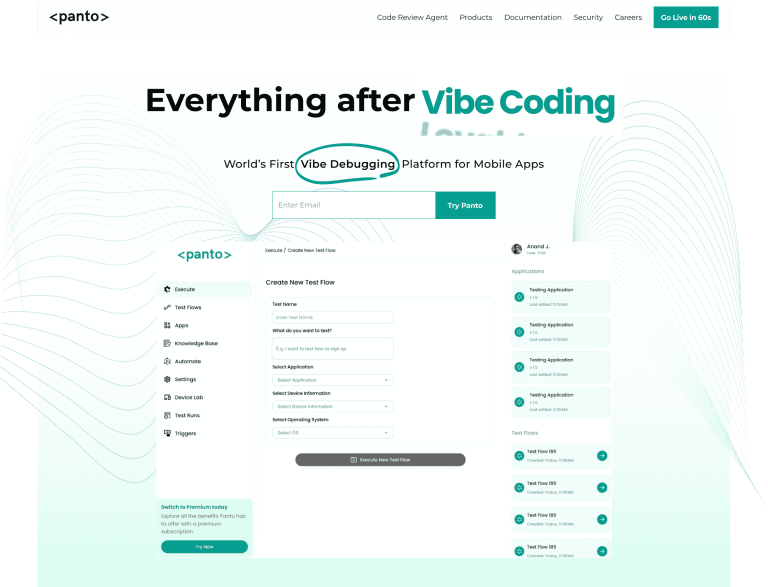
Panto AI is a modern AI-first QA platform built for teams that want natural-language test creation, self-healing tests, and faster failure triage without living inside brittle scripts all day.
Its no-code automation, AI automation, and self-healing product pages position it as a strong regression option for mobile and broader QA workflows.
Features:
- Natural-language or no-code test creation.
- Self-healing for flaky selectors and broken steps.
- Human-readable failure summaries and faster triage.
How It Helps In Regression Testing:
It reduces the time spent rewriting tests after UI changes and makes repeat runs easier to understand when something fails. That matters most in regression suites that run often and need quick maintenance turnaround.
It is purpose-built for mobile regression, generating Maestro and Appium scripts from natural language and running them on device farms without hallucinations.
Limitations:
It is newer than some legacy frameworks, so teams that prefer a long-established code-first ecosystem may still lean toward Selenium or Playwright. That is an adoption trade-off rather than a product weakness.
Pricing:
Panto AI lists a Free plan at $0, a Scale plan at $999/month, and Enterprise pricing by contact.
2. Playwright
Playwright is one of the strongest choices for developers who want fast, reliable browser regression tests with modern tooling.
It supports Chromium, WebKit, and Firefox, and its test runner bundles assertions, isolation, parallelization, and rich reporting.
Features:
- Cross-browser support across Chromium, Firefox, and WebKit.
- Test generator for recording actions and improving locators.
- Auto-waiting and web-first assertions to reduce flaky waits.
How It Helps In Regression Testing:
Playwright shines when you need repeatable UI tests that can run in CI with fewer timing issues. Its locator generation and automatic waiting make the suite easier to keep stable as the app evolves.
For mobile regression, it supports mobile viewport emulation and can complement Appium-based native testing in a shared CI pipeline.
Limitations:
It is still a framework, not a full QA platform, so you will need engineering discipline for test architecture, reporting, and maintenance. It is best suited to teams comfortable with code.
Pricing:
Playwright is open source and free to use.
3. Selenium
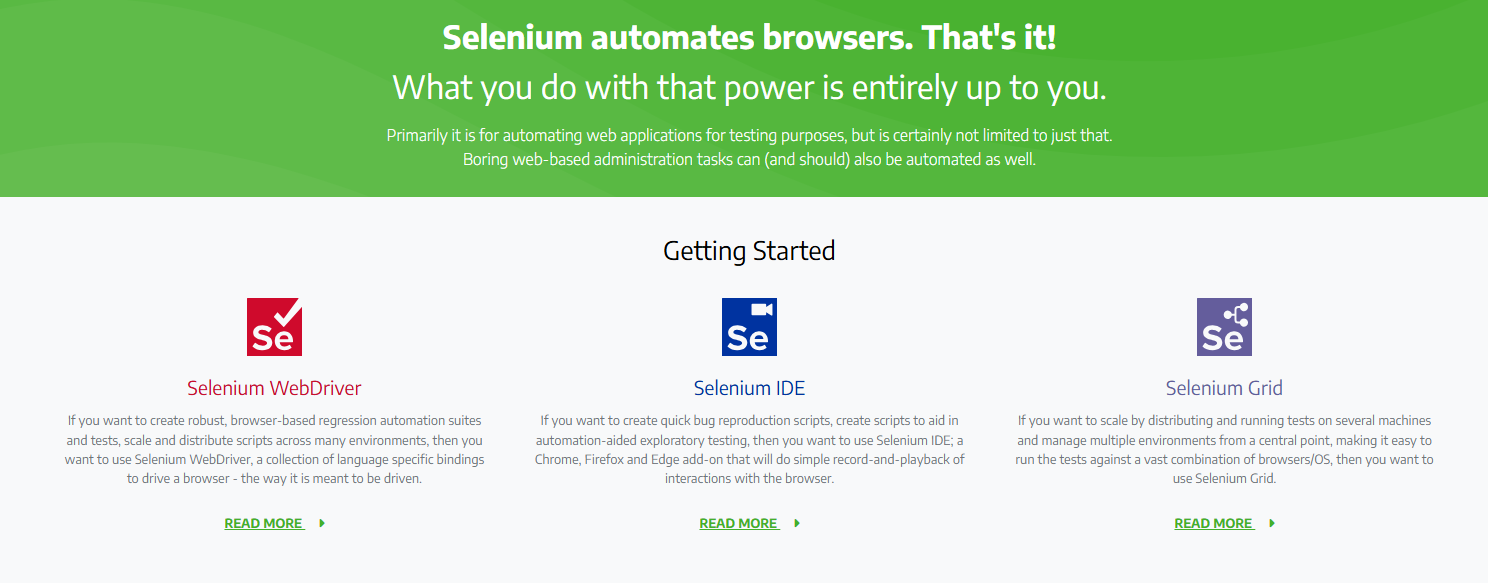
Selenium remains the classic browser automation standard. The official project describes it as a browser automation umbrella project for testing web apps across major browsers using WebDriver.
Features:
- WebDriver support for major browsers.
- Browser automation across multiple language bindings.
- Selenium IDE for basic record-and-playback workflows.
How It Helps In Regression Testing:
Selenium is ideal when your regression suite needs broad browser coverage and language flexibility. It is especially useful for teams that already have mature automation engineering practices.
For mobile, Appium is built directly on the WebDriver protocol, making Selenium-trained teams well-positioned to extend their regression suite to iOS and Android native apps.
Limitations:
Selenium is powerful, but it does not hide much complexity. Teams usually need more setup, more framework design, and more maintenance than with newer low-code tools. That is an inference from its framework-first design.
Pricing:
Selenium is open source and free.
4. Detox
Detox is a gray-box end-to-end testing framework built specifically for React Native apps. Unlike general-purpose automation tools, it runs the test runner and the app in the same process, which eliminates the timing and synchronization issues that plague most mobile regression suites.
Features:
- Gray-box architecture for deterministic, flake-free test execution.
- First-class React Native support for both iOS and Android.
- Deep CI integration with Jest as the default test runner.
How It Helps In Regression Testing: Detox is purpose-built for mobile regression, every test runs against the actual native app, not a browser emulation. Its synchronization model means tests wait intelligently for the app to settle, which dramatically reduces false failures in repeated regression runs.
For React Native teams specifically, it is the most reliable way to catch regressions introduced by JavaScript bundle changes or native module updates.
Limitations: It is tightly scoped to React Native, so teams working on native Swift/Kotlin or Flutter apps will need a different tool. It also requires more initial setup than a cloud-based platform.
Pricing: Detox is open source and free to use.
5. Katalon Studio
Katalon is a broad automation platform for web, mobile, API, and desktop testing. It combines AI, low-code recording, full-code flexibility, and built-in test management in one ecosystem.
Features:
- Web, mobile, API, and desktop testing.
- No-code recording plus full-code options.
- Self-healing, smart wait, and AI-powered test generation.
How It Helps In Regression Testing:
Katalon works well when regression spans multiple app layers, not just the UI. Its self-healing and recording features reduce maintenance, while TestOps adds visibility for larger teams.
Its mobile testing module supports both iOS and Android native apps, making it one of the more complete options for teams running regression across web and mobile in the same suite.
Limitations:
It can feel heavier than a pure framework if you only need a narrow browser-testing stack. Advanced capabilities also move into paid tiers quickly.
Pricing:
Katalon lists Free, Create from $1,000/year or $229/month, Expand from $2,000/year or $182/month, and custom Scale pricing.
6. mabl
mabl is an AI-native test automation platform built for web, mobile, and APIs, with a strong emphasis on self-healing and scale. Its messaging focuses on reducing maintenance while helping teams ship faster.
Features:
- AI-native test automation for web, mobile, and APIs.
- Adaptive auto-healing for UI changes.
- Analytics and enterprise-oriented workflow support.
How It Helps In Regression Testing:
mabl is useful when your regression suite keeps breaking because of small UI edits. The self-healing layer helps protect repeated test runs from becoming a maintenance burden.
It covers mobile web and app testing, which means regression suites can include mobile flows without switching to a separate platform.
Limitations:
Pricing is quote-based, so smaller teams may need a sales conversation before they can model cost. That can slow down early evaluation.
Pricing:
mabl uses customized pricing rather than a fully public tier sheet.
7. Testim
Testim is an AI-driven automation platform for web, mobile, and Salesforce apps. Its key selling point is stable, fast authoring with smart locators and self-healing behavior.
Features:
- AI-powered smart locators.
- Self-healing for changing app elements.
- Fast authoring with coded, codeless, or hybrid workflows.
How It Helps In Regression Testing:
Testim is built for teams that want fewer brittle failures and faster test creation. The result is a regression suite that is easier to expand and less painful to maintain.
It supports mobile web testing, so regression runs can cover mobile browser flows alongside desktop without additional tooling.
Limitations:
The product is easy to start with, but the most serious enterprise use usually involves sales-led pricing and platform adoption. That makes it less transparent than a pure open-source framework.
Pricing:
Testim offers a free account and free trial options, while paid pricing is sales-led.
8. Applitools
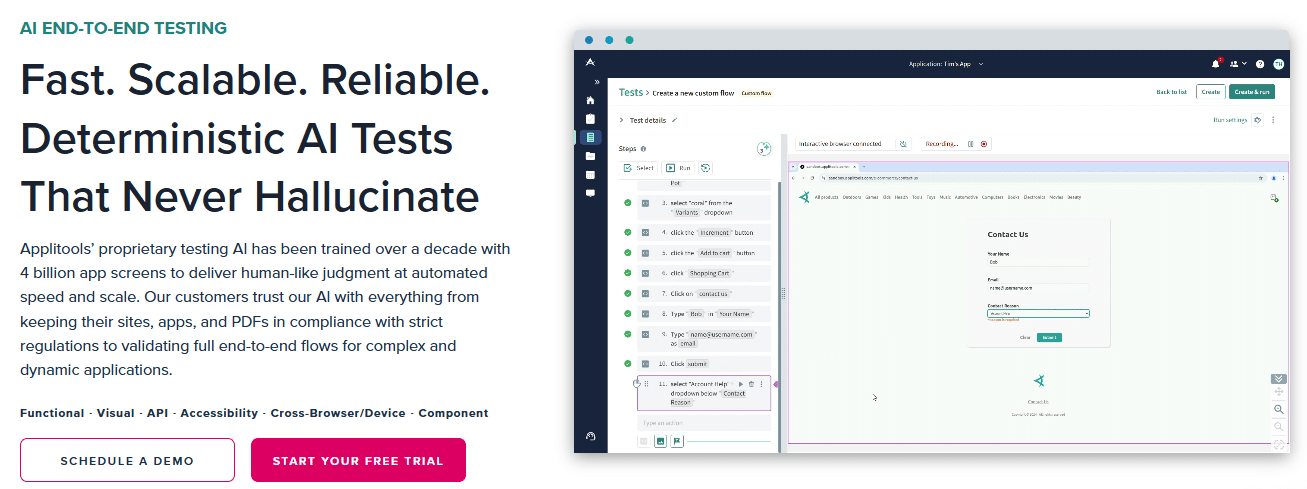
Applitools is the go-to name for visual regression testing. Its platform combines visual AI, functional testing, and autonomous testing so teams can catch UI changes that pixel diffs alone often miss.
Features:
- Visual AI for web and mobile testing.
- Code and no-code testing options.
- Dashboarding and analytics for large suites.
How It Helps In Regression Testing:
Applitools is especially valuable when your regression risk is visual: spacing, alignment, font shifts, or component rendering differences. It helps teams catch UI regressions that functional checks may miss.
Applitools is especially valuable when your regression risk is visual: spacing, alignment, font shifts, or component rendering differences. It is particularly strong for mobile regression because visual shifts such as font scaling, layout reflow, and component rendering are common across iOS and Android versions and easy to miss with functional checks alone.
Limitations:
It is most powerful when paired with existing automation, so it is not usually the only tool in the stack. At scale, pricing can also become a factor because the model is usage-based.
Pricing:
Applitools offers a Starter plan with 50 test units, unlimited users, and unlimited test executions, plus custom enterprise pricing.
9. TestRigor
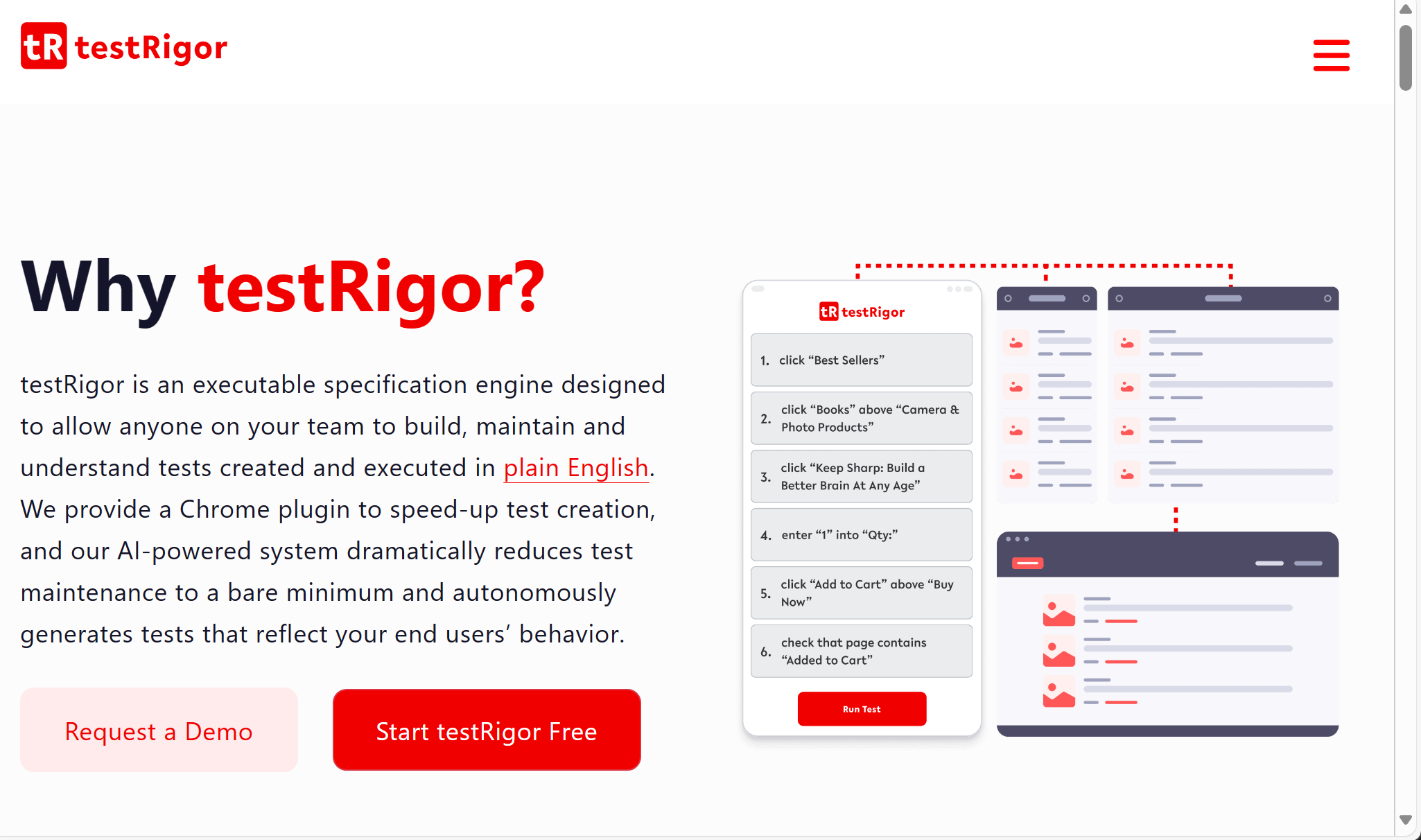
testRigor is designed for plain-English automation. It lets teams create end-to-end tests without depending heavily on brittle locators, and its AI/self-healing layer is a big part of its appeal.
Features:
- Plain-English test authoring.
- Vision AI and self-healing behavior.
- Coverage across web, mobile, desktop, and mainframe workflows.
How It Helps In Regression Testing:
testRigor is a strong fit for repeated regression runs because tests are less tied to selectors and more tied to user intent. That reduces churn when UI labels or layouts change.
It supports mobile app testing on iOS and Android, and its plain-English authoring means regression scripts are written against user intent rather than brittle device-specific selectors.
Limitations:
The free tier is public, so it is not suitable for every team or every type of application. Private and complete plans cost more as your needs grow.
Pricing:
testRigor offers a free public plan, Private Linux Chrome from $300/month, Private Complete trial access, and custom enterprise pricing.
10. TestComplete
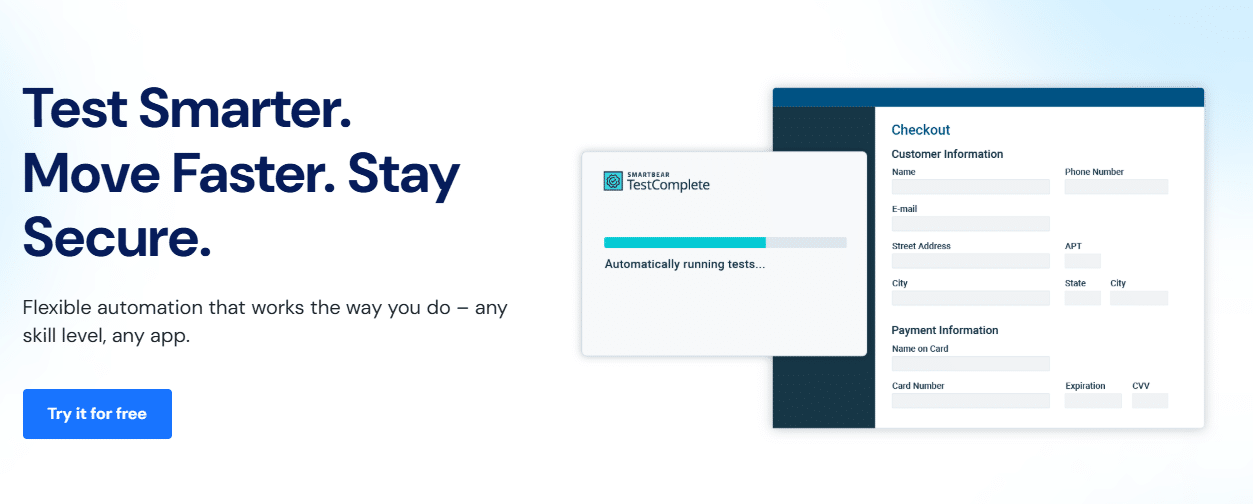
TestComplete is a mature UI automation tool for desktop, web, and mobile testing. It supports automated UI testing, parallel testing, keyword-driven testing, and GUI object recognition.
Features:
- Automated UI testing across desktop, web, and mobile.
- Parallel testing and cross-browser testing.
- Keyword-driven and codeless test creation options.
How It Helps In Regression Testing:
TestComplete is useful when your regression suite needs stable coverage across legacy and modern interfaces. Its object recognition and broad app support make it a practical enterprise choice.
Its mobile testing module covers iOS and Android native apps with object recognition and real device support, making it a practical choice for enterprise teams running regression across desktop and mobile.
Limitations:
It is a heavier enterprise product than a lightweight framework, and pricing is not fully transparent upfront. That may be fine for large teams, but smaller teams may prefer something simpler to start.
Pricing:
SmartBear offers customizable TestComplete plans and a free 14-day trial, with quote-based pricing.
Comparison Table of Automated Regression Tools
| Tool | Best For | Main Strength | Mobile Support | Main Limitation | Pricing Snapshot |
|---|---|---|---|---|---|
| Panto AI | AI-first mobile & QA teams | Natural-language automation and self-healing | ✅ iOS & Android native (Maestro + Appium) | Newer platform than legacy frameworks | Free; Scale $999/month; Enterprise custom |
| Playwright | Dev-heavy web teams | Fast, stable, cross-browser testing | ⚠️ Emulation only; no native mobile | Code-first workflow | Free / open source |
| Selenium | Mature automation teams | Maximum browser and language flexibility | ✅ Native via Appium (WebDriver-based) | More setup and maintenance | Free / open source |
| Detox | React Native mobile teams | Flake-free gray-box regression for React Native | ✅ iOS & Android native (React Native only) | React Native only; no web or native Swift/Kotlin | Free / open source |
| Katalon Studio | Mixed-skill QA teams | Web, mobile, API, desktop in one suite | ✅ iOS & Android native | Can feel heavyweight | Free; Create from $1,000/year; Scale custom |
| mabl | Scaling SaaS teams | Strong auto-healing and AI-native flow | ✅ Mobile web + app testing | Quote-based pricing | Custom pricing |
| Testim | Teams wanting stable UI tests | Smart locators and fast authoring | ⚠️ Mobile web only | Sales-led paid tiers | Free account; paid by quote |
| Applitools | UI-heavy and mobile apps | Visual AI regression across devices | ✅ iOS & Android visual regression | Best paired with another test runner | Starter + custom enterprise |
| testRigor | Non-coders and QA teams | Plain-English test authoring | ✅ iOS & Android native | Public free tier is limited | Free public; Private from $300/month |
| TestComplete | Enterprise desktop/web/mobile QA | Broad app coverage and object recognition | ✅ iOS & Android native | Quote-based and enterprise-oriented | Free 14-day trial; custom pricing |
When To Choose Which Automated Regression Testing Tool
Choosing the right mobile app regression testing tool depends on your app’s technology stack, your team’s technical depth, and whether you need native device coverage or mobile web is enough.
Some tools are built for developer-heavy teams, while others are designed for QA teams that want faster automation with less maintenance.
Use this quick guide to decide which tool fits your needs best.
Panto AI If You Want AI-First Regression Testing
Panto AI is ideal for teams that want to reduce test maintenance and create automation faster without heavy scripting.
Best For:
- Fast-moving product teams
- QA teams with limited automation engineers
- Teams struggling with flaky regression tests
- Mobile app teams on iOS and Android
Choose Panto AI When:
- Your UI changes frequently
- You want natural-language test creation
- You want self-healing regression suites
- You want faster failure triage
This is particularly useful for startups and scaling teams shipping weekly or daily.
Playwright If Your Team Is Developer-Heavy
Playwright is a strong choice when developers are comfortable writing automation in code and want maximum control.
Best For:
- Engineering-led QA teams
- Modern web applications
- CI/CD-heavy environments
Choose Playwright When:
- You want fast test execution
- You need cross-browser coverage
- You prefer open-source frameworks
- You want tight CI integration
Playwright works especially well for modern React, Vue, and Angular apps. Avoid it as your only tool if you need native iOS or Android regression because it handles mobile emulation, not native apps.
Selenium If You Need Maximum Flexibility
Selenium remains the most flexible framework for organizations with existing automation infrastructure.
Best For:
- Large enterprises
- Legacy systems
- Multi-language automation teams
- Mobile teams using Appium for iOS and Android
Choose Selenium When:
- You already use Selenium infrastructure
- You need broad browser support
- You want language flexibility (Java, Python, JS, etc.)
However, Selenium usually requires more maintenance compared to newer tools.
Detox If You Build With React Native
Detox is the strongest choice for teams whose mobile app is built in React Native and who need fast, reliable regression without flaky timing failures.
Best For:
- React Native mobile teams
- Mobile-first product teams
- CI-heavy release workflows
Choose Detox When:
- Your app is built in React Native
- Flaky regression tests are slowing down releases
- You want open-source tooling with deep CI integration
- You need deterministic test runs on iOS and Android
Avoid it if your app is built in native Swift, Kotlin, or Flutter, it will not cover those stacks.
Katalon Studio If You Want All-In-One Testing
Katalon provides a complete platform for UI, API, and mobile testing in one place.
Best For:
- Mid-size QA teams
- Cross-platform testing needs
- Low-code automation users
- Teams needing web and mobile regression in one platform
Choose Katalon When:
- You want UI + API regression in one platform
- You want built-in reporting and analytics
- You want low-code automation options
Katalon is helpful when teams want to avoid managing multiple tools.
mabl If You Want AI-Driven Test Maintenance
mabl focuses heavily on self-healing and automated testing and maintenance.
Best For:
- SaaS companies
- Rapid release teams
- Enterprise automation teams
Choose mabl When:
- Your tests frequently break
- You want AI-based regression maintenance
- You want scalable regression suites
- Your regression suite needs to cover mobile alongside web
This is helpful for large and rapidly changing applications.
Testim If You Want Stable UI Automation
Testim provides AI-powered locators and faster test creation.
Best For:
- Growing QA teams
- UI-heavy applications
- Teams reducing flaky tests
Choose Testim When:
- You want AI-based locators
- You want fast test authoring
- You want scalable regression automation
- You need mobile web regression coverage
Testim is popular for teams transitioning from manual testing.
Applitools If Visual Regression Matters Most
Applitools focuses on catching UI visual changes.
Best For:
- Design-heavy applications
- E-commerce platforms
- UI-sensitive applications
- Mobile teams catching visual regressions across device sizes and OS versions
Choose Applitools When:
- Visual regressions matter
- UI consistency is critical
- You already have automation frameworks
Applitools is often used alongside other automation tools.
testRigor If You Want Plain-English Tests
testRigor focuses on non-technical automation creation.
Best For:
- Manual QA teams
- Business testers
- Low-code environments
- Mobile QA teams who want to write tests in plain English
Choose testRigor When:
- You want plain-English automation
- You want minimal coding
- You want faster regression creation
This helps teams scale automation without engineering bottlenecks.
TestComplete If You Need Enterprise Coverage
TestComplete supports desktop, web, and mobile regression testing.
Best For:
- Enterprise organizations
- Legacy desktop applications
- Complex system testing
- Enterprise teams running regression across mobile and desktop
Choose TestComplete When:
- You test desktop applications
- You need enterprise-grade tooling
- You need cross-platform and performance regression testing
TestComplete is particularly useful for large enterprise QA teams.
Final Takeaway
There is no single best automated regression testing tool for every team. The right choice depends on whether you care most about coding flexibility, no-code speed, visual validation, mobile coverage, or enterprise governance.
For mobile-specific regression, prioritize tools with native iOS and Android support or deep Appium integration, as mobile web emulation alone will miss the failures that matter most on real devices.
If your team wants AI-assisted regression with a strong focus on reduced maintenance for mobile apps, Panto AI is a compelling first stop. If you want code-first control, Playwright and Selenium remain safe bets. If visual quality matters most, Applitools belongs near the top of the shortlist.
FAQ’s
Q: What is mobile app regression testing?
A: Mobile app regression testing is the process of re-running previously validated tests after code changes to confirm that existing functionality still works correctly. It helps catch unintended side effects across critical flows like login, onboarding, payments, checkout, and navigation before they reach production.
Q: What is the difference between mobile regression testing and functional testing?
A: Functional testing verifies that a specific feature or new change behaves correctly. Regression testing verifies that previously working functionality still works after those changes are introduced. Functional tests validate the new behavior, while regression tests protect the existing product from breakage.
Q: Should mobile regression tests run on real devices or emulators?
A: Both are useful, but they serve different purposes. Emulators and simulators provide fast feedback during development, while real devices expose issues related to OEM Android skins, biometric authentication, camera behavior, push notifications, network instability, and OS-specific quirks. Reliable release testing should always include real-device coverage.
Q: What is the best regression testing tool for React Native apps?
A: Detox remains one of the strongest open-source options for React Native regression testing because its gray-box architecture reduces many common synchronization issues. Teams that also want AI-assisted maintenance, natural-language test creation, or no-code workflows often evaluate platforms like Panto AI alongside Detox.
Q: How is Appium different from other mobile regression testing tools?
A: Appium is a flexible automation framework built around the WebDriver protocol. It provides cross-platform mobile automation for iOS and Android but does not include built-in reporting, orchestration, or maintenance tooling. Platforms like Katalon, testRigor, and Panto AI add higher-level workflows, analytics, and AI-assisted maintenance on top of or alongside Appium.
Q: How often should mobile regression tests run?
A: Critical regression tests should run on every pull request or CI build targeting a release branch. Broader cross-device regression suites are commonly executed nightly and again before production releases. Running tests continuously helps teams catch regressions as close to the original code change as possible.