
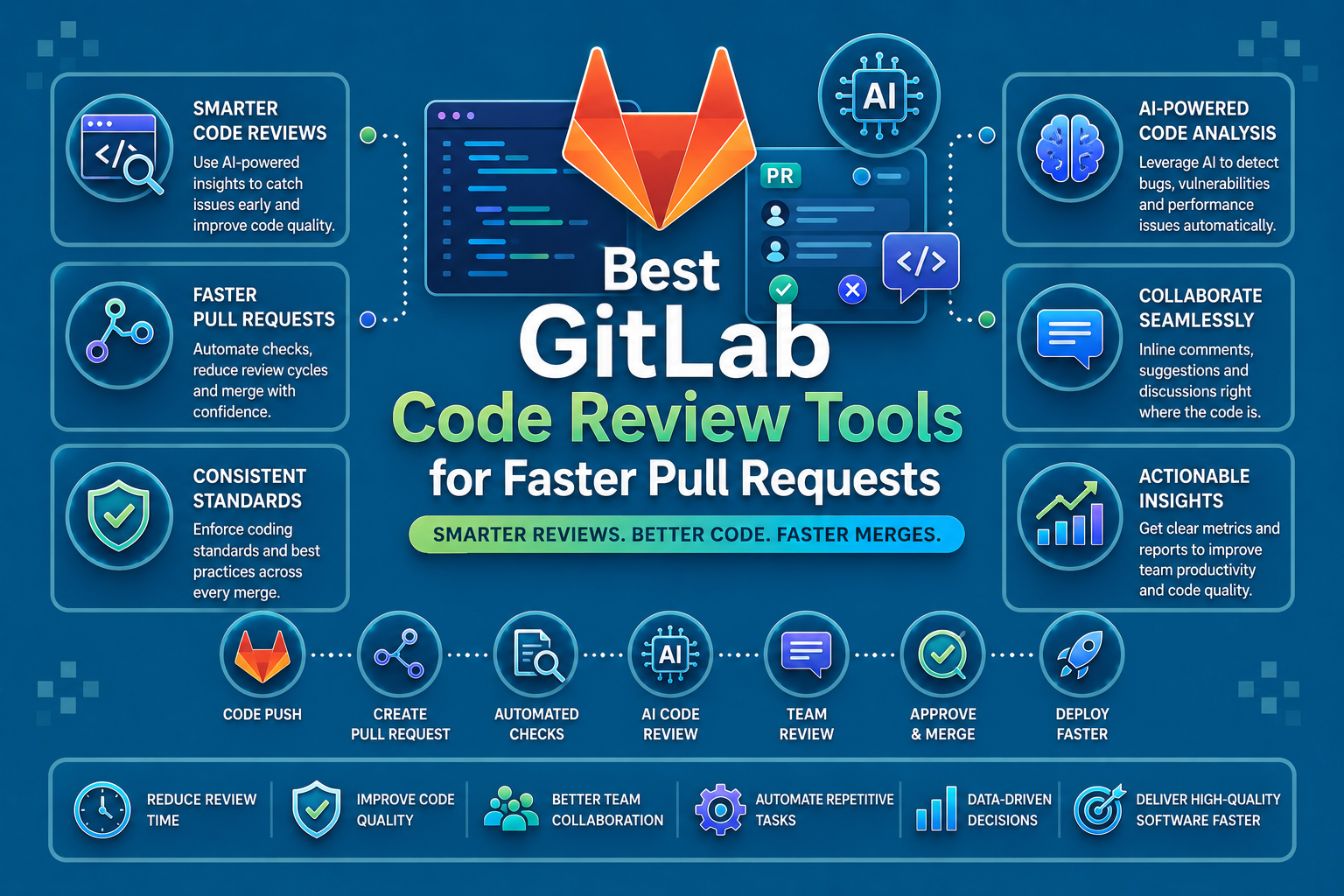

Code review remains one of the most important practices in modern software development. It helps teams catch bugs earlier, improve maintainability, enforce security standards, and share knowledge across engineering organizations.
GitLab provides solid native code review capabilities through merge requests, approvals, discussions, and CI/CD integration. However, as repositories grow larger and teams become more distributed, many organizations find that GitLab’s built-in features alone aren’t enough.
Today’s engineering teams are increasingly adopting AI-powered code review tools that automate repetitive reviews, surface security vulnerabilities, provide repository-wide context, and help developers merge code faster without sacrificing quality.
In this guide, we’ll compare the best GitLab code review tools in 2026, including AI reviewers, security-focused platforms, enterprise governance solutions, and developer productivity tools.
Why GitLab Code Review Tools Matter
Code reviews do much more than catch bugs.
A strong review process helps teams:
- Reduce production defects
- Improve code quality and maintainability
- Identify security vulnerabilities earlier
- Accelerate developer onboarding
- Enforce coding standards
- Improve collaboration across teams
- Reduce technical debt
As organizations adopt AI-assisted development, code review becomes even more critical. AI-generated code can accelerate development, but it also increases the need for automated quality and security validation before changes reach production.
This is why AI-powered code review platforms have become one of the fastest-growing categories in developer tooling.
12 Leading GitLab Code Review Tools in 2026
1. Panto AI
Best For
Teams looking for business-aware AI code reviews with strong security coverage.
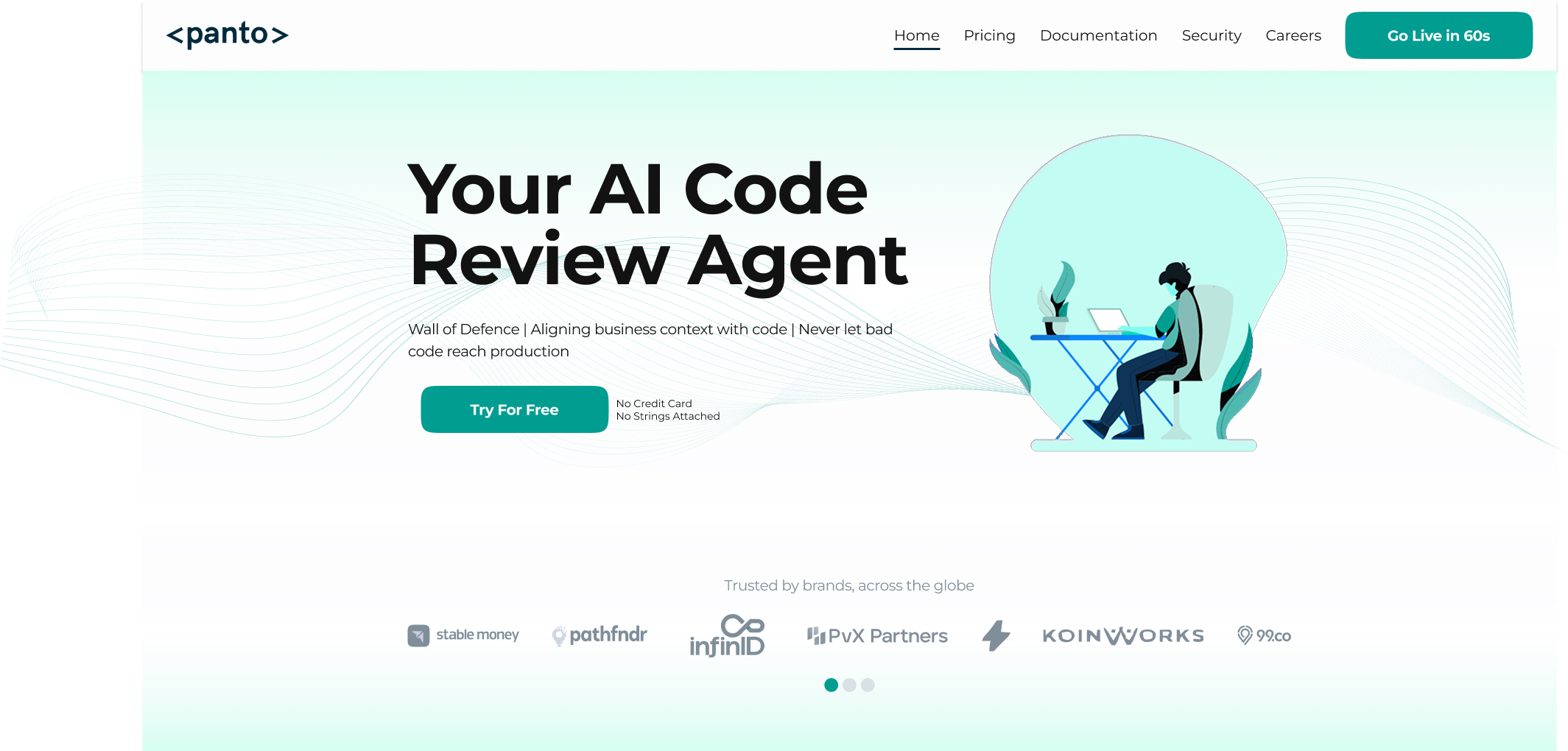
Panto AI goes beyond traditional static analysis by combining code intelligence, business context, and AI-powered review automation.
Unlike tools that analyze only code changes, Panto AI can incorporate information from Jira tickets, Confluence documentation, and project requirements to help reviewers understand both what changed and why it changed.
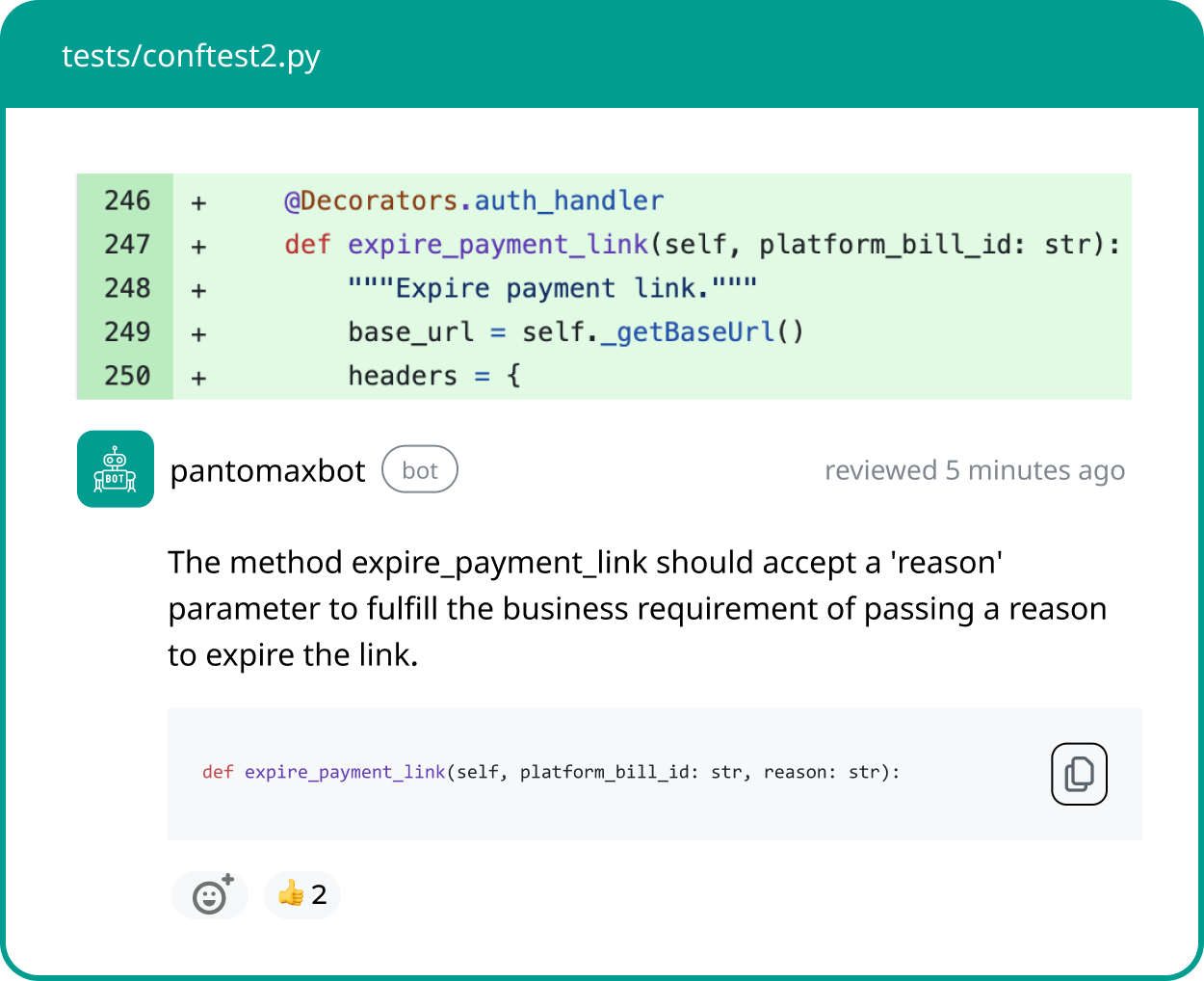
The platform automatically generates pull request summaries, identifies potential issues, provides security recommendations, and enables developers to ask follow-up questions through a conversational AI interface.
Key Features
- AI-powered merge request reviews
- Business context integration
- Jira and Confluence connectivity
- Automated PR summaries
- Conversational review assistant
- Support for 30+ programming languages
- 30,000+ security rules
- Cloud and on-prem deployment
- Zero code retention options
Pros
- High-signal feedback
- Strong business context awareness
- Enterprise-grade security controls
- Excellent review summaries
Cons
- More feature-rich than some small teams require
2. Greptile
Best For
Large engineering organizations with complex repositories.
Greptile has gained popularity because of its ability to understand entire codebases rather than reviewing only pull request diffs.
The platform excels in monorepos and large microservice environments where repository-wide understanding significantly improves review accuracy.
Key Features
- Full repository context
- Monorepo support
- AI code reviews
- Enterprise security controls
- Custom review rules
- SOC 2 compliance
Pros
- Excellent repository awareness
- Strong enterprise focus
- Accurate AI reviews
Cons
- Premium pricing
3. CodeAnt AI
Best For
Teams seeking faster review cycles.
CodeAnt AI combines AI reviews, static analysis, and security scanning into a single GitLab workflow.
Its biggest advantage is reducing reviewer workload through automated merge request summaries and actionable recommendations.
Key Features
- AI review automation
- Static analysis
- Security scanning and secret detection
- Merge request summaries
- Custom review rules
- Slack integration
- IDE notifications
Pros
- Easy adoption
- Strong productivity benefits
Cons
- Limited repository-wide context
4. SonarQube
Best For
Enterprise compliance and quality enforcement.
SonarQube remains one of the most widely adopted code quality platforms in the industry.
It integrates directly into GitLab pipelines and enforces quality gates before code can be merged.
Key Features
- Static code analysis
- Security scanning
- Quality gates
- Technical debt tracking
- CI/CD integration
- Extensive language support
Pros
- Industry standard
- Strong governance capabilities
Cons
- Less focused on AI-powered reviews
5. Codacy
Best For
Continuous code quality monitoring.
Codacy automates code quality analysis throughout the development lifecycle and provides a comprehensive dashboard for tracking engineering health.
Key Features
- Code quality monitoring
- Security scanning
- Duplication detection
- Test coverage tracking
- Style enforcement
- Custom rules
Pros
- Easy setup
- Broad language support
Cons
- Limited AI review capabilities
6. Snyk (DeepCode)
Best For
Security-first engineering teams.
Snyk’s DeepCode engine specializes in identifying vulnerabilities, insecure coding patterns, and dependency risks before deployment.
Key Features
- Security reviews
- Open-source dependency scanning
- Container scanning
- Infrastructure-as-code analysis
- Real-time vulnerability detection
Pros
- Industry-leading security capabilities
- Excellent vulnerability database
Cons
- Not a complete code review solution
7. Ellipsis AI Reviewer
Best For
Startups and fast-moving development teams.
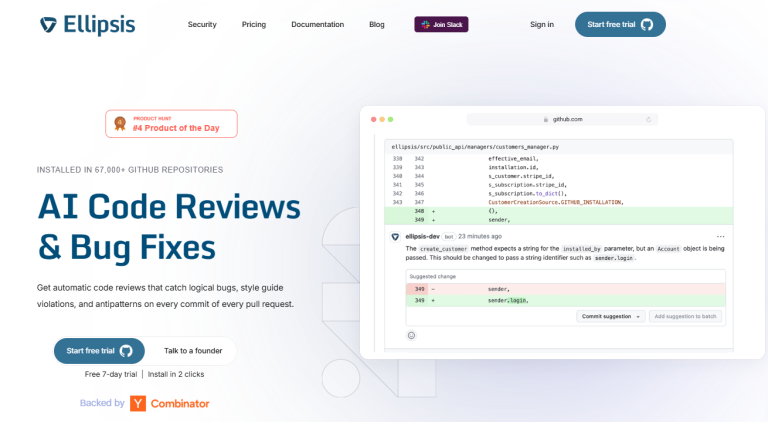
Ellipsis AI Reviewer automates pull request reviews and provides actionable bug fixes directly within merge requests.
Key Features
- AI-generated review comments
- Automated bug detection
- Suggested fixes
- GitLab integration
- Security analysis
Pros
- Quick deployment
- Developer-friendly experience
Cons
- Less customizable than enterprise solutions
8. CodeRabbit
Best For
Small and mid-sized engineering teams.
CodeRabbit provides automated AI-generated pull request reviews with minimal setup requirements.
Key Features
- AI review comments
- Pull request summaries
- Security suggestions
- GitLab integration
- Automated code explanations
Pros
- Extremely easy setup
- Fast feedback
Cons
- Less repository context awareness
9. Crucible
Best For
Organizations with formal review processes.
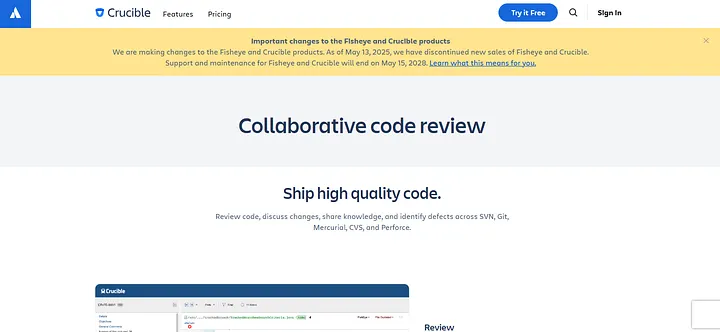
Crucible remains popular among enterprises that require structured peer review workflows and detailed audit trails.
Key Features
- Peer review workflows
- Inline discussions
- Metrics and reporting
- Review tracking
- Audit history
Pros
- Strong governance
- Mature platform
Cons
- Older user experience
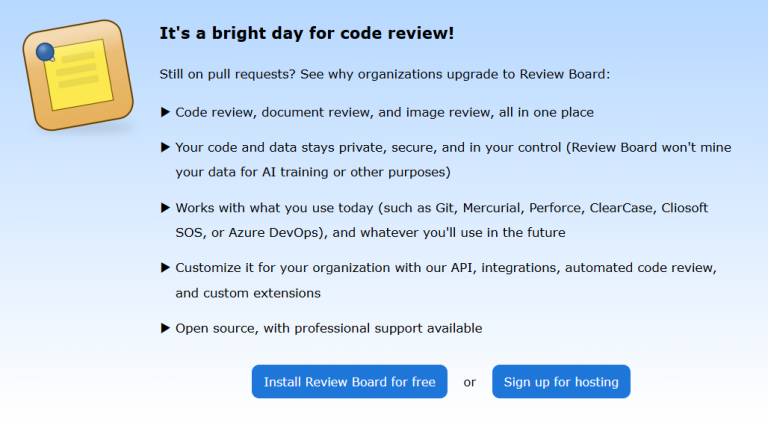
10. Review Board
Best For
Open-source and distributed teams.
Review Board offers flexible review workflows and supports various repository types.
Key Features
- Open-source platform
- Flexible review processes
- Static analysis integrations
- Threaded discussions
- Multi-file support
Pros
- Highly customizable
- Free open-source option
Cons
- More complex setup
11. CodiumAI
Best For
Developers focused on test-driven development.
CodiumAI complements GitLab reviews by automatically generating tests and validating code logic before pull requests are submitted.
Key Features
- AI-generated tests
- Logic validation
- IDE integrations
- Unit test generation
- Coverage improvements
Pros
- Improves test quality
- Reduces manual testing effort
Cons
- Not a dedicated merge request reviewer
12. Qodo Merge
Best For
Teams adopting AI-assisted pull request workflows.
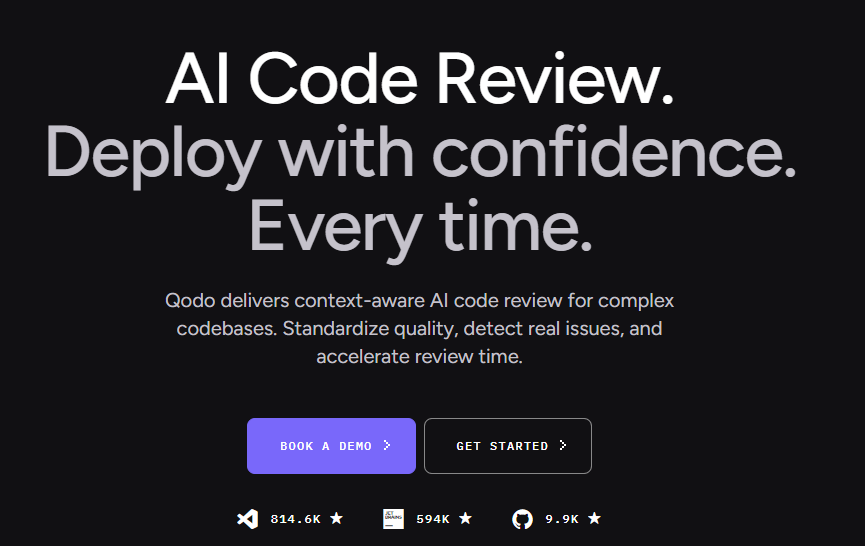
Qodo Merge (formerly known as Codium PR-Agent) has emerged as one of the most widely discussed AI review platforms for GitHub and GitLab users.
The platform automatically analyzes merge requests, generates summaries, identifies bugs, highlights security concerns, and prioritizes review effort based on risk.
Key Features
- AI-generated merge request summaries
- Automated bug detection
- Security recommendations
- Custom review policies
- GitLab CI/CD integration
- Risk-based review prioritization
Pros
- Strong AI capabilities
- Excellent reviewer productivity improvements
Cons
- Advanced customization may require tuning
GitLab Code Review Tool Comparison
| Tool | AI Review | Security Scanning | Full Repo Context | GitLab Integration | Best For |
|---|---|---|---|---|---|
| Panto AI | Yes | Yes | Yes | Yes | Business-aware reviews |
| Greptile | Yes | Partial | Yes | Yes | Large repositories |
| CodeAnt AI | Yes | Yes | Partial | Yes | Faster reviews |
| SonarQube | Partial | Yes | No | Yes | Compliance |
| Codacy | Partial | Yes | No | Yes | Code quality |
| Snyk | No | Excellent | No | Yes | Security |
| Ellipsis | Yes | Partial | No | Yes | Startups |
| CodeRabbit | Yes | Partial | Partial | Yes | Fast deployment |
| Crucible | No | No | No | Partial | Governance |
| Review Board | No | No | No | Partial | Open-source teams |
| CodiumAI | Partial | No | No | Partial | Test generation |
| Qodo Merge | Yes | Yes | Partial | Yes | AI-driven reviews |
How to Choose the Right GitLab Code Review Tool
The best solution depends on your priorities.
Choose Panto AI if you need business-aware AI reviews and enterprise-grade security.
Choose Greptile if repository-wide understanding is critical.
Choose SonarQube if compliance and governance drive your review process.
Choose Snyk if security scanning is your primary concern.
Choose CodeRabbit or Ellipsis if you want fast AI feedback with minimal setup.
Choose Qodo Merge if you’re looking for an AI-first review workflow focused on developer productivity.
Final Thoughts
GitLab’s native review features provide a solid foundation, but modern engineering teams increasingly need AI-powered assistance, security automation, and repository-wide context to maintain development velocity.
Whether you’re a startup looking to accelerate pull requests or an enterprise enforcing compliance at scale, the right code review tool can dramatically improve software quality and developer productivity.
For teams seeking contextual AI reviews that connect code changes with business requirements, security policies, and project documentation, Panto AI offers one of the most comprehensive GitLab code review experiences available today.
Ready to improve your GitLab code review process? Explore Panto AI and see how contextual AI can help your team ship faster with greater confidence.
Frequently Asked Questions
Q: Does GitLab have built-in code review tools?
A: Yes. GitLab includes a comprehensive code review workflow with merge requests, approval rules, inline comments, threaded discussions, and CI/CD integration. While these native capabilities cover most review needs, many engineering teams supplement them with AI-powered tools for automated feedback, security analysis, and review acceleration.
Q: What is the best AI code review tool for GitLab?
A: The best tool depends on your team’s priorities. Panto AI focuses on autonomous review workflows and AI-driven analysis, while Greptile, Qodo Merge, CodeRabbit, CodeAnt AI, and Ellipsis AI Reviewer each offer different strengths in areas such as pull-request reviews, security scanning, developer productivity, and workflow automation.
Q: Which GitLab code review tool is best for security?
A: For security-focused reviews, Snyk, SonarQube, Panto AI, and CodeAnt AI are among the strongest options. These platforms can automatically identify vulnerabilities, insecure coding patterns, dependency risks, and compliance issues before code reaches production.
Q: Can AI replace human code reviews?
A: No. AI can significantly reduce review effort by detecting bugs, security flaws, code smells, and style violations, but it cannot fully replace human judgment. Developers are still needed to evaluate architecture decisions, business requirements, maintainability trade-offs, and overall system design. The most effective teams use AI to automate repetitive analysis while keeping humans responsible for final review decisions.