

Functionize is a powerful cloud-based AI test generation platform, but many teams want better mobile focus, simpler maintenance, or more flexible pricing in 2026.
This guide breaks down 10 top Functionize alternatives for mobile-first AI QA automation.
As mobile testing budgets grow 25% and 68% of teams report maintenance as their #1 pain point, specialized Functionize alternatives now deliver faster ROI.
Why Look Beyond Functionize in 2026?
Functionize brought AI into test creation and self-healing, yet teams still struggle with maintenance, mobile depth, and costs at scale.
As QA budgets lean more toward mobile and cross-device coverage, specialized QA platforms are taking the lead.
Modern alternatives emphasize:
- AI agents that understand natural language and context.
- Self-healing across rapidly changing UIs and OS versions.
- Real-device coverage and CI/CD-native execution at scale.
The following tools help teams replace or complement Functionize depending on stack, skills, and release velocity.
Top Functionize Alternatives in 2026
1. Panto AI
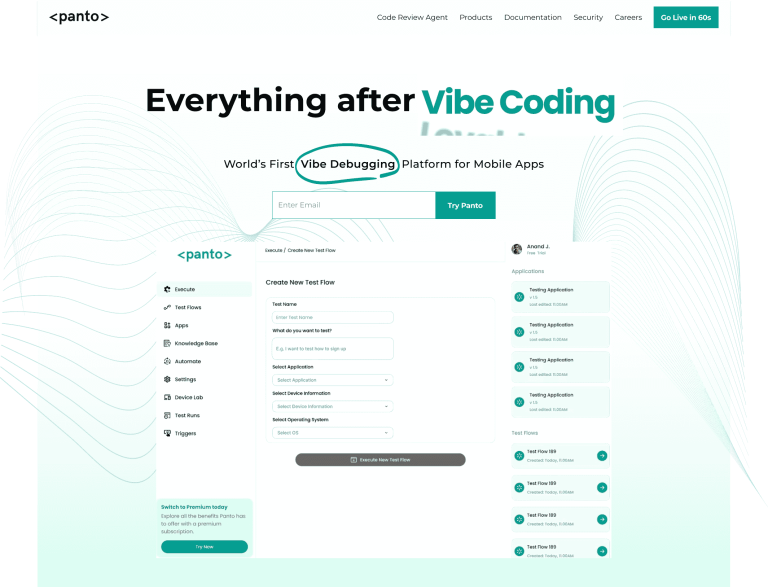
Panto AI is a mobile-first AI automation platform that lets teams explain test flows in plain English and turn them into deterministic, reusable scripts.
It focuses on making mobile QA fast, reliable, and visual regression-friendly across iOS, Android, and iPadOS.
Key capabilities of Panto AI
- Natural language to automation
- Describe flows like “Open the app, search for X, add to cart, and checkout” in simple language.
- Panto AI’s agent executes the flow, asks clarifying questions, and generates a stable test from the successful run.
- Deterministic scripts, not one-off AI runs
- Successful executions convert into a proprietary automation framework that can run across any device, OS, and schedule.
- This removes the non-determinism seen in “pure AI” execution and makes visual regression runs predictable.
- Self-healing automation for mobile
- When the UI changes, Panto AI detects breakages, re-runs flows via Panto Execute, and updates steps automatically.
- Teams get notified and can approve or review changes, keeping test suites resilient over time.
- Context-aware Knowledge Base
- A built-in context store lets teams add app-specific rules and nuances in natural language.
- Over time, Panto “learns” the app, making automated test generation faster and smarter with each run.
- Deep reporting and CI/CD integration
- Step-by-step debug reports with logs, videos, and screenshots are delivered to Slack or the dashboard.
- Tests can be triggered from CI/CD, pull requests, Slack, webhooks, or APIs for flexible orchestration.
Best for
- Mobile-first teams wanting deterministic tests instead of brittle AI replays.
- Product-engineering squads that prefer “explain once, automate forever” with minimal scripting.
- Orgs aiming for near-100% mobile regression coverage within weeks, not quarters.
2. testRigor
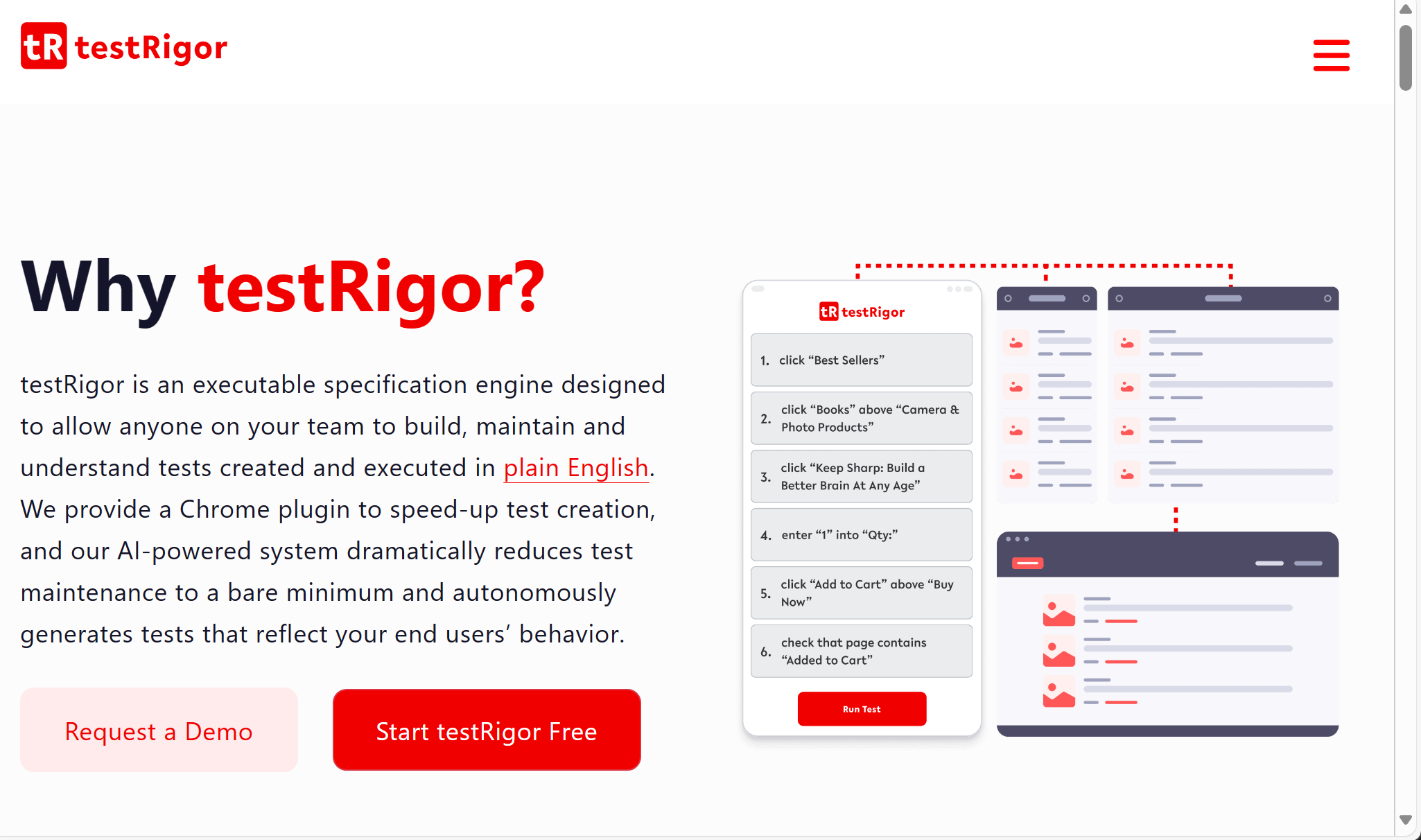
testRigor is a plain-English automation platform built to let manual testers write complex end-to-end tests without code.
It targets fast authoring and low maintenance for web, mobile, and APIs.
Key capabilities of testRigor
- Plain English test authoring
- Tests are written in near-natural language, reducing reliance on SDET-heavy scripting.
- This helps QA teams scale coverage without expanding automation headcount.
- Low-maintenance intelligent locators
- AI-powered element discovery minimizes breakage during UI changes.
- Many teams report significantly lower locator flakiness versus raw Selenium.
- Broad platform coverage
- Supports web, mobile web, and native apps with cloud execution.
- Integrates with popular CI/CD and test management stacks.
3. TestGrid

TestGrid focuses on real-device and cross-platform automation with strong AI support for test creation and self-healing.
It is tailored for teams seeking device clouds plus no-code or low-code authoring.
Key capabilities of TestGrid
- AI-powered test automation
- AI assists in building scripts, identifying elements, and maintaining tests over UI changes.
- This is useful for mixed-skill teams transitioning from manual to automated mobile QA.
- Real-device cloud
- Provides access to a wide grid of real mobile and web devices.
- Enables realistic debugging across OS versions, screen sizes, and network conditions.
- Performance and API testing
- Adds scalability and performance monitoring and API-level tests under one umbrella.
- This simplifies tool sprawl for teams wanting full-stack coverage.
4. Applitools
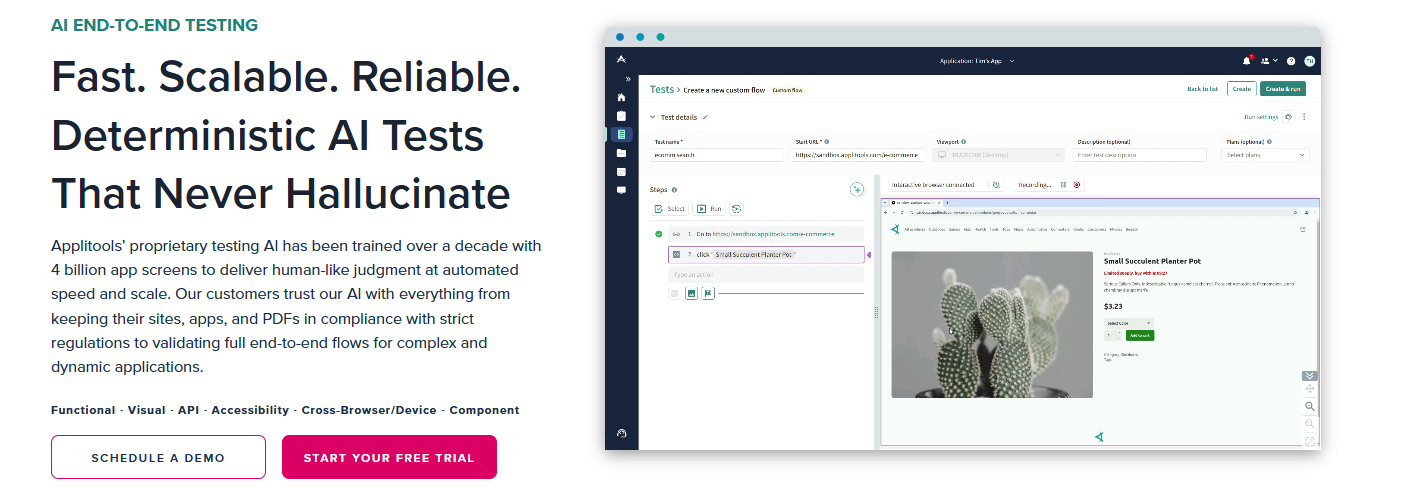
Applitools is a visual AI platform that adds ultra-reliable visual regression to existing automation stacks.
It excels at catching UI and UX regressions that functional tests often miss.
Key capabilities of Applitools
- Visual AI for regression
- Takes snapshots across browsers and real devices and detects pixel-level or layout differences.
- Reduces false positives using AI-based baselines and ignore regions.
- Works with your existing tools
- Integrates with Selenium, Cypress, Playwright, Appium, and more.
- Lets teams keep their test code but upgrade visual reliability.
- Ultrafast grid
- Parallel visual runs across large browser/device matrices.
- Helps teams validate UI at scale without manual screenshot reviews.
5. Tricentis Testim (Testim.io)
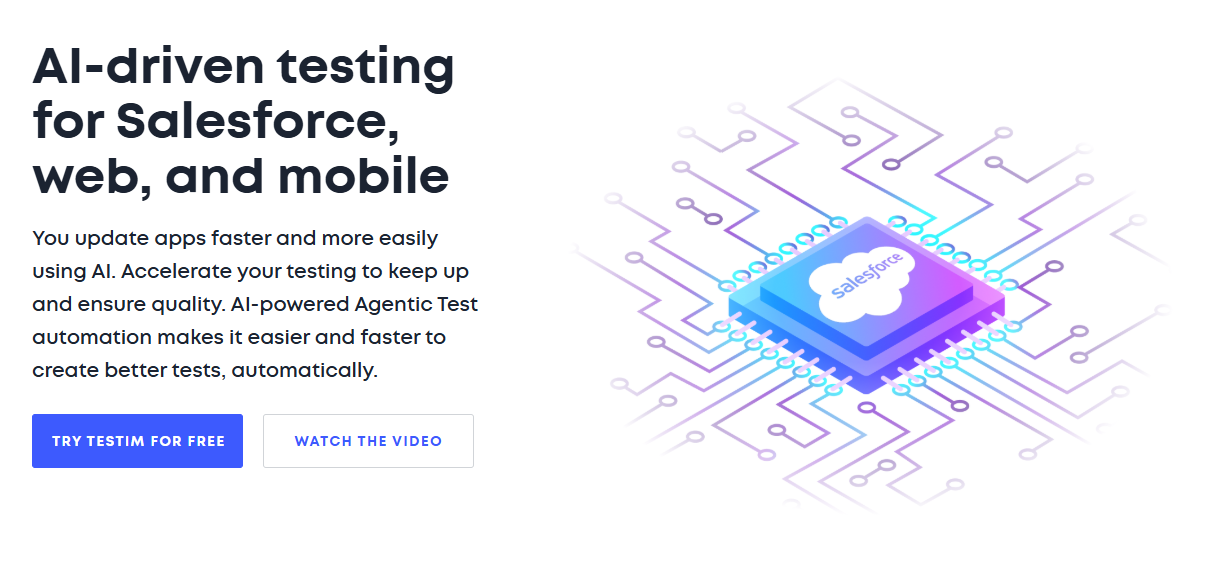
Testim (under the Tricentis umbrella) focuses on AI-powered test authoring with reusable building blocks and smart locators.
It aims to reduce test maintenance for web and Salesforce-heavy stacks.
Key capabilities of Testim
- AI-based locator management
- Uses multiple attributes and AI models to keep locators stable.
- Customers often see significant reductions in flaky failures versus raw Selenium.
- Reusable components and flows
- Encourages modular “test components” reused across suites.
- Shortens authoring time and helps teams standardize patterns.
- Tight developer workflow integration
- GitHub, CI/CD, and PR review integrations enable shift-left strategies.
- Works well in dev-centric organizations with strong JS skillsets.
6. TestComplete

TestComplete is a long-standing UI test automation platform from SmartBear, supporting desktop, web, and mobile.
It blends codeless automation with scripting for teams who want flexibility.
Key capabilities of TestComplete
- Codeless plus code options
- Offers record-and-playback with keyword-driven tests.
- Supports scripting in languages like JavaScript and Python for advanced flows.
- Desktop and legacy app coverage
- Strong support for Windows desktop and older tech stacks.
- Good fit for enterprises with thick-client apps plus web.
- SmartBear ecosystem integrations
- Connects with tools like ReadyAPI and Zephyr for API and debugging management.
- Simplifies governance in large organizations.
7. Leapwork
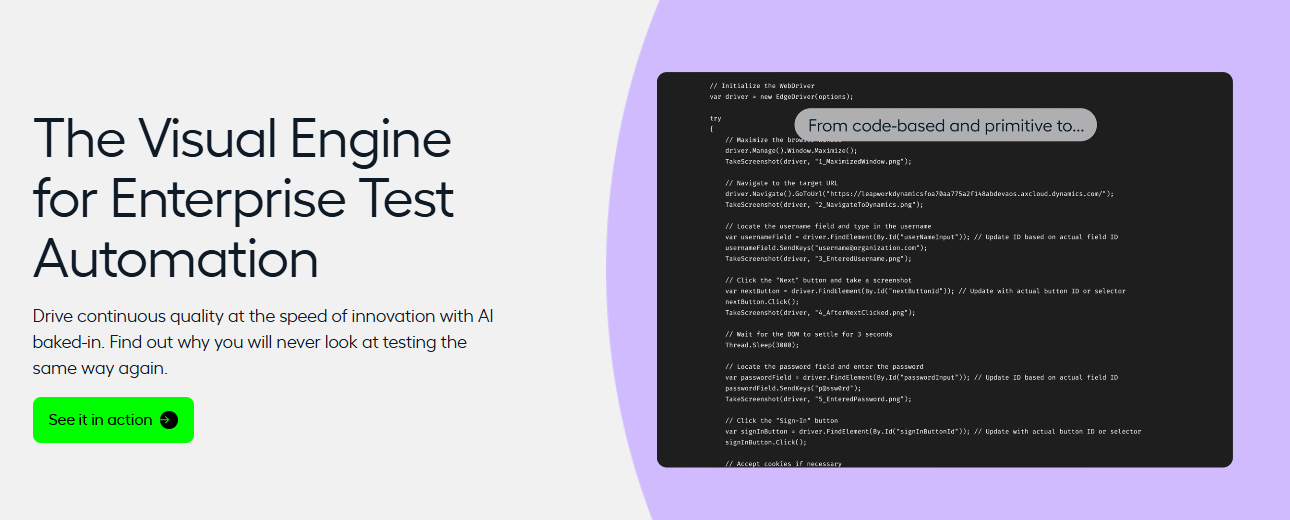
Leapwork is a visual, no-code automation platform with flowchart-like test design. It is built for business users and QA teams who want automation without scripting.
Key capabilities of Leapwork
- Visual flow designer
- Users build flows using drag-and-drop blocks instead of code.
- Makes it easier for non-technical stakeholders to participate in automated QA.
- Cross-technology coverage
- Supports web, desktop, and some legacy systems.
- Often used in RPA-like and end-to-end development workflows.
- Enterprise governance
- Offers audit trails, RBAC, and centralized control.
- A good fit for regulated or large enterprises.
8. Mabl
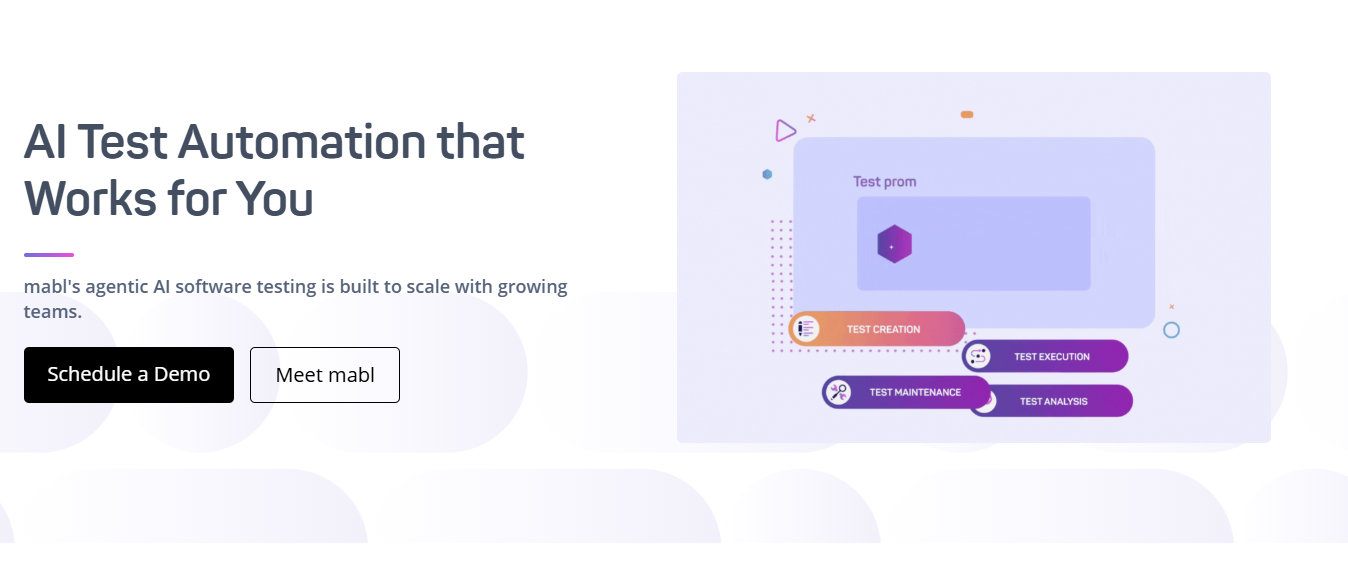
Mabl is a cloud-native, AI-driven test automation platform tightly integrated with CI/CD pipelines.
It targets modern product teams that ship frequently and want continuous testing.
Key capabilities of Mabl
- Cloud-native execution
- Runs tests in the cloud with minimal infrastructure overhead.
- Integrates with modern DevOps toolchains and pipelines.
- AI-assisted testing
- Learns app structure and helps maintain tests over UI changes.
- Includes performance and visual testing checks within functional runs.
- Strong analytics
- Provides insights into flakiness, coverage, and failure patterns.
- Helps teams prioritize fixes and improve test suites iteratively.
9. BrowserStack
BrowserStack offers cloud-based device/browser infrastructure plus low-code automation features.
It is ideal when the biggest bottleneck is coverage, not necessarily authoring.
Key capabilities of BrowserStack
- Massive device and browser coverage
- Thousands of real devices and browsers for web and mobile.
- Enables high-confidence cross-platform validation without physical labs.
- Low-code automation and integrations
- Low-code features plus support for Selenium, Playwright, Cypress, and others.
- Fits teams already invested in code-based frameworks.
- Integrated debugging tools
- Offers video, network logs, and console logs for failed runs.
- Shortens feedback loops for developers.
10. Katalon Platform
Katalon is an all-in-one automation platform for web, API, desktop, and mobile, with both low-code and code options.
It targets teams seeking a unified stack rather than many niche tools.
Key capabilities of Katalon
- End-to-end coverage
- Web UI, mobile, API, and desktop tests in a single environment.
- Reduces tool sprawl for QA organizations.
- Codeless and scripted flows
- Offers a recorder and keyword-driven tests.
- Allows test case generation for complex logic using Groovy/Java.
- Marketplace and ecosystem
- Plugins for CI/CD, reporting, and integrations.
- Speeds up setup and extensibility.
How to Choose the Right Functionize Alternative
Match tools to your QA strategy
Different teams have different bottlenecks: scripting skills, device access, or brittle suites.
Mapping your pain points to each tool’s strengths avoids expensive misalignment.
Consider these angles:
- Skill mix: manual-heavy vs SDET-heavy teams.
- Platform focus: web-only vs mobile-first QA vs desktop-heavy.
- Release cadence: feature teams shipping daily vs quarterly.
When Panto AI is the best fit
Panto AI stands out when mobile regression reliability is the primary challenge.
It combines natural language, deterministic scripts, self-healing, and real-device execution tailored for mobile apps.
- You want to “explain once” and convert flows into reusable automation quickly.
- Your team cares about deterministic, repeatable runs rather than AI improvisation.
- You need Slack/CI-native reporting with videos, logs, and step-by-step traces.
Comparison Table: Top Functionize Alternatives
| Tool | Primary Focus | AI/Automation Style | Platforms Covered | Ideal Team Profile | Notes |
|---|---|---|---|---|---|
| Panto AI | Mobile QA and regression at scale | Natural language to deterministic, self-healing mobile tests | iOS, Android, iPadOS, real devices and emulators | Mobile-first teams needing fast, reliable automation | Vibe debugging, context store, CI/CD and Slack-native reporting |
| testRigor | Codeless end-to-end functional testing | Plain-English steps with AI locators | Web, mobile web, native apps | Manual-heavy teams moving into automation | Great for non-technical QA who own regression suites |
| TestGrid | AI-powered automation plus device cloud | AI-based authoring and self-healing | Web, mobile, APIs with real devices | Teams needing broad device coverage | Bundles performance and API testing in one stack |
| Applitools | Visual regression intelligence | Visual AI for UI diffs and layout checks | Web and mobile via existing frameworks | Teams with existing Selenium/Cypress/Appium suites | Adds strong visual coverage on top of current tests |
| Tricentis Testim | Web and Salesforce automation | AI locators and reusable test components | Web apps, especially JS-heavy UIs | Dev-centric orgs with JS skills | Good for shift-left testing and modular patterns |
| TestComplete | Desktop, web, and mobile UI testing | Record-playback plus scripted tests | Windows desktop, web, mobile | Enterprises with legacy desktop plus web | Part of the larger SmartBear QA suite |
| Leapwork | No-code visual automation | Flowchart-style test designer | Web, desktop, legacy apps | Business/QA users with little coding | Strong in enterprise RPA-style workflows |
| Mabl | Cloud-native continuous testing | AI-assisted tests with integrated performance and visual checks | Web and some mobile web | Product teams shipping frequently via CI/CD | Tight DevOps integrations and analytics |
| BrowserStack | Device and browser infrastructure plus low-code automation | Low-code plus support for Selenium, Playwright, etc. | Web, mobile web, native apps on real devices | Teams that already have automation frameworks | Great when coverage and infra are the main gaps |
| Katalon Platform | Unified web, API, desktop, mobile automation | Recorder, keywords, and scripted tests | Web, mobile, API, desktop | QA orgs wanting one consolidated platform | Marketplace-driven extensions and strong CI support |
This table gives an at-a-glance view of how each Functionize alternative aligns with your tech stack, skills, and release model, making it easier to shortlist the right platform for 2026 QA goals.