Quash has established itself as a powerful AI-driven mobile app testing platform, enabling teams to automate debugging without complex scripting. However, the mobile QA landscape has evolved dramatically in 2025.

Modern mobile testing tools reflect industry shifts toward AI-powered testing. Teams today demand solutions that accelerate feedback loops and integrate seamlessly with workflows.

This comprehensive guide explores 10 Quash alternatives and their advanced testing capabilities. Whether your priority is speed, cost or performance monitoring, this analysis helps you identify the perfect fit for your QA strategy.

Why Explore Quash Alternatives?

Quash Bugs quash alternatives

Quash excels at visual test execution and AI-powered test generation for mobile apps. Its no-code approach and real device integration have made mobile testing more accessible to teams of all sizes.

Yet, the evolving QA market now presents compelling Quash alternatives that address specific pain points Quash may not fully resolve.

Key Limitations of Quash

  • Limited integration with certain CI/CD platforms for some organizations
  • Enterprise pricing models that may exceed smaller team budgets
  • Potential gaps in cross-platform framework support (React Native, Flutter)
  • Dependency on cloud infrastructure without extensive on-premise options

What Quash Alternatives Offer

  • Self-healing automation adapting to UI changes without manual updates
  • Real-time performance monitoring across global device networks
  • Multi-language support beyond visual testing interfaces
  • Flexible pricing models from completely free open-source to enterprise plans
  • Deep AI integration for predictive issue detection and autonomous test generation

Key Metrics & Statistics for Mobile App Testing in 2025

Mobile app testing investments continue accelerating as organizations prioritize code quality and speed. Recent data reveals significant improvements across QA teams adopting modern platforms:

AI-powered Testing Impact

AI-powered testing platforms deliver measurable improvements, accelerating execution while dramatically reducing maintenance burden through intelligent self-healing capabilities.

These innovations enable teams to redirect engineering effort from script maintenance toward high-impact quality activities.

ai-powered testing impact

  • 35% faster test execution cycles compared to traditional frameworks
  • 45% reduction in test maintenance overhead with self-healing capabilities
  • 60-70% fewer manual script updates required
  • 78% of enterprises test across 5+ device/browser combinations

Mobile QA has become the strategic priority for organizations competing in app-first markets. Real device clouds and parallel execution capabilities transform testing speed while self-healing automation eliminates repetitive maintenance tasks.

These advancements allow QA teams to focus on complex scenarios and user experience validation.

mobile testing trends in 2025

  • Mobile-first strategies represent 62% of QA budgets currently
  • Real device testing reduced flakiness by up to 70%
  • Cloud-based parallel execution reduces feedback loops from hours to minutes
  • Self-healing automation frees engineers for high-value activities

Top 10 Quash Alternatives in 2025

1. Panto AI: Vibe Debugging for Mobile Apps

Panto AI quash alternatives

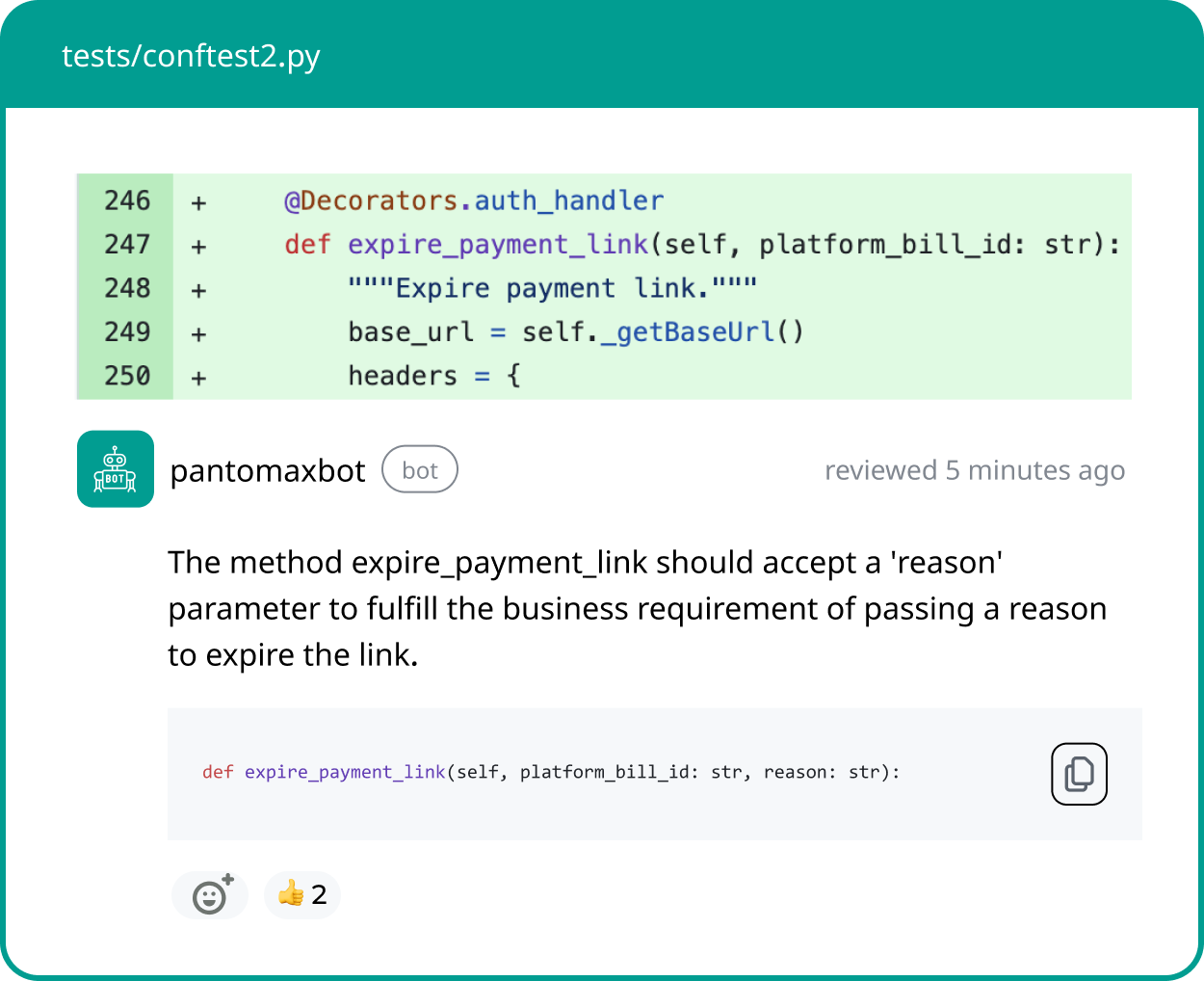
Panto AI redefines mobile app testing through its Vibe Debugging Platform, combining dynamic code reviews, code security scanning, and AI-powered QA automation. This platform represents the future of contextual, human-like intelligent testing.

Panto AI excels at natural language test case generation. Teams describe use cases in plain English, and the platform automatically navigates apps, executing tests step-by-step with zero code required. Its self-healing automation detects UI changes, adapts test flows, and notifies teams automatically without manual updates.

Panto’s standout capabilities:

  • Automated test case creation from natural language requirements
  • Multi-device execution on real devices and emulators
  • Slack and CI/CD pipeline integration with automatic triggers
  • Instant debug reports with videos, logs, and screenshots
  • Visual recognition with contextual understanding of app intent
  • Self-healing automation that adapts to UI/UX changes
  • Native iOS, Android, and iPad application support
  • Knowledge Base for storing app-specific context over time

Panto AI teams achieve 100% test coverage in two weeks, with test maintenance dropping 60-80% compared to traditional frameworks. The platform’s proprietary framework eliminates dependency on external tools while maintaining flexibility.

2. Maestro: Modern YAML-Based Mobile Testing

Maestro

Maestro has emerged as a simplicity-first mobile testing framework, designed specifically for teams seeking minimal setup with maximum reliability. Built on learnings from predecessors like Appium and XCTest, Maestro uses human-readable YAML syntax to define test flows instead of complex code.

Maestro excels at reducing test flakiness through intelligent synchronization. Unlike traditional QA frameworks requiring manual waits, Maestro automatically handles animation delays and network requests, ensuring consistent results across devices and network conditions.

Maestro’s core strengths:

  • YAML-based test definition—no programming knowledge required
  • Cross-platform execution (iOS, Android, React Native, Flutter)
  • Automatic element waiting eliminating manual timeout management
  • Visual test recording for rapid test generation
  • Open-source framework with active community support
  • Cloud execution through BrowserStack integration
  • Fast iteration—changes apply instantly without compilation

Enterprise adoption of Maestro has accelerated significantly. It reported reducing test creation time from hours to under 10 minutes per test. For agile teams prioritizing rapid automation, Maestro’s lean approach delivers exceptional velocity.

3. Appium: Cross-Platform Mobile Automation Standard

Appium quash alternatives

Appium remains the industry-standard mobile automation framework, supporting virtually every programming language and app type. Its W3C WebDriver protocol compliance ensures longevity and standardization across testing ecosystems.

Appium’s maturity translates to extensive ecosystem support, massive community resources, and established automation patterns. 2025 enhancements introduce AI-powered element location and dynamic test prioritization, analyzing code commits to automatically prioritize relevant regression tests.

Appium’s established strengths:

  • Multi-language support (Java, Python, Ruby, JavaScript, C#)
  • Native, hybrid, and web application testing
  • Selenium Grid integration for distributed parallel testing
  • No app modification or instrumentation required
  • Massive community with proven troubleshooting patterns
  • 30+ minute initial setup time typical

However, Appium demands significant coding expertise and setup complexity. Synchronization issues frequently plague test stability without explicit wait strategies.

4. Testim Mobile: AI-Powered Cloud-Based Mobile Testing

Testim

Testim Mobile streamlines mobile app automation through proprietary AI technology that understands application structure at levels other frameworks struggle to achieve. Using Enhanced Mode, Testim Mobile supports testing of Flutter, React Native, and hybrid applications with unprecedented stability.

Testim Mobile’s proprietary element detection learns app structure to produce stable tests even when applications undergo significant UI changes. This capability addresses a critical pain point—traditional QA tools break when apps evolve.

Testim Mobile key features:

  • Codeless test authoring with cloud-based execution
  • Support for native, hybrid, and cross-platform apps
  • Enhanced Mode for Flutter and React Native applications
  • Proprietary drivers providing deeper application understanding
  • Virtual Mobile Grid with diverse simulator and emulator options
  • Seamless authoring-to-execution workflow entirely in cloud
  • Test stability improvements through proprietary technology

Testim Mobile eliminates the maintenance burden plaguing traditional frameworks. Once tests are authored, they remain stable through application changes thanks to proprietary technology.

5. Firebase Test Lab: Google’s Cloud Testing Infrastructure

Firebase Test Lab quash alternatives

Firebase Test Lab provides free cloud-based testing for Android applications, leveraging Google’s infrastructure to run tests on real devices in data centers worldwide. Integrated directly with Android Studio, it enables testing without external setup complexity.

Firebase Test Lab excels at automated exploratory debugging through Robo testing. For Android apps, the platform automatically explores application interfaces, discovering crashes and obvious failures without script creation.

Firebase Test Lab strengths:

  • Completely free Android app testing on real devices
  • Real devices in Google data centers, not emulators
  • UI Automator 2.0 and Espresso framework integration
  • Robo testing for automated exploratory testing
  • Locale customization and API configuration
  • Seamless Android Studio integration
  • No external device lab maintenance required

iOS testing support remains unavailable, limiting Firebase Test Lab’s utility for cross-platform teams. The platform focuses on functional validation rather than visual regression testing.

6. Katalon Studio: Low-Code IDE for All Testing Layers

Katalon Studio

Katalon Studio democratizes test automation through its intuitive IDE, combining record/playback functionality with optional scripting capabilities. Built on Appium for mobile testing, Katalon abstracts complex driver management behind visual interfaces.

Katalon Studio enables teams to create tests without deep programming knowledge. Record application interactions, customize steps visually, and execute tests across devices—all without writing a single line of code.

Katalon’s comprehensive features:

  • Record/playback functionality for rapid test generation
  • Visual test creation with optional Groovy scripting
  • Web, API, desktop, and mobile testing unified platform
  • AI-powered test generation analyzing user interactions
  • Smart test maintenance with automatic locator updates
  • CI/CD integration (Jenkins, GitLab, Azure DevOps)
  • Built-in reporting and analytics

Setup requires Appium installation and device configuration, typically consuming 20-30 minutes for initial mobile testing setup. The visual interface compensates for this through ease-of-use advantages.

7. BrowserStack App Live: Interactive Real Device Testing

Browserstack quash alternatives

BrowserStack App Live provides instant access to 3,000+ real iOS and Android devices, eliminating the need to maintain on-premises device laboratories. No setup required—simply upload your app and begin testing immediately on real hardware.

BrowserStack App Live excels at interactive manual and exploratory testing. Teams perform live testing gestures, capture screenshots, and debug applications in real-time across diverse devices and OS versions.

BrowserStack App Live capabilities:

  • 3,000+ real devices with diverse OS versions
  • 30+ native device features (GPS, biometrics, payment methods)
  • Interactive gestures—tap, swipe, zoom, scroll naturally
  • Real-time debugging with crash logs and stack traces
  • Network simulation for testing connectivity scenarios
  • Multi-device testing simultaneously (up to 4 devices)
  • Real production app or beta APK/IPA testing

BrowserStack App Live shines for compatibility validation and exploratory testing. For automated regression testing, integration with automation frameworks becomes necessary.

8. Sofy.ai: No-Code AI Testing at Scale

Sofy.AI

Sofy.ai empowers teams through AI-driven no-code test automation, eliminating programming barriers entirely. Any team member—QA engineer, product manager, or developer—can create and maintain automated tests without coding expertise.

Sofy.ai’s reinforcement learning algorithms automatically detect UI changes and adapt tests, reducing the maintenance burden that plagues traditional automation. Teams report 50%+ reduction in automation effort compared to traditional frameworks.

Sofy.ai’s standout capabilities:

  • AI-powered test case generation from plain English descriptions
  • No-code automation accessible to non-technical team members
  • Self-healing tests adapting to UI changes automatically
  • 100+ real Android and iOS device access
  • Parallel execution reducing feedback loops dramatically
  • ML-based UX and accessibility validation (100+ guidelines)
  • CI/CD integration for automated release workflows

Sofy.ai’s impact: 1.2 million hours of development time saved across customers. With 1,700+ apps tested and 100 million minutes of testing executed, the platform demonstrates proven effectiveness at scale.

9. HeadSpin: Global Real Device Cloud with AI Analytics

Headspin quash alternatives

HeadSpin combines global device infrastructure across 50+ locations with AI-driven performance analytics, enabling teams to test applications under authentic real-world conditions. Real SIM-enabled devices in each location provide genuine network conditions rather than simulation.

HeadSpin excels at performance monitoring with 130+ built-in KPIs tracking UI responsiveness, network performance, device metrics, and user experience indicators. AI-powered root cause analysis identifies performance bottlenecks automatically.

HeadSpin’s comprehensive platform:

  • Real SIM-enabled devices across 50+ global locations
  • 130+ built-in KPIs for comprehensive performance tracking
  • AI-powered root cause analysis for faster issue resolution
  • Experience monitoring analyzing real user interaction data
  • Comparative performance analysis against peer applications
  • Continuous monitoring using synthetic data for higher availability
  • Developer-friendly platform with Grafana dashboard integration

HeadSpin targets large enterprises requiring global debugging coverage and deep performance insights. Premium pricing reflects the extensive global infrastructure and AI analytics.

10. Functionize: Agentic AI Testing Platform

Functionize

Functionize represents the frontier of autonomous testing with agentic AI capabilities. Rather than requiring engineers to script tests, Functionize agents plan, learn, and act from context—understanding complex application flows autonomously.

Functionize’s 5D data model captures approximately 200 data points per UI element, enabling self-healing that adapts to application changes with minimal false positives.

Functionize’s innovative features:

  • Plain English test creation using advanced NLP
  • Agentic-by-design architecture for autonomous testing
  • Self-healing tests reducing maintenance by 50%+
  • Visual testing and screenshot comparison capabilities
  • API testing for comprehensive end-to-end validation
  • Cloud-based parallel execution across browser/device combinations
  • Strong Performer in Forrester Wave Q4 2025 report

Functionize named Strong Performer in Forrester’s Autonomous Testing Platforms Wave report, recognized for robust AI-native architecture and comprehensive testing support across web, API, and mobile layers.

Feature Comparison Table of Quash Alternatives

Quash AlternativesBest ForPlatformsLearning CurveSetup TimePricingSelf-HealingParallel TestingReal Devices
Panto AIMobile QA with AI code reviewiOS, AndroidVery Low< 5 minsFreemiumYesMulti-deviceYes
MaestroRapid mobile test automationiOS, Android, React Native, FlutterVery Low< 5 minsOpen SourceYesYesYes
AppiumMulti-language mobile testingiOS, Android, web appsHigh30+ minsOpen SourceNoYes (Grid)Yes
Testim MobileFlutter/React Native testingAll mobile typesLow< 10 minsPaidYesYesYes
Firebase Test LabFree Android testingAndroid onlyLow< 5 minsFreeNoYesYes
Katalon StudioVisual test creationWeb, mobile, API, desktopLow20 minsFreemiumYesYesYes
BrowserStack App LiveInteractive device testingiOS, AndroidVery LowInstantPaidNoYes (manual)Yes
Sofy.aiNo-code enterprise testingiOS, AndroidVery Low< 5 minsFreemiumYesYesYes
HeadSpinGlobal performance testingWeb, mobile, OTTMedium10-15 minsEnterpriseYesYesYes
FunctionizeAutonomous test generationWeb, mobile, APILow5-10 minsPaidYesYesYes

Choosing The Right Quash Alternative

Choose Panto AI when mobile app testing combined with code review and security scanning becomes critical. Vibe Debugging provides contextual, human-like intelligence that standard frameworks cannot match.

Choose Maestro when speed of test automation is paramount and your team embraces minimal setup. YAML syntax and low code/no-code philosophy accelerate test creation dramatically for agile teams.

Choose Appium when multi-language support and maximum flexibility across app types matter more than ease-of-use. Established patterns solve nearly every mobile debugging scenario.

Choose Testim Mobile specifically for Flutter and React Native testing environments requiring exceptional stability. Proprietary technology handles complex cross-platform tools excellently.

Choose Firebase Test Lab for Android-exclusive projects where cost elimination is paramount. Free real device testing eliminates device lab maintenance costs entirely.

Choose Katalon Studio when non-technical team members require visual testing tools. The IDE bridges automation and manual testing seamlessly.

Choose BrowserStack App Live for exploratory testing and interactive validation across diverse devices. Real-time debugging capabilities shine for compatibility verification.

Choose Sofy.ai when non-technical teams require autonomous test generation without coding expertise. AI-powered automation democratizes testing across organizations.

Choose HeadSpin for enterprise organizations prioritizing global testing with comprehensive performance metrics. 50+ device locations enable worldwide validation.

Choose Functionize when autonomous AI testing provides a competitive advantage. Agentic architecture represents testing’s evolution.

Future-Ready Testing Strategy

The current testing ecosystem provides exceptional Quash alternatives, addressing diverse organizational needs comprehensively. Each tool excels in specific scenarios based on technology stack, team composition, and business priorities.

Evaluate your Quash alternatives by considering:

  • Team expertise levels and training requirements
  • Application architecture and technology stack
  • Scaling requirements and growth trajectories
  • Total cost of ownership across options
  • CI/CD pipeline integration needs
  • Maintenance and community support longevity
  • Global testing requirements and device coverage
  • Performance monitoring and analytics depth

Platforms like Panto AI, Maestro, and Functionize exemplify this evolution, delivering comprehensive AI-driven automation without maintenance overhead. Organizations investing in modern Quash alternatives today position themselves competitively for years ahead.