


Choosing between BrowserStack and LambdaTest is not easy. Both are powerful cloud-based testing platforms that solve very similar problems.
However, they differ significantly in pricing, usability, scalability, and enterprise readiness. This guide breaks down those differences so you can pick the tool that fits your team best.
BrowserStack vs LambdaTest – At a Glance
Modern teams need fast, reliable cross‑browser and cross‑device testing.
Both BrowserStack and LambdaTest help you do that without maintaining your own device lab.
At a high level:
- BrowserStack focuses on depth and maturity.
- LambdaTest focuses on cost‑effectiveness and flexibility.
What is BrowserStack?
BrowserStack is a mature, cloud-based testing platform launched in 2011. It provides access to a large pool of real devices, browsers, and operating systems.
Teams use BrowserStack for:
- Manual live testing of web and mobile apps
- Automated tests using Selenium, Cypress, Playwright, and more
- Real device testing for iOS and Android
- Visual and responsive design checks
It is widely adopted in enterprises that need stability, compliance, and a robust real-device lab. The platform has earned trust from Fortune 500 companies and tech giants who rely on it daily.
What is LambdaTest?
LambdaTest is a cloud-based testing platform focused on cross‑browser and cross‑platform automation. It competes directly with BrowserStack but often emphasizes affordability and scalability.
Teams use LambdaTest for:
- Cross‑browser testing on a wide matrix of browsers and OS
- Selenium, Cypress, Playwright, Appium, and API test automation
- Parallel test execution at scale
- Real device and emulator/simulator testing (depending on plan)
LambdaTest is appealing for fast‑growing teams that want more concurrency at a lower cost. It has rapidly grown as an alternative for organizations seeking more flexibility in their testing strategies.
Feature‑by‑Feature Comparison: BrowserStack vs LambdaTest
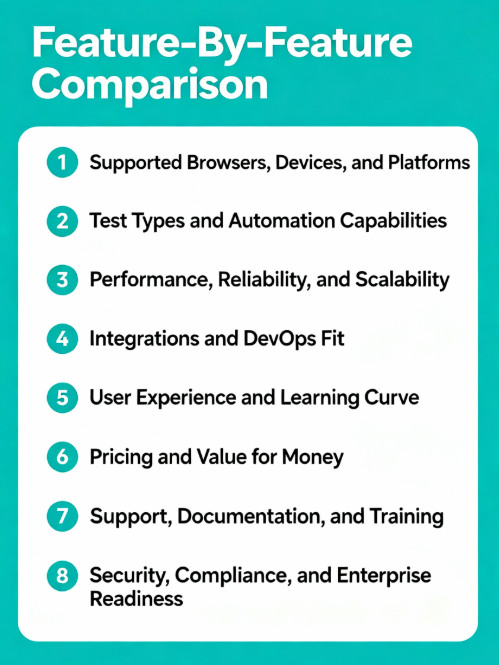
1. Supported Browsers, Devices, and Platforms
Both platforms support a large matrix of browsers, operating systems, and devices.
However, they emphasize slightly different strengths.
- Strong focus on real mobile devices for both iOS and Android
- Wide coverage for legacy and modern browsers
- Good support for desktop OS like Windows, macOS, and popular browser versions
- Extensive library of actual physical devices maintained in data centers
- Broad cross‑browser coverage for web apps
- Mix of real devices and emulators/simulators depending on plan
- Focus on giving more concurrency at competitive pricing
- Fast provisioning of test environments
In general:
- Choose BrowserStack if real‑device depth is critical.
- Choose LambdaTest if browser coverage plus concurrency matters more than breadth of physical devices.
2. Test Types and Automation Capabilities
Both platforms are well suited for automation‑first teams. They integrate with popular frameworks and CI tools out of the box.
BrowserStack supports:
- Selenium, Cypress, Playwright, Puppeteer
- Appium for mobile QA
- Visual testing, screenshots, and responsive checks
- Local testing for staging or internal environments
- Inspector and debugging tools for troubleshooting
LambdaTest supports:
- Selenium, Cypress, Playwright, Puppeteer, and more
- Appium for mobile QA
- Parallel test runs and cloud‑hosted test execution
- Local testing tunnels for secure environments
- Built‑in screenshot comparison and visual regression testing
When comparing automation:
- BrowserStack is battle‑tested in many large enterprises.
- LambdaTest leans into speed, parallelism, and scale for growing teams.
3. Performance, Reliability, and Scalability
Slow and flaky tests can destroy developer confidence. So platform performance really matters.
In practice:
- BrowserStack is often praised for its reliability and device stability.
- LambdaTest is frequently appreciated for fast spin‑up and parallel runs at scale.
Things to consider:
- High‑volume CI/CD pipelines may benefit from LambdaTest’s aggressive parallelism options.
- Critical production releases and large mobile teams may prefer BrowserStack’s mature infrastructure.
If possible, run a small proof of concept on both platforms under your real workload. This gives you actual performance data specific to your application and test scenarios.
4. Integrations and DevOps Fit
A cross‑browser platform becomes truly useful only when it fits into your pipeline.
Both BrowserStack and LambdaTest integrate with modern DevOps stacks.
Common integration points:
- CI/CD tools like Jenkins, GitHub Actions, GitLab CI, Azure DevOps, CircleCI
- Issue trackers like Jira
- Collaboration tools like Slack or Microsoft Teams
- Test frameworks and reporting tools
BrowserStack:
- Long history of integrations and plugin support
- Good documentation for major CI tools
- Deep support for multiple automation frameworks
- APIs and webhooks for custom integrations
LambdaTest:
- Strong coverage of popular CI/CD tools and issue trackers
- Focuses on making integrations quick and easy
- Often adds new integrations faster to keep up with ecosystem trends
- Modern REST APIs for flexible custom workflows
If your pipeline is complex or heavily regulated, BrowserStack’s maturity can be reassuring. If you want quick, modern integrations with minimal friction, LambdaTest is very attractive.
5. User Experience and Learning Curve
A powerful platform that is hard to use will slow teams down. UX is one of the areas where teams notice clear differences.
BrowserStack UX:
- Rich, feature‑heavy interface
- Can feel overwhelming for complete beginners
- Very powerful once teams know where everything lives
- Steeper learning curve for first‑time users
LambdaTest UX:
- Clean, modern, and relatively simple interface
- Easier onboarding for non‑specialist testers
- Clear navigation around live testing, automation, and analytics
- Intuitive dashboard and reporting views
If your team includes non‑technical testers, LambdaTest may feel more approachable. If you have an experienced QA team, BrowserStack’s depth may be an advantage, not a burden.
6. Pricing and Value for Money
Exact pricing and plans change frequently, so always verify on the vendor sites.
However, general patterns are quite consistent.
Typical patterns:
- BrowserStack tends to charge a premium for its real‑device coverage and brand maturity.
- LambdaTest usually positions itself as more cost‑effective, especially at higher concurrency levels.
When evaluating value:
- Map your expected monthly test volume and needed parallel sessions.
- Estimate how many engineers will actively use the tool.
- Compare yearly cost against lost time from flaky or slow tests.
Often, small teams that need a few concurrent sessions may find both tools similar in cost. While growing teams that need many parallel runs often see LambdaTest as more budget‑friendly.
The ROI calculation should include not just platform cost but also time saved through faster test execution.
7. Support, Documentation, and Training
Good support can save days during critical release weeks. Here, both tools offer solid but slightly different experiences.
BrowserStack support:
- Email and ticket‑based support
- Chat support on many plans
- Strong documentation and guides
- Enterprise support options for large customers
- Dedicated account managers on premium tiers
LambdaTest support:
- Email, chat, and knowledge base on most plans
- Emphasis on responsive customer service
- Documentation, webinars, and training resources
- Community forums and user groups
If your organization requires strict SLAs and enterprise‑grade account management, verify the exact support tiers for each vendor. Support quality becomes increasingly important as your test infrastructure grows.
8. Security, Compliance, and Enterprise Readiness
For enterprises, security and compliance are non‑negotiable. This is one area where BrowserStack has invested heavily.
Key considerations:
- BrowserStack is known for strong compliance and certifications, enterprise security practices, and secure real‑device handling.
- LambdaTest offers secure cloud execution, network tunnels, and enterprise‑grade security controls, especially on higher tiers.
Additional security factors:
- Data residency requirements (on‑premises or regional cloud)
- Encryption standards for data in transit and at rest
- SOC 2, ISO 27001, GDPR, HIPAA compliance certifications
- Audit logs and access control policies
If you are in a regulated domain (finance, healthcare, government), it is important to involve your security team early. Also, request security whitepapers, certifications, and architecture docs from both vendors.
Quick Reference: Comparison Table
| Feature | BrowserStack | LambdaTest |
|---|---|---|
| Real Device Coverage | Extensive library of physical devices | Mix of real devices & emulators |
| Browser Support | Wide range (legacy to modern) | Broad cross-browser coverage |
| Automation Frameworks | Selenium, Cypress, Playwright, Appium | Selenium, Cypress, Playwright, Appium |
| Parallel Test Execution | Available but premium-focused | Optimized for high concurrency |
| Cost Model | Premium pricing for features | More cost-effective at scale |
| UI/UX | Feature-rich, steeper learning curve | Modern, intuitive interface |
| Integration Ecosystem | Mature plugins for major CI/CD tools | Fast-growing integration coverage |
| Mobile Testing | Strong iOS & Android real device testing | Good coverage via emulators/real devices |
| Visual Testing | Built-in screenshot & comparison tools | Built-in visual regression testing |
| Performance | Highly reliable and stable | Fast spin-up & parallel execution |
| Enterprise Security | SOC 2, ISO 27001, HIPAA certified | Enterprise-grade controls available |
| Support Tier Options | Email, chat, dedicated account managers | Email, chat, knowledge base |
| Scalability | Excellent for large enterprises | Excellent for rapid scaling |
| Compliance Certifications | Multiple (regulated industries focus) | Growing compliance coverage |
| Pricing Transparency | Premium model, custom quotes | Flexible plans with clear pricing |
BrowserStack vs LambdaTest – How to Decide
There is no universal winner between BrowserStack and LambdaTest. The right tool depends on your context, constraints, and roadmap. This section provides a decision framework your team can actually use.
When BrowserStack Makes More Sense
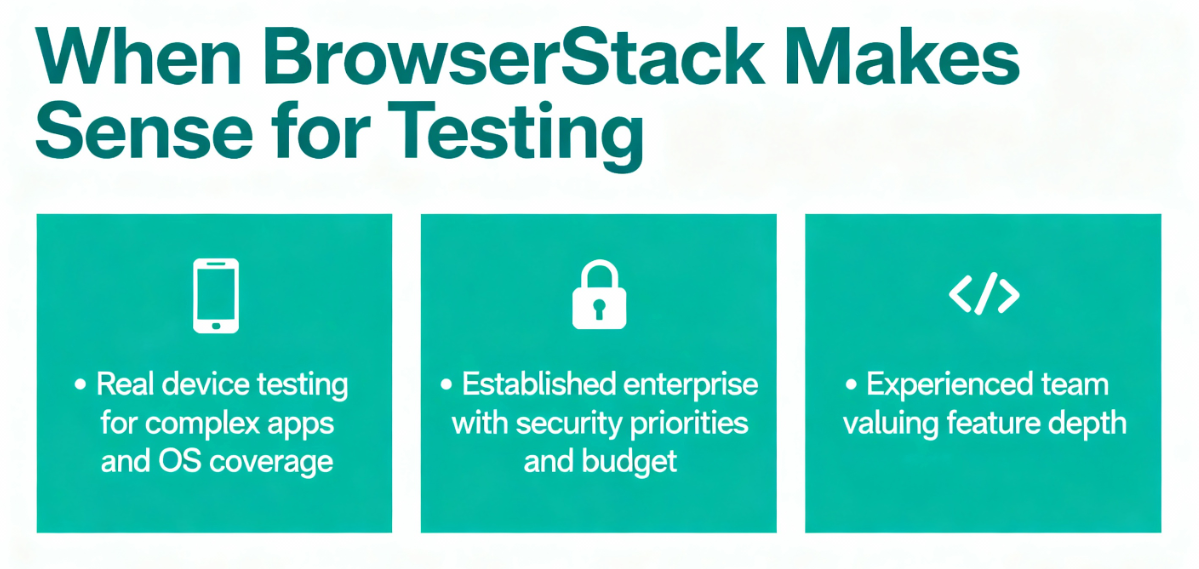
BrowserStack is a strong fit when:
Real device testing is critical:
- You test complex native or hybrid mobile apps.
- You need deep coverage of OS versions and physical devices.
- Device fragmentation and edge cases are common pain points in your debugging process.
You are an established enterprise:
- Security and compliance are big priorities.
- You need predictable, stable infrastructure and long‑term vendor reliability.
- Budget is available for premium tools that reduce risk.
Your team is already experienced with automation:
- Advanced testers can leverage BrowserStack’s full power.
- The richer interface is not a barrier for your QA engineers.
- You value depth of features over ease of use.
Choose BrowserStack if quality, stability, and enterprise readiness outweigh the need for aggressive cost optimization.
When LambdaTest Makes More Sense
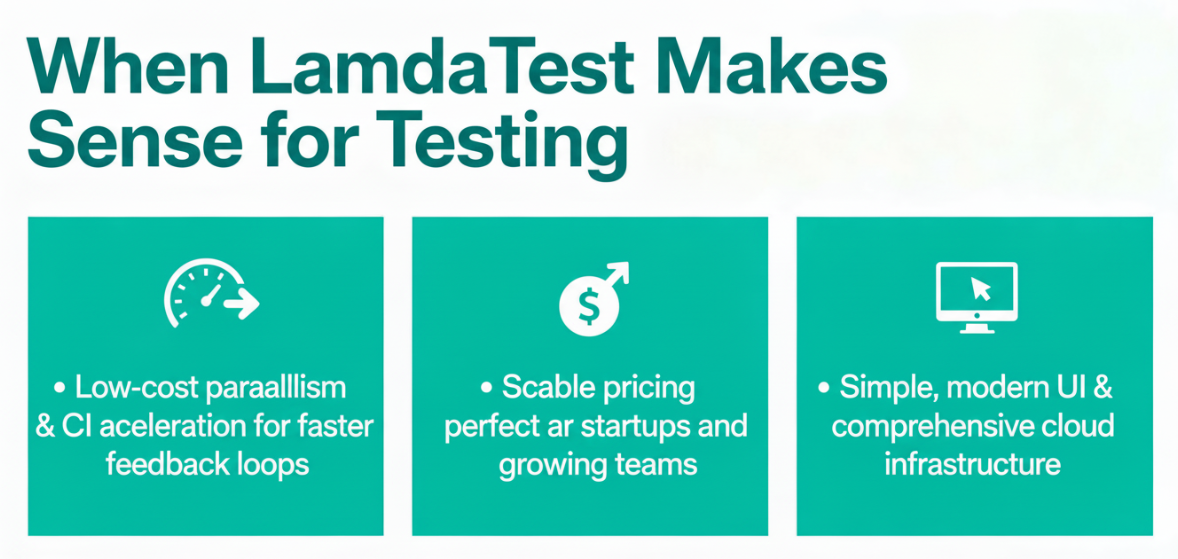
LambdaTest is often the better choice when:
You want more parallelism for less cost:
- You run heavy CI/CD pipelines with many browser combinations.
- Faster feedback through more concurrent sessions matters more than deep device libraries.
- Every minute of build time saved translates to productivity gains.
Your team is scaling quickly:
- You are a startup or fast‑growing product team.
- You want pricing that stays manageable as your test volume grows.
- Predictable, linear cost scaling is important to your budget planning.
You prefer a simpler, modern UI:
- Testers with mixed technical backgrounds can start quickly.
- You value ease of navigation and low onboarding friction.
- Modern, intuitive interfaces improve team adoption rates.
Choose LambdaTest if you want to maximize coverage and speed at a more approachable price point.
Where Panto AI Adds a Different Dimension
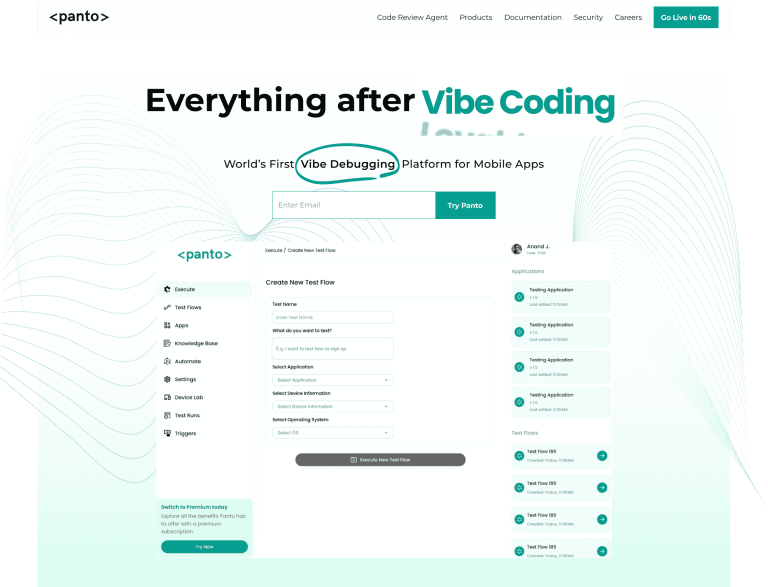
Panto AI addresses challenges that BrowserStack and LambdaTest are not designed to solve. While those platforms focus on execution infrastructure and device access, Panto AI focuses on how tests are created and maintained. It introduces AI-driven modern QA and intent-based validation that neither tool provides.
Panto AI also reduces the operational burden of test maintenance. Its ability to automatically adapt to UI changes helps eliminate brittle tests and recurring failures. This makes it especially valuable for teams that already have cloud debugging infrastructure but struggle with test reliability and scale.
Key Questions to Ask Before You Commit
Before locking into a contract, answer these questions as a team:
What matters more: devices or concurrency?
- If deep real‑device coverage is critical → lean toward BrowserStack.
- If running many tests in parallel is critical → lean toward LambdaTest.
What does your security and compliance posture demand?
- Highly regulated sectors may favor BrowserStack’s enterprise story.
- Growing teams with standard needs may find LambdaTest more than sufficient.
Who will actually use the tool daily?
- Mostly senior QA automation engineers → either will work.
- Mixed team including manual testers and product folks → LambdaTest’s UX can help.
How quickly is your team and test suite growing?
- If growth is explosive, optimize for predictable cost and parallelism.
- If growth is moderate, optimize for depth, robustness, and long‑term partnership.
What is your annual testing budget and how flexible is it?
- Fixed, tight budgets favor LambdaTest’s cost advantage.
- Flexible budgets that can absorb premium tools favor BrowserStack.
Gather your answers, then run a short trial on both platforms with real scenarios. Let data from your own pipelines drive the final call.
Quick Snapshot: When Each Shines
Choose BrowserStack if your priorities are:
- Enterprise‑grade real device coverage
- Strong brand trust and proven stability
- Advanced mobile testing and debugging capabilities
- Long‑term vendor partnership assurance
Choose LambdaTest if your priorities are:
- Cost‑effective parallel test execution
- Flexible pricing for scaling teams
- Simple, modern UI with fast onboarding
- Rapid feature updates and innovation
Final Verdict: BrowserStack vs LambdaTest
Both BrowserStack and LambdaTest are capable, production-ready platforms for cross-browser testing.
BrowserStack is a great choice if you need robust real-device coverage and enterprise-grade security. It is ideal for organizations that value maturity, stability, and rich functionality. It also serves large enterprises or regulated industries with strict compliance requirements.
LambdaTest is a great choice if you need high concurrency at a more affordable cost. It offers a clean, modern user experience with quick onboarding. If cost efficiency and rapid feature updates are your priorities, LambdaTest provides a compelling value proposition in modern QA.
For teams seeking to reduce test authoring and maintenance through AI-driven, intent-based automation, Panto AI is a complementary option worth evaluating alongside these platforms. The best decision is the one aligned with your roadmap, risk profile, and budget.