


QA automation has matured rapidly, and teams now expect more than test case generation. Platforms competing with TestMu AI are evolving toward autonomous test generation, self-healing execution, and continuous quality intelligence.
In 2026, selecting the right alternative directly impacts release velocity and defect leakage. Teams are seeking TestMu AI alternatives that emphasize NLP-based testing, and mobile-first strategies amid rising mobile QA budgets (62% of total).
This guide evaluates the 10 best TestMu AI alternatives for AI test generation and QA automation. All tools listed emphasize cloud delivery, intelligent maintenance, and scalable automation.
Why Teams Are Replacing TestMu AI in 2026
TestMu AI popularized AI-assisted test creation, but modern QA teams now demand deeper autonomy. Requirements include faster test authoring, lower maintenance costs, and tighter CI/CD integration.
Many alternatives outperform TestMu AI across these dimensions. Limitations include Chrome-family bias in some setups, high costs for massive parallel runs, and less mobile-specific vibe debugging.
Teams report 71% evaluate alternatives yearly for better mobile coverage, lower maintenance (45% reduction goal), and AI-native mobile execution.
Key Limitations Driving the Shift
- Limited autonomous test generation beyond initial flows
- High manual intervention during UI changes
- Shallow production-quality insights
- Scaling challenges in large CI pipelines
Common TestMu pain points:
- Enterprise pricing scales quickly beyond $500/mo.
- Script-first foundations under AI bolt-ons cause brittleness.
- Limited natural language for mobile-only flows without code.
What Modern AI QA Platforms Deliver
- Natural language to executable test generation
- Self-healing locators and adaptive assertions
- Risk-based test prioritization using ML
- Cloud-native execution at scale
The following tools represent the most competitive TestMu AI alternatives available in 2026. Each emphasizes AI-first automation rather than scripted assistance.
Mobile Testing Trends 2026
Mobile QA in 2026 is defined by AI autonomy, device fragmentation, and faster release cycles. Mobile-first companies now treat debugging as a continuous, AI-assisted process rather than a discrete phase.
AI-Generated Tests Replace Manual Authoring
NLP test generation has become a baseline expectation. QA teams increasingly describe user journeys in plain English and allow AI to generate executable mobile tests. This shift reduces test creation time by 60–80% across most teams.
- NLP-driven test creation from user stories
- Automatic expansion of test coverage
- Reduced dependency on Appium expertise
Self-Healing Is No Longer Optional
Frequent UI updates make traditional locator-based tests unsustainable. In 2026, mobile testing platforms are expected to automatically adapt to UI, layout, and flow changes. Self-healing automation now directly impacts release velocity.
- AI-based locator remapping
- Dynamic assertion updates
- Up to 50% reduction in flaky test failures
Real Device Cloud Usage Continues to Rise
Emulators alone no longer provide sufficient confidence for mobile releases. Teams increasingly rely on cloud-based real device testing to capture OS-specific, hardware-level issues. This trend is strong for fintech and consumer apps.
- Broader device and OS coverage
- Improved detection of performance issues
- Higher production defect prevention rates
Shift-Left and CI-Integrated Mobile QA
Mobile testing is moving earlier into the development lifecycle. AI-generated tests now run automatically on pull requests and feature branches. This enables faster feedback and reduces late-stage regression failures.
- Automated test generation at commit time
- Tighter CI/CD pipeline integration
- Shorter release cycles with higher confidence
Unified Functional and UX Validation
Functional correctness alone is no longer sufficient for mobile apps. Modern QA platforms combine functional testing with UX and visual regression validation. AI now evaluates flows, animations, and layout consistency across devices.
- AI-assisted visual and UX validation
- Detection of layout and interaction regressions
- Improved user experience quality metrics
In 2026, the most effective mobile QA strategies combine AI test generation, self-healing execution, and real-device validation. Tools that fail to support these trends are quickly becoming obsolete in high-velocity product teams.
10 Best TestMu AI Alternatives for AI Test Generation
1. Panto AI
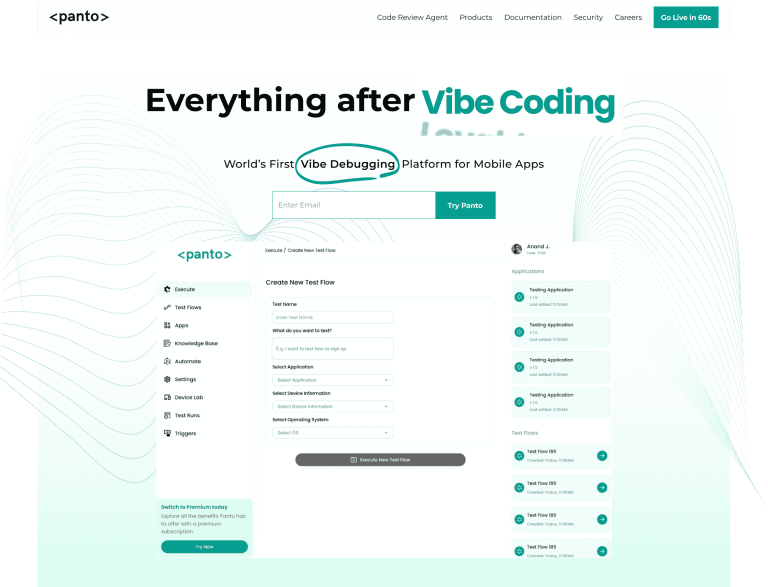
Panto AI is an autonomous AI testing platform designed to replace brittle test scripts with intelligent, intent-driven automation. It converts product behavior and requirements into executable tests using contextual AI reasoning.
Why Panto AI Leads in 2026
Panto AI focuses on “vibe debugging,” where the system understands expected behavior rather than rigid steps. This enables automatic test creation, healing, and expansion as applications evolve. Teams report significant reductions in test maintenance effort.
- Up to 70% reduction in test authoring time
- Self-healing across UI and workflow changes
- Cloud execution on real devices and emulators
- Native CI/CD and bug reporting integrations
2. Mabl
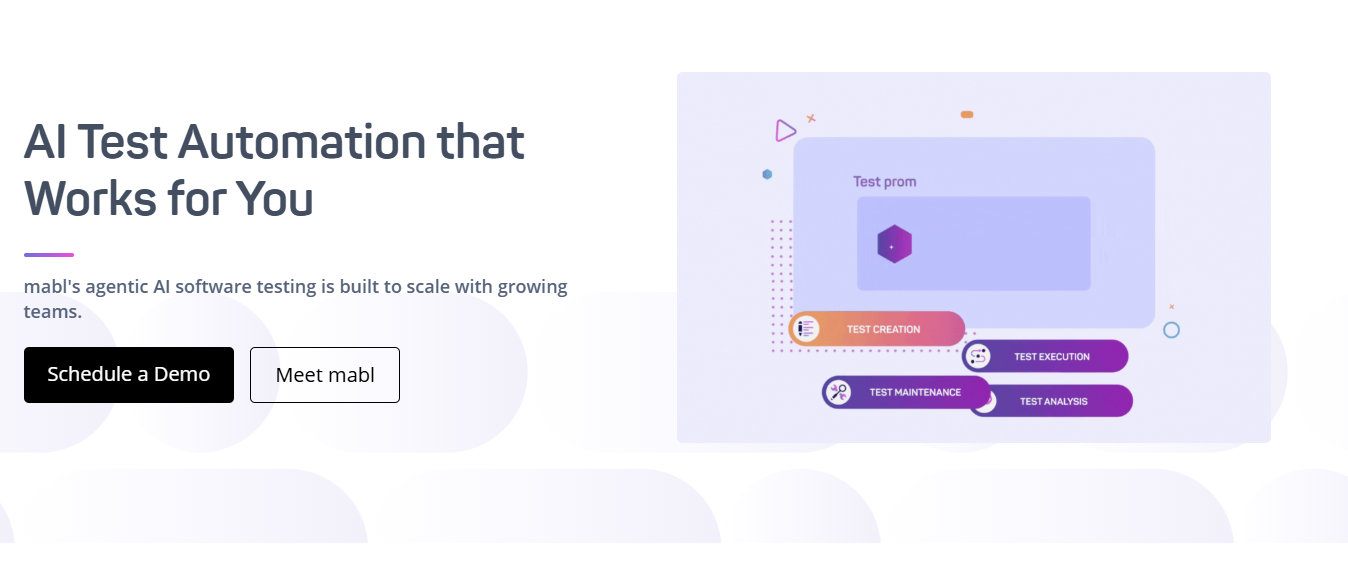
Mabl is a cloud-native AI debugging platform optimized for continuous delivery teams. It combines low-code test creation with machine learning models that adapt tests to application changes. Mabl is widely used for web and API regression automation.
Core Strengths
Mabl’s AI agents monitor application behavior across environments. They automatically adjust assertions and user journeys when changes occur. This makes it effective for fast-moving agile teams.
- AI-driven test stabilization
- Built-in performance and accessibility checks
- Deep GitHub, GitLab, and Jenkins integrations
3. Testim

Testim emphasizes stable UI automation using AI-powered testing locators and reusable components. It enables rapid test creation while allowing engineers to extend flows using JavaScript. This hybrid model appeals to mixed-skill QA teams.
Where Testim Excels
Its Smart Locators dramatically reduce flaky tests caused by DOM changes. Testim also supports modular test architecture for enterprise-scale suites.
- AI-based element recognition
- Reusable test building blocks
- Cloud execution with parallelization
4. testRigor
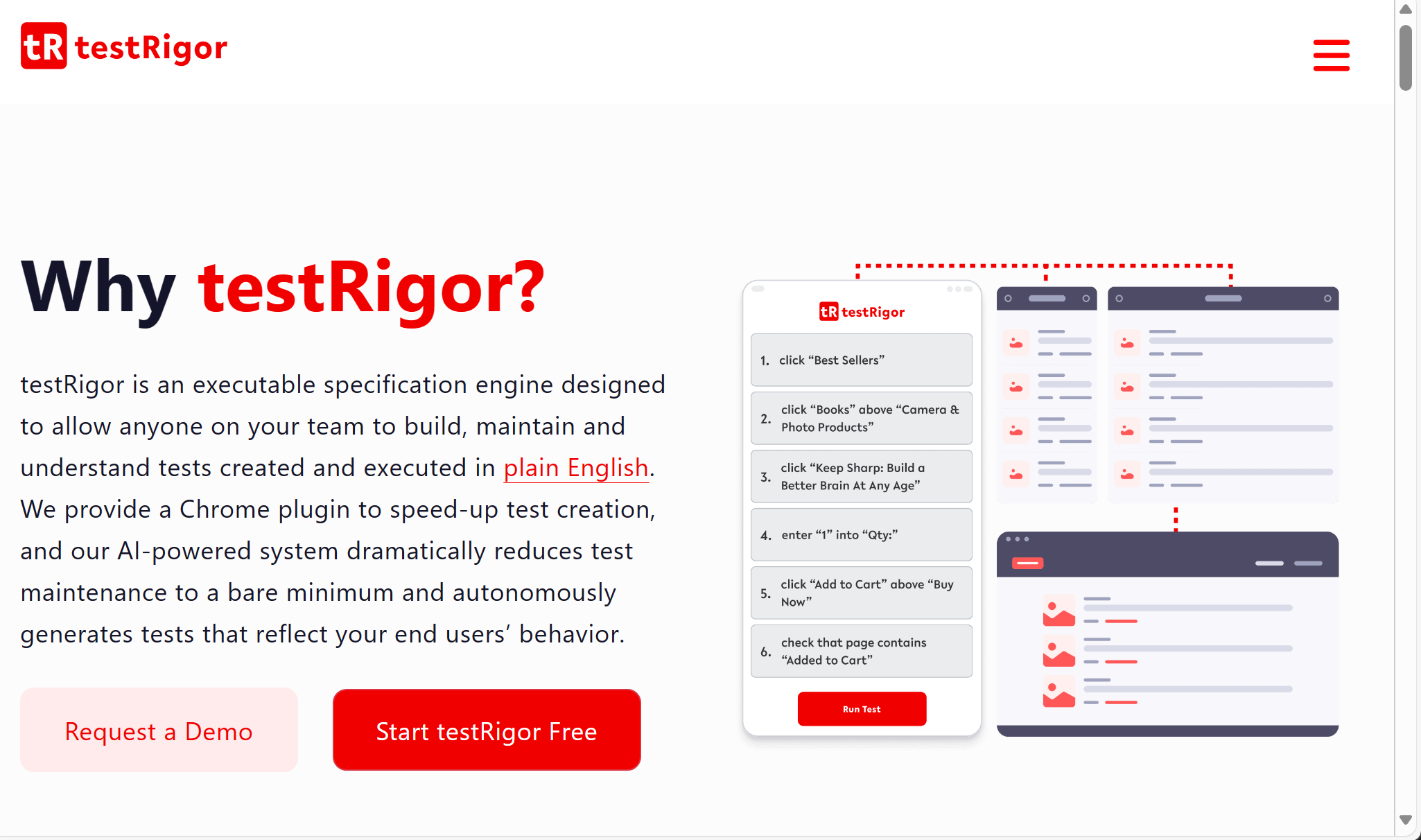
testRigor allows teams to write tests in plain English that are executed using AI interpretation. It removes the need for selectors, XPath, or scripting knowledge. This makes it attractive for non-technical QA roles.
Automation Without Scripts
The platform focuses on human-readable intent rather than implementation details. AI handles locator resolution and flow execution dynamically.
- English-based test definitions
- Self-healing execution engine
- Web, mobile, and API support
5. Maestro Cloud
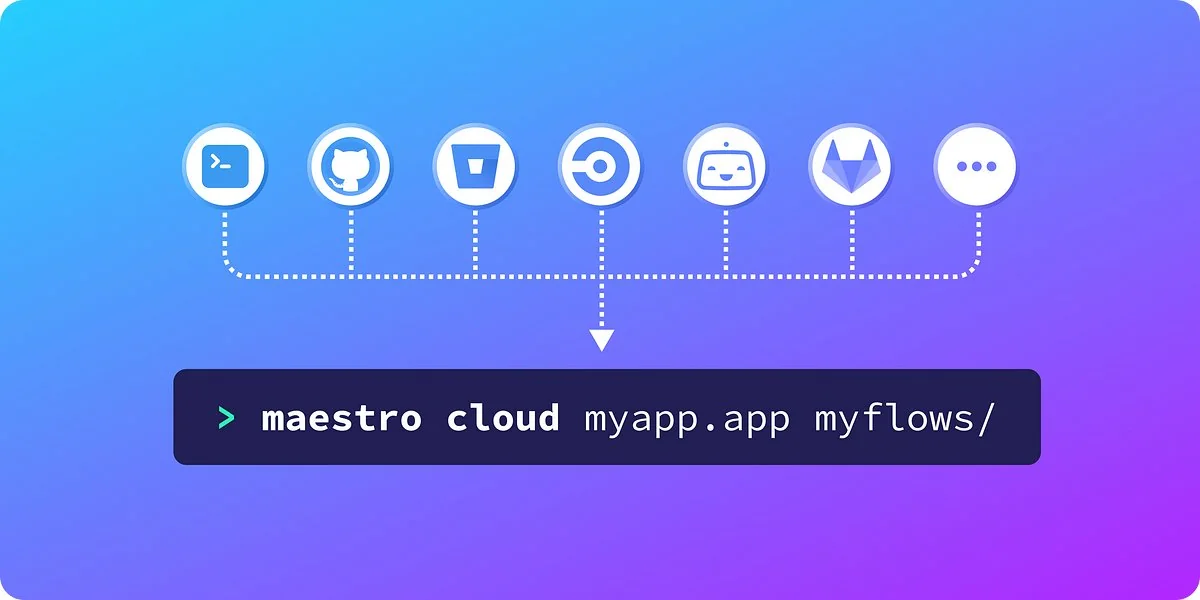
Maestro Cloud is a modern mobile automation platform built around declarative, AI-assisted test flows. It focuses on fast, reliable mobile testing without the brittleness of traditional Appium-heavy setups. Maestro is increasingly adopted by mobile-first teams in 2026.
Why Maestro Cloud
Unlike generic cloud grids, Maestro emphasizes intent-driven mobile testing workflows. Tests are written in a human-readable format and executed reliably across Android and iOS environments. Its cloud offering eliminates local setup and device management overhead.
- Declarative mobile test syntax (YAML-based)
- AI-assisted flow validation and retries
- Cloud execution on real and virtual devices
- Strong support for CI/CD pipelines
Maestro Cloud is best suited for teams prioritizing mobile reliability, fast feedback, and low-maintenance automation. Its lightweight approach makes it a strong TestMu AI alternative for modern mobile QA stacks.
6. ACCELQ

ACCELQ uses intent-driven AI models to generate tests from business workflows. It unifies UI, API, mobile, and backend automation into a single platform. AI predicts which tests are most valuable per release.
Business-Aligned Automation
The platform maps automation directly to business intent. This reduces redundant test coverage and improves release confidence.
- Natural language automation logic
- Unified multi-layer debugging
- AI-based test prioritization
7. Applitools
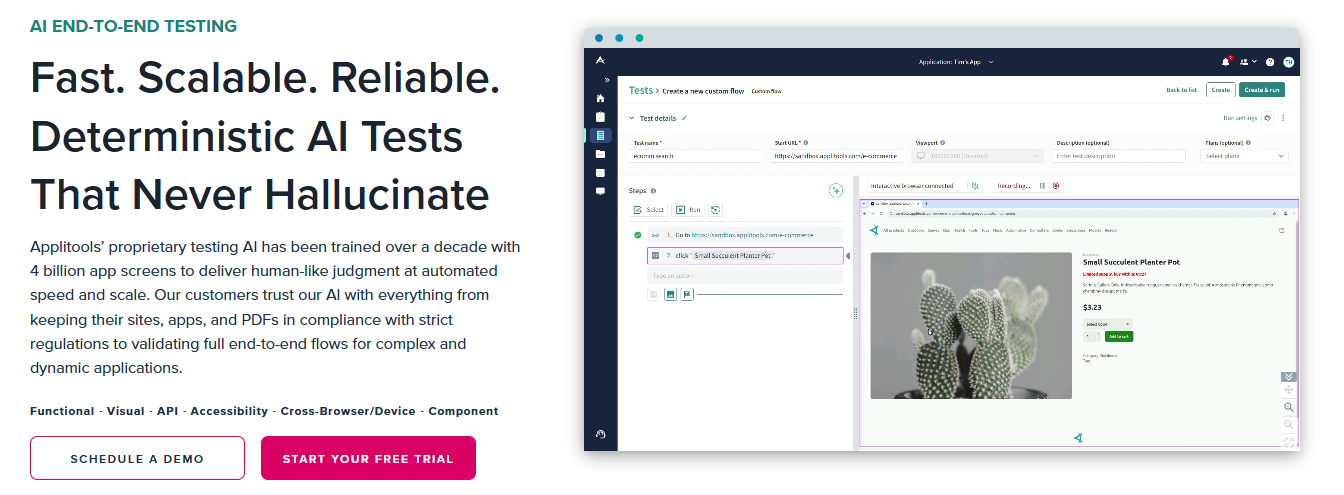
Applitools specializes in AI-powered visual regression testing rather than full flow automation. It detects UI regressions that functional tests often miss. This makes it a strong complement or partial alternative to TestMu AI.
Visual AI Differentiation
Its Visual AI compares rendered screens using perceptual models. Minor pixel differences are ignored while meaningful layout issues are flagged.
- Visual regression at scale
- Cross-device UI validation
- Framework-agnostic integrations
8. Autify
Autify offers codeless AI automation for web and mobile apps. Tests are created through recording and refined using AI-suggested updates. The platform targets teams with limited engineering bandwidth.
Ease of Adoption
Autify minimizes onboarding time and allows QA teams to achieve coverage quickly. AI handles maintenance suggestions when UI changes occur.
- No-code test creation
- Automatic test updates
- Parallel cloud execution
9. Functionize

Functionize applies reinforcment learning and NLP to generate and maintain automated tests. It focuses on enterprise-scale automation with predictive analytics. The platform learns application behavior over time.
Enterprise Intelligence
Functionize predicts failure-prone areas and focuses test execution accordingly. This reduces unnecessary runs while improving defect detection.
- NLP-based test creation
- Predictive analytics engine
- Cloud-native scalability
10. Katalon
Katalon combines traditional QA automation tooling with AI-assisted features. It supports web, API, mobile, and desktop testing. While not fully autonomous, its AI capabilities reduce flakiness and maintenance.
Hybrid Flexibility
Katalon suits teams transitioning from scripted automation to AI-assisted workflows. It balances control with productivity enhancements.
- Multi-platform debugging
- AI-based locator healing
- Flexible deployment options
Comparison Table Of TestMu AI Alternatives
| Tool | AI Test Generation | Cloud-Native | No-Code Support | Self-Healing | Best Use Case |
|---|---|---|---|---|---|
| Panto AI | Full | Yes | Yes | Advanced | Autonomous mobile & E2E QA |
| Mabl | Strong | Yes | Low-code | Yes | CI-driven web automation |
| Testim | Partial | Yes | Low-code | Yes | Stable UI automation |
| testRigor | Full | Yes | Yes | Yes | Non-technical QA teams |
| KaneAI | Strong | Yes | Yes | Partial | Cross-browser testing |
| ACCELQ | Strong | Yes | Yes | Yes | Business-driven QA |
| Applitools | Visual | Yes | No | N/A | Visual regression testing |
| Autify | Moderate | Yes | Yes | Suggested | Rapid no-code automation |
| Functionize | Strong | Yes | Yes | Yes | Enterprise AI QA |
| Katalon | Assisted | Partial | Low-code | Partial | Hybrid QA teams |
How to Choose the Right TestMu AI Alternative in 2026
Selecting the right TestMu AI alternative depends on application type, team skill mix, and release velocity. No single platform fits every QA workflow. The goal is to align AI capabilities with your product and delivery model.
Panto AI when:
- Your product is mobile-first (iOS, Android, or cross-platform)
- You want AI-generated tests from natural language requirements
- You need self-healing automation with minimal maintenance
- Your team prioritizes speed over scripting flexibility
Choose Mabl If:
- You run frequent CI/CD deployments for web applications
- You prefer low-code test creation with strong DevOps integration
- You need built-in performance and regression insights
Testim is the choice:
- You maintain large, complex web UI test suites
- You want AI-stabilized locators with optional JavaScript control
- You want enhanced collaborations between both QA engineers and developers
testRigor is good if:
- Your QA team is largely non-technical
- You want tests written entirely in Natural Language
- You want to eliminate selector and locator maintenance
Choose Maestro Cloud If:
- You need lightweight, mobile-focused QA automation
- You prefer declarative test definitions over recorded scripts
- Your team wants fast execution with minimal setup
ACCELQ when:
- You want automation aligned to development workflows
- You test across UI, API, and backend layers
- You need AI-driven test prioritization
Applitools Is the Choice:
- Visual accuracy is critical to your application
- You need to detect layout and visual regressions
- You already have functional automation in place
Autify If:
- You want codeless automation with fast onboarding
- Your team lacks deep automation expertise
- You need cloud-based execution with AI maintenance
Functionize Is Good If:
- You operate at enterprise scale
- You need predictive productivity analytics and risk-based testing
- You want AI to focus coverage on failure-prone areas
Choose Katalon If:
- You want a hybrid approach to automation
- Your team mixes manual testers and automation engineers
- You are transitioning from scripted to AI-powered testing
Conclusion
In 2026, the most effective TestMu AI alternatives are those that minimize test maintenance while maximizing coverage. AI-driven test generation, self-healing execution, and cloud scalability are no longer differentiators but expectations.
Platforms like Panto AI represent the shift toward autonomous QA. Selecting the right tool is ultimately a strategic decision that shapes release confidence, engineering efficiency, and long-term product quality.