

Infrastructure-as-Code (IaC) has become essential for modern DevOps teams, but reviewing IaC configurations presents unique challenges. From Terraform security vulnerabilities to CloudFormation misconfigurations, teams need intelligent code review tools that understand infrastructure patterns.
This guide explores the best AI code reviewers for IaC in 2026, featuring tools that combine automated scanning, AI-powered insights, and compliance checking to catch infrastructure problems before production deployment.
12 Most Innovative IaC Code Review Solutions
1. Panto AI
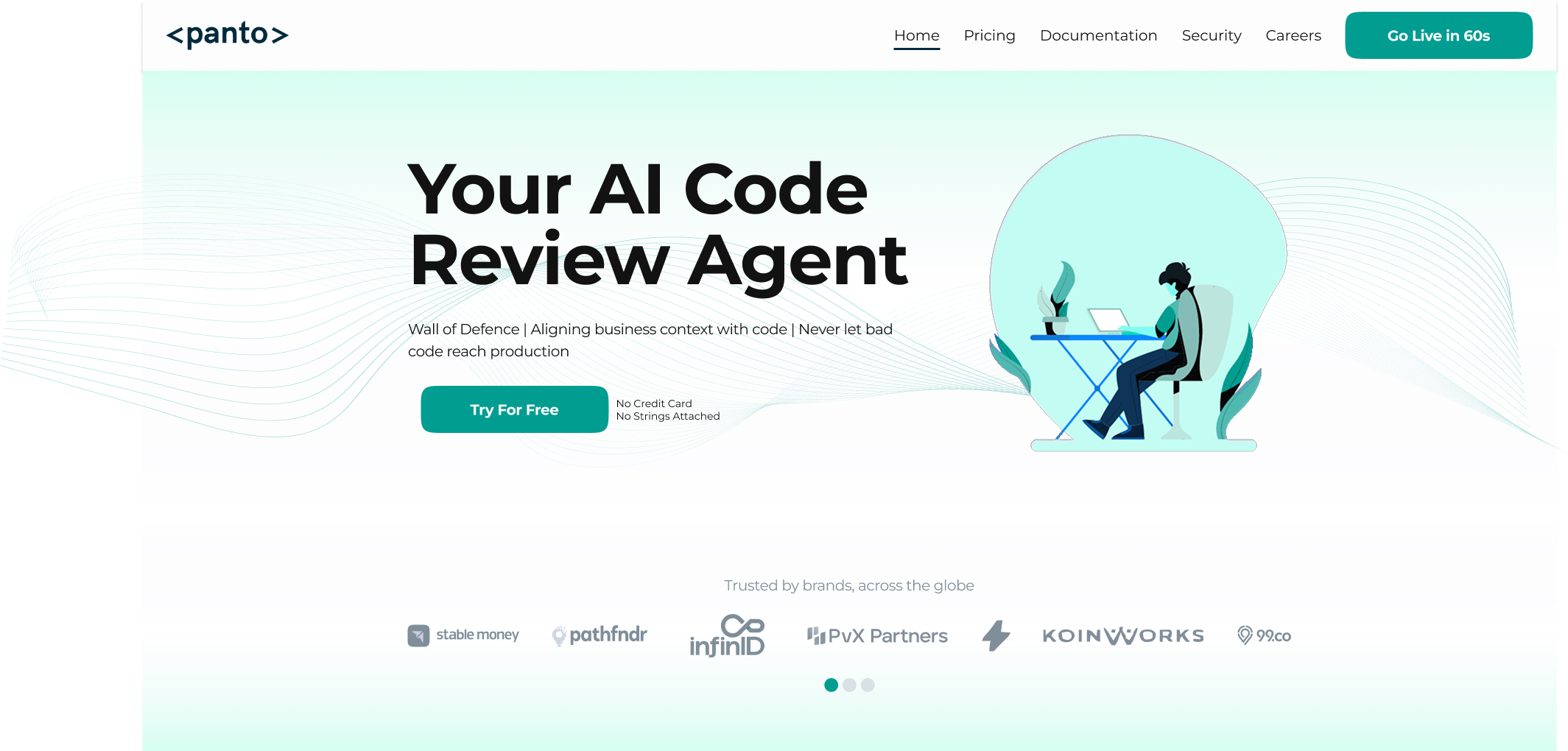
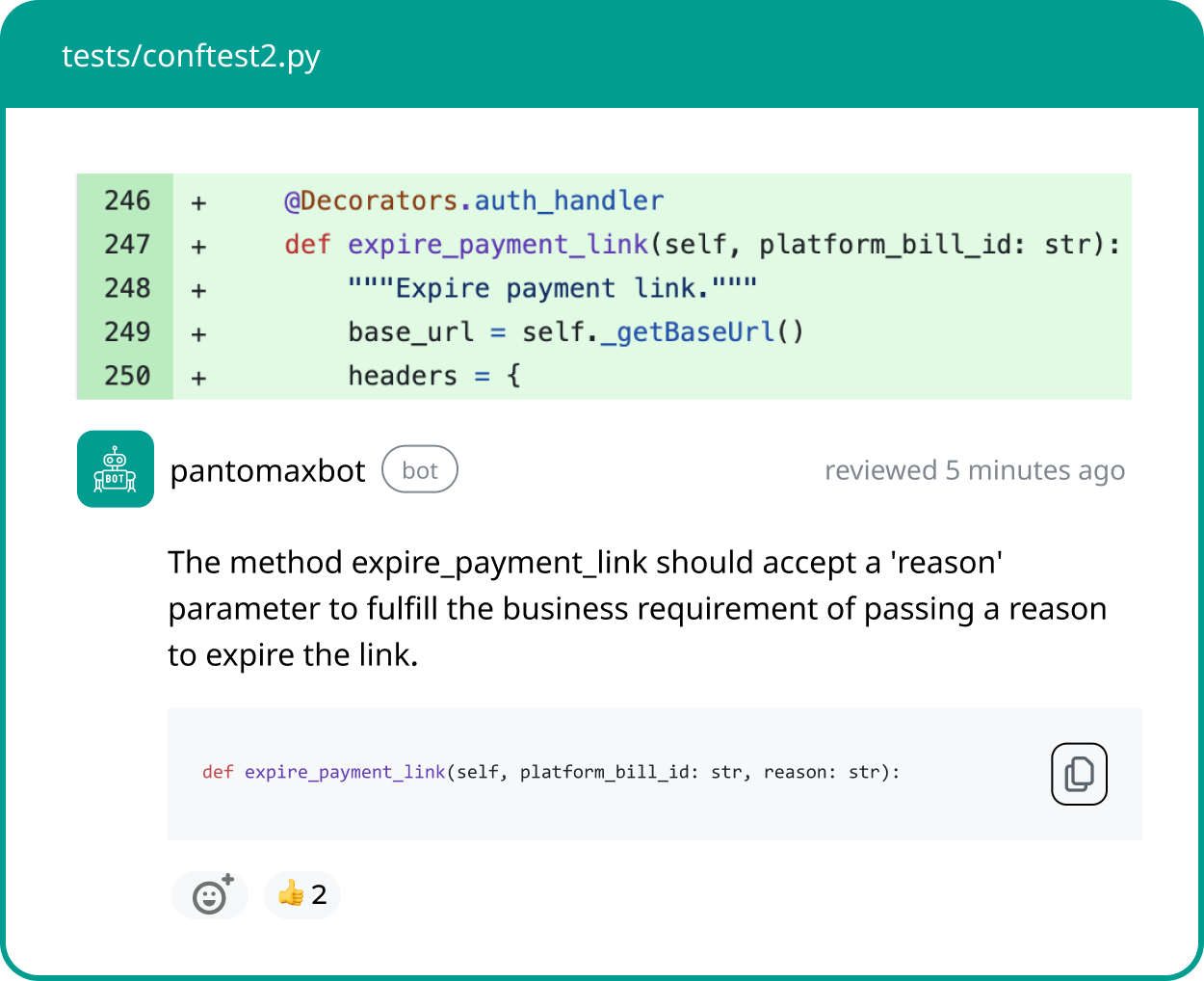
Panto AI stands out as a powerful AI code review agent designed for teams prioritizing code quality. The platform delivers automated PR summaries, enabling reviewers to understand infrastructure changes across GitHub, GitLab, and Bitbucket.
What makes Panto AI exceptional is its proprietary AI OS that aligns code with business context from Jira and Confluence, enhancing infrastructure review efficiency.
The platform supports 30+ languages and 30,000+ security checks, utilizing reinforcement learning to maintain high signal-to-noise ratio throughout the review process.
Key Features: Automated PR summaries, Business context alignment, Multi-VCS support (GitHub, GitLab, Bitbucket), Zero code retention policy, CERT-IN compliance certification, On-premise compatibility, High signal-to-noise filtering
Supported Infrastructure Tools: Terraform, CloudFormation, Kubernetes, Helm charts, Azure Resource Manager
Ideal For: Teams managing IaC across multiple cloud platforms needing context-driven security reviews
2. Checkov
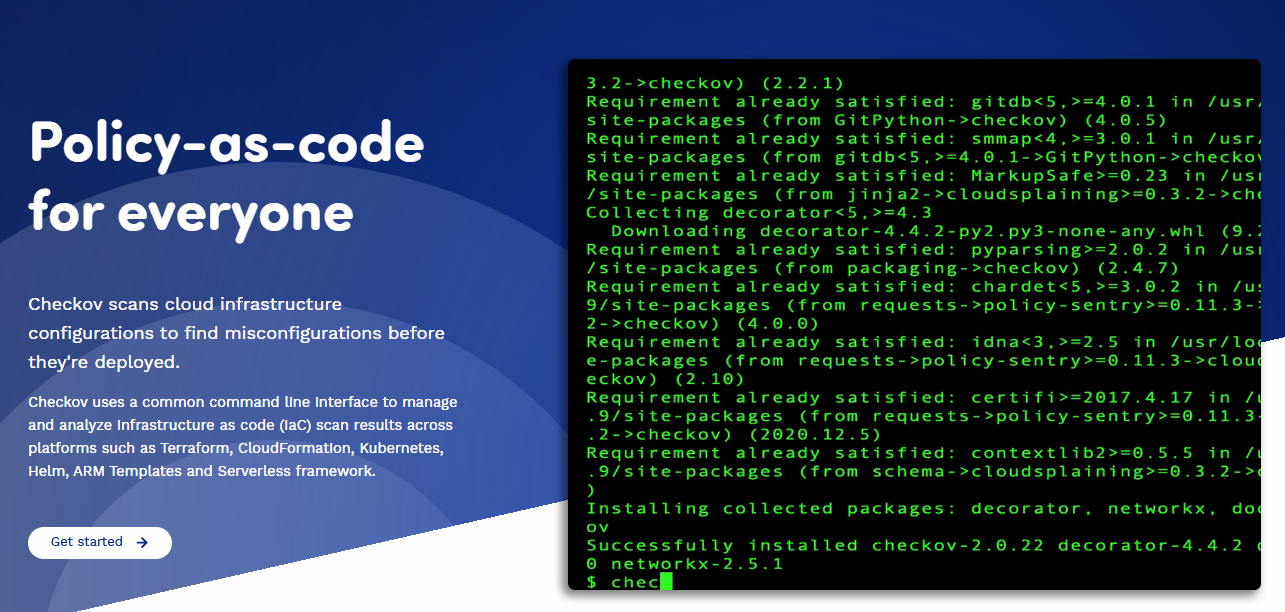
Checkov is the industry-standard open-source IaC scanning tool trusted by thousands of DevOps teams. This static analysis solution identifies misconfigurations and security vulnerabilities across multiple platforms before deployment.
The platform provides a sizeable built-in rule library with the flexibility to create custom rules as Python or YAML code. Organizations gain powerful resource connection graph analysis for deep misconfiguration detection across infrastructure relationships.
Key Features: 1000+ built-in policies, Custom policy support (Python/YAML), Cloud resource connection graphing, Lightweight integration, Free and enterprise options
Supported IaC Frameworks: Terraform (AWS/GCP/Azure/OCI), CloudFormation (including AWS SAM), ARM templates, Serverless framework, Kubernetes, Docker
Ideal For: Teams seeking lightweight, open-source IaC security scanning with zero licensing costs
3. Terracotta
Terracotta revolutionizes infrastructure code reviews through deployment simulation. Reviewers receive context-rich explanations with curated insights about planned infrastructure changes.
The platform simulates Terraform deployment in context of your real infrastructure, pulling cloud resource metadata for additional verification.
Before any merge, Terracotta identifies what will be created, modified, or destroyed and cross-references current infrastructure to spot unintentional changes and hidden risks.
Key Features: Terraform plan simulation, Real infrastructure context, Blast radius visualization, GitOps-aware, State file integration, Unintentional change detection
Supported IaC Tools: Terraform (with Atlantis/Terragrunt support)
Ideal For: Teams deploying complex infrastructure requiring change impact analysis before merge
4. tfsec
tfsec delivers specialized security scanning through context-aware vulnerability detection. This open-source tool analyzes Terraform code and compares it against predefined security rules covering data privacy, network security, and access control.
The platform identifies potential security issues with detailed feedback and remediation suggestions, making it straightforward for security teams to ensure infrastructure meets compliance requirements.
With CI/CD pipeline integration and custom rule support, teams enforce security standards at scale across infrastructure repositories.
Key Features: Terraform-specific security scanning, Context-aware analysis, Custom rule creation, CI/CD integration, Multiple output formats (JSON, CSV, etc.), Detailed remediation guidance
Ideal For: Teams focusing exclusively on Terraform security without broader IaC framework requirements
5. SonarQube / SonarCloud
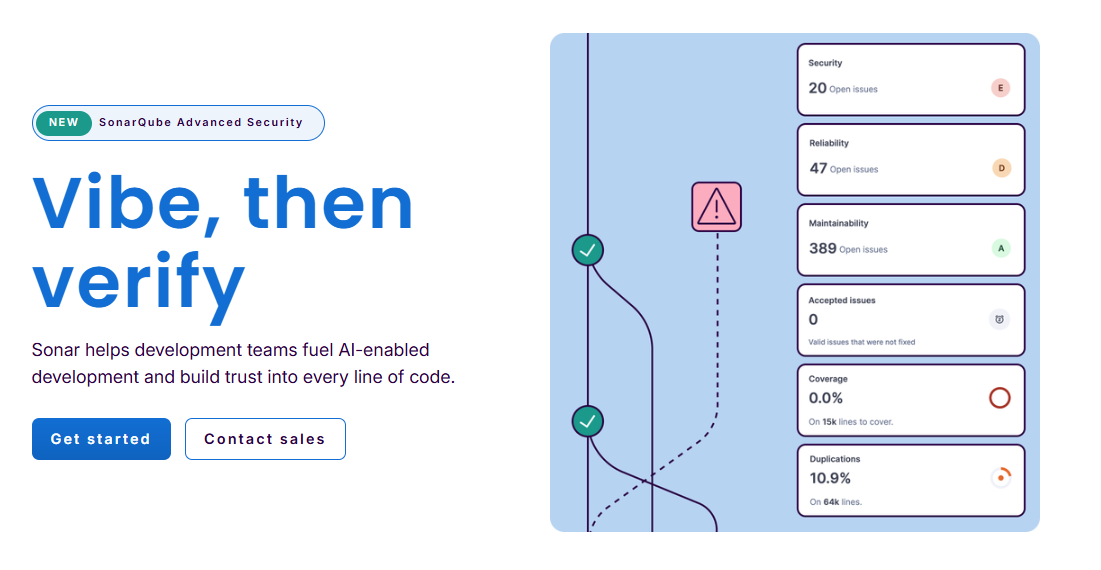
SonarQube combines static application security testing (SAST) with comprehensive code quality analysis, supporting 30+ programming languages and 6,500+ built-in security rules.
This mature platform enables teams to perform advanced cross-file analysis, taint analysis, and secrets detection before infrastructure reaches production.
The platform features AI CodeFix for automated vulnerability remediation and integrates seamlessly into IDEs and CI/CD pipelines.
While enterprise features require commercial licensing, SonarQube delivers security depth comparable to legacy SAST tools at significantly lower complexity.
Key Features: 6,500+ built-in security rules, SAST + code quality combined, Taint analysis, Secrets detection, AI CodeFix automation, 30+ language support, IDE + CI/CD integration
Supported Languages: Java, JavaScript, TypeScript, Python, PHP, C, C++, C#, Go, and more
Ideal For: Organizations needing comprehensive security testing across application and infrastructure code
6. CodeRabbit
CodeRabbit provides AI-first pull request reviews with context-aware feedback and line-by-line code suggestions. The platform employs advanced AI models to deliver instant, actionable insights on infrastructure changes, reducing review time while maintaining quality.
Developers receive quick feedback on bugs and refactoring opportunities through real-time code analysis integrated with popular development environments.
The collaborative chat feature allows developers to discuss suggestions directly in pull requests, ensuring review teams stay aligned on infrastructure decisions.
Key Features: Real-time AI analysis, Line-by-line suggestions, Chat-based collaboration, Bug detection, Refactoring recommendations, Language support, GitHub/GitLab/Bitbucket integration
Ideal For: Teams seeking conversational code review with rapid AI feedback on infrastructure changes
7. Snyk Code
Snyk Code leverages machine learning trained on millions of repositories to identify security vulnerabilities with exceptional accuracy. This AI-powered SAST solution achieves 85% accuracy with only 8% false positive rates.
The platform provides developer-friendly remediation with pre-validated fixes and sub-second feedback in IDEs. Real-time scanning across pull requests and development workflows ensures vulnerabilities never reach production.
Key Features: AI-trained detection engine, 85% accuracy rate, Sub-second IDE feedback, Automated fix suggestions, Low false-positive rate, Multi-language support, IDE + CI/CD integration
Ideal For: Teams needing high-accuracy vulnerability detection with minimal review noise
8. Amazon CodeWhisperer
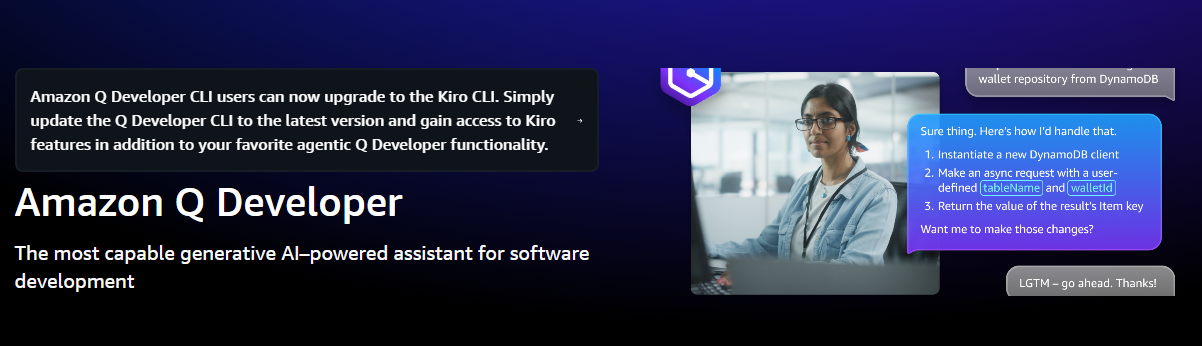
Amazon CodeWhisperer specializes in AWS-optimized coding and review. The tool provides tailored guidance for AWS infrastructure development with code suggestions aligned to AWS best practices, including secure defaults like encryption and least privilege access.
Built-in security scanning flags potential vulnerabilities in AWS-specific code, making CodeWhisperer exceptional for teams heavily invested in AWS infrastructure.
The platform integrates seamlessly with VS Code, JetBrains IDEs, and Lambda console, enabling infrastructure teams to maintain AWS-native workflows.
Key Features: AWS API optimization, AWS-specific security scanning, Secure defaults (encryption, least privilege), IDE integration, Real-time inline suggestions, Built-in security checks for Java/JavaScript/Python
Supported Cloud: AWS (EC2, Lambda, S3, DynamoDB, and 200+ AWS services)
Ideal For: AWS-focused teams prioritizing cloud-native infrastructure review with security built-in
9. Kodus

Kodus delivers context-aware AI code review that learns from specific infrastructure patterns. It analyzes your codebase, understanding architectural decisions, naming conventions to provide truly tailored reviews.
Unlike generic tools, Kodus integrates with Jira and Notion for business context alignment, ensuring infrastructure changes match project requirements.
The platform supports any LLM provider and allows teams to define custom rules in natural language, maintaining complete data privacy with on-premise deployment options.
Key Features: Codebase context learning, Business context integration (Jira/Notion), LLM flexibility (any provider), Custom rule creation (natural language), Technical debt tracking, Model-agnostic approach, Data privacy options
Ideal For: Teams prioritizing customization, data privacy, and alignment with organizational infrastructure standards
10. Infracost
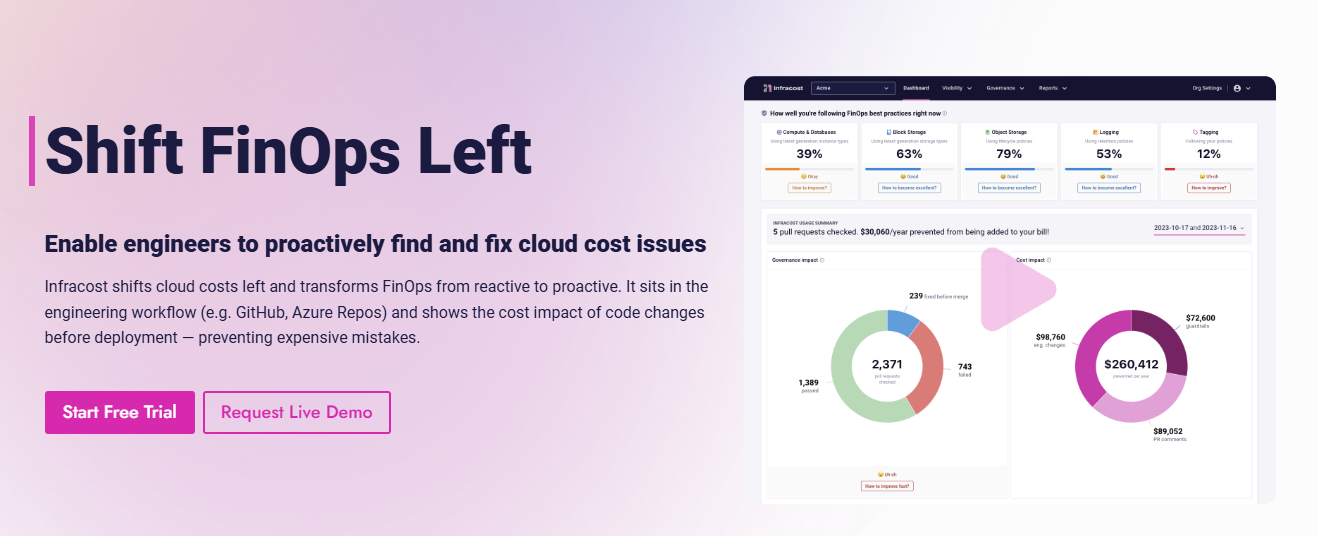
Infracost provides cost estimation for infrastructure changes before deployment, filling a critical gap. The platform analyzes IaC tools to generate cost forecasts of planned resources, enabling teams to catch inefficient configurations early.
Integration with GitHub actions adds cost estimates to PR comments, facilitating informed infrastructure decisions. Teams leverage Infracost to identify cost optimization opportunities and prevent expensive configuration mistakes.
Key Features: Terraform cost estimation, Pull request integration, Budget threshold alerts, Cost breakdown by resource, CI/CD pipeline support, Infracost API, CLI tool, Cloud-specific pricing
Ideal For: Teams managing cloud infrastructure costs and seeking cost visibility in infrastructure reviews
11. Qodo PR-Agent
Qodo PR-Agent is an open-source AI code review agent built for intelligent infrastructure automation. The platform offers 15+ automated PR workflows including scope validation, missing tests, standards enforcement, and risk scoring.
The tool includes ticket-aware validation against Jira/Azure DevOps, ensuring infrastructure changes align with sprint requirements. Qodo delivers persistent codebase intelligence that understands architectural patterns.
It automatically generates remediation patches aligned with existing conventions, enabling one-click fixes instead of extended comment threads.
Key Features: 15+ automated PR workflows, Scope validation, Test coverage insights, Risk scoring, Jira/ADO integration, Architectural pattern awareness, Auto-remediation patch generation
Ideal For: Teams needing structured, policy-driven infrastructure review with high automation
12. GitHub Copilot for Businesses

GitHub Copilot brings context-aware code generation directly to infrastructure development. The tool generates infrastructure code based on comments and context, reducing boilerplate for Terraform and other IaC frameworks.
Copilot excels at rapid template generation and refactoring suggestions for infrastructure code. Integration with GitHub repositories enables PR suggestions, making it valuable for teams adopting IaC automation across existing GitHub workflows.
Key Features: Context-aware code generation, Multi-language support, GitHub integration, IDE compatibility, Refactoring suggestions, Comment-to-code conversion
Ideal For: Teams already using GitHub seeking AI-assisted infrastructure code generation
Comprehensive Comparison Table of Infrastructure Code Reviewers
| AI Code Reviewer | Best For | IaC Support | Security Focus | Custom Rules | Cost | AI Training |
|---|---|---|---|---|---|---|
| Panto AI | Business context alignment | Terraform, CloudFormation, K8s | 30,000+ checks | Yes | Enterprise pricing | Proprietary OS |
| Checkov | Open-source scanning | Terraform, CloudFormation, Docker, K8s | 1000+ policies | Yes (Python/YAML) | Free | Static analysis |
| Terracotta | Deployment simulation | Terraform | Change impact | No | Commercial | N/A |
| tfsec | Terraform security | Terraform only | Security-focused | Yes (custom) | Free | Pattern-based |
| SonarQube | Comprehensive security | Multi-language | SAST + secrets | Yes | Free + Enterprise | Advanced SAST |
| CodeRabbit | Rapid AI feedback | Multi-language | Vulnerability detection | Limited | Freemium | GPT-3.5/GPT-4 |
| Snyk Code | High accuracy SAST | Multi-language | 85% accuracy | Yes | Free + Enterprise | ML-trained |
| CodeWhisperer | AWS-native development | AWS services | AWS-specific | No | Free tier + paid | AWS-trained |
| Kodus | Context customization | Multi-language | LLM-based | Natural language | Community + Pro | Any LLM provider |
| Infracost | Cost optimization | Terraform, multi-cloud | Cost analysis | API-based | Free tier | Pricing models |
| Qodo PR-Agent | Policy automation | Multi-language | Workflow automation | Yes | Open-source | Community |
| GitHub Copilot | Code generation | Multi-language | General-purpose | No | $10-20/user/month | OpenAI Codex |
Key Metrics for IaC Code Review in 2026
- Security Coverage: Top tools now analyze 30,000+ infrastructure security checks, covering common misconfigurations in cloud environments.
- False Positive Reduction: Advanced AI tools achieve 85-95% accuracy rates, reducing review noise for teams managing large infrastructure repositories.
- Automation Capability: Modern reviewers support 15+ automated PR workflows, decreasing review time by up to 60% for routine infrastructure changes.
- Language Support: Leading platforms support 70-80+ coding languages, essential for heterogeneous infrastructure stacks with multiple IaC frameworks.
- Deployment Speed: AI-powered tools reduce infrastructure review time from days to hours, accelerating deployment velocity for DevOps teams.
Critical Considerations When Selecting Infrastructure Code Reviewers
- Infrastructure-Specific Understanding: Choose tools that recognize IaC frameworks (Terraform, CloudFormation, Kubernetes) rather than generic code reviewers, ensuring recommendations align with infrastructure best practices.
- Compliance Requirements: Organizations managing regulated workloads need reviewers supporting zero-code retention, on-premise deployment, and compliance certifications (CERT-IN, SOC 2, GDPR).
- Integration Depth: Prioritize reviewers with deep VCS integration (GitHub, GitLab, Bitbucket) and CI/CD pipeline support, reducing context switching for infrastructure teams.
- Custom Policy Enforcement: Teams with proprietary infrastructure patterns benefit from tools supporting NLP rule creation and business context integration (Jira, Confluence, Notion).
- Cost-Aware Review: Include cost optimization tools like Infracost in your review pipeline, preventing expensive configuration mistakes before production deployment.
Getting Started with Infrastructure Code Review in 2026
Phase 1: Assessment
Evaluate current infrastructure review bottlenecks—security scanning, compliance checking, cost estimation, or deployment safety. Different tools excel at different pain points.
Phase 2: Integration
Select reviewers compatible with existing Git platforms (GitHub, GitLab, Bitbucket) and CI/CD systems (GitHub Actions, GitLab CI, Jenkins). Seamless integration ensures adoption without workflow disruption.
Phase 3: Customization
Configure custom security policies, compliance rules, and architectural standards reflecting your organization’s infrastructure requirements. This phase transforms generic reviewers into team-specific intelligence.
Phase 4: Measurement
Track review metrics—time-to-merge, security issues caught, false positive rates, and cost savings. These code quality metrics guide tool optimization and justify continued investment in automation.
The Future of IaC Code Review
AI code reviewers for infrastructure-as-code have evolved from simple linters to intelligent agents understanding business context, architectural patterns, and team standards.
Panto AI delivers exceptional business context alignment, while Checkov provides battle-tested open-source scanning. Teams prioritizing deployment safety choose Terracotta, whereas cost-conscious organizations leverage Infracost for budget awareness.
Most organizations benefit from combining multiple tools—perhaps Panto AI for quality, Checkov for compliance, Infracost for costs, and CodeRabbit for rapid feedback.
This layered approach catches security vulnerabilities, prevents misconfigurations, optimizes spending, and accelerates infrastructure deployment in 2026
..