


Shift-Left and Shift-Right testing represent complementary strategies for improving code quality. However, neither approach alone guarantees flawless software.
Shift-Left testing moves testing and feedback to the earliest stages of development, while Shift-Right testing extends testing into production and real-user environments.
Shift-Left catches many defects early and cuts fix costs dramatically, but may miss issues that only appear under real usage.
Shift-Right finds real-world issues and enhances system resilience, but relying on it alone risks shipping preventable bugs.
The reality for agile teams is that both strategies must coexist to achieve end-to-end quality. Traditional thinking once framed these as a binary choice – either test early or test late – but that view is obsolete.
Testing only in production would make deployment a “quality gate” that users encounter, while testing only in development misses performance and UX issues.
Today’s best practices embed debugging continuously across the lifecycle. In practice, teams build pipelines that test applications from requirements and design through code, deployment and live operations.
Shift-Left Testing: Proactive QA in Early Development
What is Shift-Left Testing?
Shift-Left testing means moving QA tasks earlier in the software lifecycle. Instead of waiting for complete builds or releases, teams start debugging during requirements and development.
For example, developers write unit tests and do code reviews as they code, and testers validate requirement models before implementation.
This “test-as-you-build” approach fits Agile and DevOps: tests run in parallel with development in CI/CD pipelines, so feedback is instant and defects are caught right away.
Key Benefits of Shift-Left
Early defect detection and cost savings
Bugs caught in development are far cheaper to fix. Industry data shows a defect fixed in development is ~10× cheaper than in QA, ~100× cheaper than in staging, and ~1000× cheaper than in production.
Shift-Left systematically attacks the economics of quality by catching issues at the cheapest point.
Higher quality and faster delivery
Continuous tests during development provide immediate feedback, reducing late-stage surprises. This leads to faster time-to-market because teams spend less time on rework.
Developers can merge changes confidently, knowing regressions will be flagged immediately.
Improved productivity and morale
Quick feedback loops mean developers fix errors instantly rather than debugging months-old code.
This reduces frustration and context-switching. Teams report higher morale when they solve problems right away, making releases smoother.
Collaboration and accountability
Shift-Left fosters a culture where developers, QA testing and DevOps share testing responsibility.
Testers help shape requirements and write acceptance tests early, while developers help write and maintain test suites. This shared ownership embeds quality into every phase.
Real-world example
A fintech startup that enforced Shift-Left TDD during sprints caught logic bugs within minutes of code changes.
As a result, they saw about 40% fewer production defects compared to before implementing these practices. This kind of feedback shows how catching problems early pays off in the real world.
Implementing Shift-Left: Practices & Tools
Implementing Shift-Left requires embedding quality checks directly into everyday development workflows rather than treating testing as a final gate.
Teams achieve this by combining QA automation, continuous feedback, and shared ownership of quality across engineering and QA.
The following core practices and tools make early testing practical, scalable, and effective in modern CI/CD environments:
- Unit and integration testing with TDD to validate logic from the moment code is written.
- Continuous Integration pipelines that automatically build, test, and block faulty changes.
- Static code analysis tools to detect vulnerabilities, code smells, and maintainability risks early.
- Automated functional testing across APIs and UIs to confirm real workflows before release.
- Collaborative quality culture where developers, QA, and DevOps jointly own testing outcomes.
Unit/Integration Testing & TDD
Write automated tests for every new function during development. Many teams follow Test-Driven Development (TDD), writing tests before code to define expected behavior. This ensures all code paths are tested from the outset.
Continuous Integration (CI)
Set up CI pipelines (e.g. Jenkins, GitLab CI, Travis) that build the app and run all tests on each commit. If any test fails, the build breaks and the code can’t merge. This keeps defects out of shared branches.
Static Code Analysis
Use tools (SonarQube, linters) to scan new code for bugs, security flaws and code smells before review. Static analysis catches issues (like security vulnerabilities or dead code) that peer review might miss, enforcing quality standards.
Automated Functional Tests
Extend automation to APIs and UIs in dev/staging environments. For example, automate smoke tests that verify core workflows after each build. Integrate these into CI/CD so that merging a branch automatically runs them.
Collaborative Culture
Encourage developers to own test suites and treat testing as part of coding. QA specialists should be involved in requirement grooming and design reviews to identify test scenarios early. Shared tools and dashboards help everyone see test results.
The payoff of Shift-Left is evident in defect cost. The table below shows how fix cost multiplies when a bug escapes earlier testing:
| Defect found in | Relative cost to fix |
|---|---|
| Development (unit) | 1× (baseline) |
| QA/testing | ~10× |
| Staging | ~100× |
| Production | ~1000× |
This exponential curve makes clear why catching defects early is a top strategy for saving effort and money.
Shift-Right Testing: Continuous QA in Production
What is Shift-Right Testing?
Shift-Right testing focuses on verifying the software after deployment, often in live or staging environments. It accepts that some bugs only appear under real usage or scale.
Shift-Right uses practices like feature flags, canary releases and full-scale monitoring to validate the application in the wild. In other words, debugging extends into the hands of real users and production data.
Key Benefits of Shift-Right
Real-world validation
Testing in production yields high confidence in the software’s behavior. By observing the application under real load, teams confirm that it meets performance and reliability metrics.
Issues like environment-specific bugs or unexpected data scenarios become visible only in production. Shift-Right catches these last-mile issues that pre-prod tests may miss.
User-centric feedback
Production telemetry provides direct insight into user experience. Teams learn how actual users interact with features.
For instance, if a new UI causes users to drop off, or an API has slow responses, these show up in logs and metrics.
Teams can respond by hotfixes or UX tweaks. This aligns development with actual user needs (BlazeMeter terms it “user-centric development”).
Enhanced reliability and resilience
Shift-Right exercises the system’s fault-tolerance. Introducing controlled failures (chaos engineering) or gradually ramping traffic ensures the system can self-heal.
Organizations become proactive: they fix issues in pre-prod so production stays smooth. For example, chaos tests might uncover a failover flaw that is then corrected before it hits customers.
Reduced release risk
Feature flags and canary releases limit the blast radius of new code. New features in production are turned on for a subset of users initially. If errors spike (e.g. increased error rate or metric drop), engineers can roll back instantly.
For instance, one e-commerce team deployed a new recommendation engine to 10% of users via a feature flag. Monitoring detected a 12% drop in conversions, and they rolled back the change within hours, sparing 90% of users from a poor experience.
These safety nets greatly reduce the risk of any given deployment.
Real-world example
An online retailer deployed a new checkout flow under a flag to 10% of traffic. Observability tools quickly spotted a 12% drop in user conversions, and the team rolled back the feature before most customers saw it.
This illustrates how Shift-Right can avert a major issue in real time, thus transforming production quality.
Implementing Shift-Right: Practices & Tools
Implementing Shift-Right focuses on validating software under real-world conditions while maintaining safety and observability.
Rather than ending testing at deployment, teams extend quality assurance into production through monitoring, controlled releases, and rapid feedback loops.
The following practices and tools enable organizations to test confidently in live environments while minimizing risk:
- Feature flags and canary releases to roll out changes gradually and limit blast radius.
- Comprehensive production monitoring across infrastructure, application performance, and business metrics.
- Automated production tests using synthetic transactions to verify critical user journeys and dependencies.
- Chaos engineering experiments to uncover resilience gaps and strengthen fault tolerance.
- Tight DevOps collaboration that converts production insights into immediate fixes and future test improvements.
Feature Flags & Canary Releases
Use rollout strategies to test in production safely. Deploy code with new features disabled, then enable them gradually for a controlled audience.
If automated monitors (or a team member) see bad trends, disable instantly. This approach decouples deployment from release, adding flexibility.
Full Production Monitoring
Instrument the live system extensively. Track infrastructure (CPU, memory), application (response times, error counts) and business KPIs (user sign-ups, checkout rates).
Use tools like Datadog, Dynatrace or open-source stacks (Prometheus+Grafana). Real User Monitoring (RUM) captures client-side issues. Shift-Right is as much about visibility as it is about active tests.
Automated Production Tests
Integrate automated checks against production endpoints. For instance, run synthetic transactions that mimic user actions and watch for failures.
This ensures external dependencies (e.g. payment gateway) are working. If a critical endpoint breaks, the automation will catch it immediately.
Chaos Engineering
Deliberately inject faults (e.g. kill a server, introduce latency) in production or identical staging to verify recovery.
This reveals hidden bugs in failover logic or error handling. The insights lead to improvements, making the system inherently more resilient.
DevOps Collaboration
In a Shift-Right model, QA works closely with SRE/DevOps and product owners. When production metrics or errors emerge, incidents are logged as bugs in the backlog and addressed immediately.
Developers participate in triaging production issues. Over time, operational feedback loops back into development and testing plans. This is the essence of continuous delivery.
Shift-Right thus ensures that new code keeps running well under real conditions. Although debugging in real production environments might sound risky, with proper safeguards it dramatically increases confidence.
As experts warn, don’t treat production as a dumping ground for untested code – instead, “test in production” with observability and safe rollout strategies.
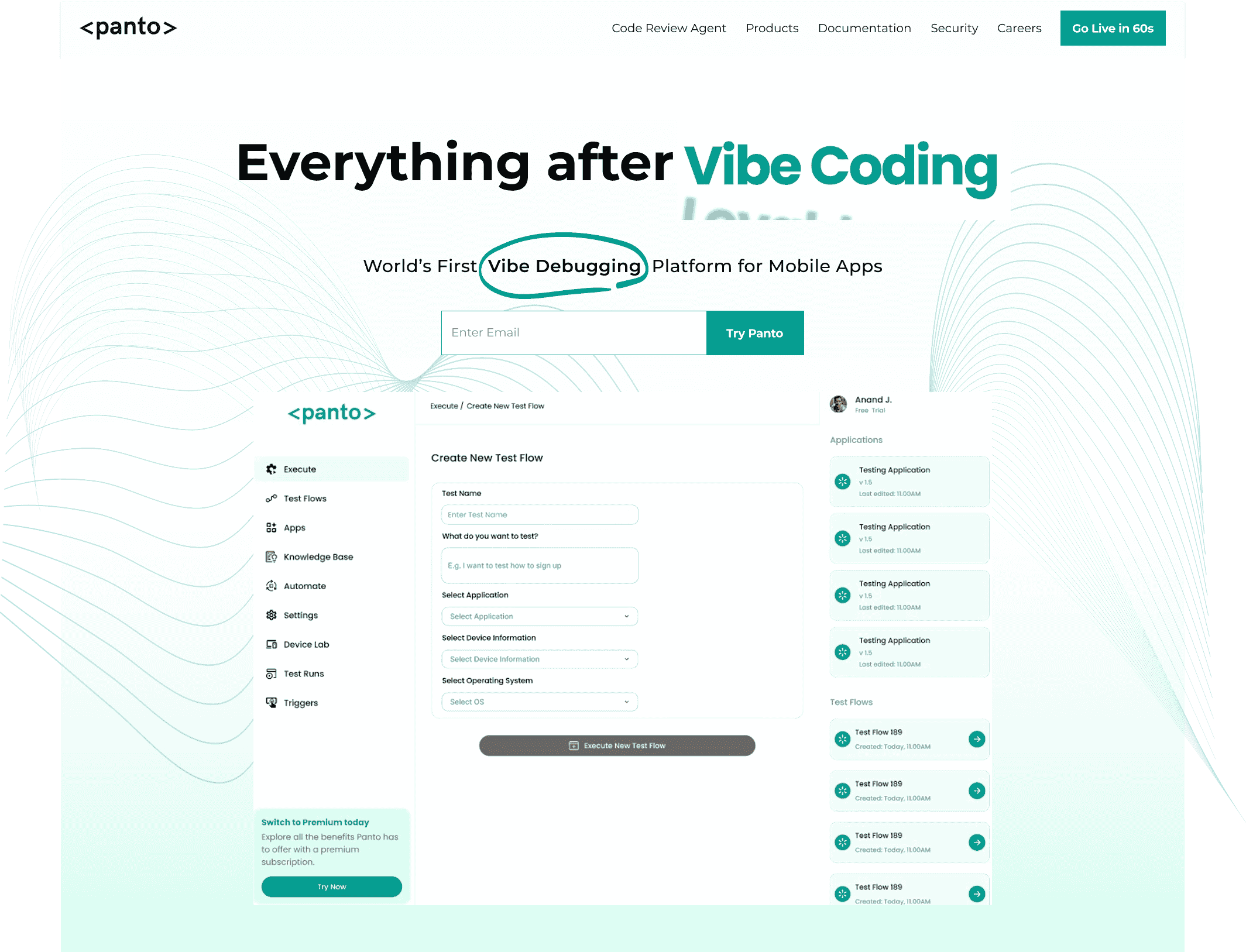
Everything After Vibe Coding
Panto AI helps developers find, explain, and fix bugs faster with AI-assisted QA—reducing downtime and preventing regressions.
- ✓ Explain bugs in natural language
- ✓ Create reproducible test scenarios in minutes
- ✓ Run scripts and track issues with zero AI hallucinations
Metrics and Outcomes
Measuring effectiveness for Shift-Right includes tracking things like rollback rate, mean time to detect/fix (MTTD/MTTR), and user impact.
Real-world data underlines its value: teams that adopted observability and gradual rollouts saw ~28% fewer rollback incidents and 31% higher confidence in releases. More broadly, combining approaches yields improvements across the board.
Shift-Left effectiveness, meanwhile, is measured through early defect detection rates, reduced rework, faster build stability, and shorter release cycles.
Organizations that embed intelligent testing and continuous feedback earlier in development often report significantly fewer production defects and improved developer productivity, demonstrating how proactive quality reduces downstream risk.
For example, one DevOps report found that 74% of high-performing teams were using both Shift-Left and Shift-Right practices – evidence that elite teams don’t treat them as exclusive choices.
The table below summarizes how the strategies differ:
| Aspect | Shift-Left Testing | Shift-Right Testing |
|---|---|---|
| When | Early SDLC (requirements/design/development) | After deployment (staging/production) |
| Primary Focus | Preventing bugs through early testing | Validating application under real load |
| Techniques | Unit/integration tests, code reviews, CI/CD | Feature flags, canary releases, chaos engineering |
| Team Roles | Devs and QA collaborate in dev environments | QA, DevOps/SRE and product teams collaborate in prod |
| Key Benefits | Faster fixes, cost savings | Higher confidence, better UX and resilience |
Combined Strategy and Culture
Ultimately, the best QA strategies use both approaches. Shift-Left and Shift-Right cover different aspects of quality, and together they provide 360° coverage.
Shift-Left eliminates ambiguity and coding errors early, while Shift-Right catches the rare cases only visible under real usage. In fact, continuous testing across the entire pipeline is now the goal.
In practice, effective teams treat quality as a cycle: automated tests in CI (Shift-Left) give developers immediate feedback, and production monitoring (Shift-Right) keeps tabs on user experience.
Production incidents become learning opportunities; teams write new tests or improve designs based on live issues. For example, after a Shift-Right failure in prod, the next sprint might add a unit test or a new static check to catch that issue earlier.
Over time, each production problem shrinks because it was already caught upstream. Continuous feedback loops like this are a hallmark of high-performing teams.
The data backs this up: organizations that combine Shift-Left and Shift-Right see real gains in quality and developer velocity. By catching defects early and validating behavior in production, teams deliver better software faster.
In essence, quality after automation becomes a continuous thread – from the first line of code all the way to the live system.